

Emotional Intelligence in Modern Education: Building Future-Ready Learners Through Social-Emotional Skills
Discover how emotional intelligence transforms education with the latest 2024-2025 research, practical implementation strategies, and proven outcomes. Learn why EQ matters as much as IQ for student success, academic performance, and lifelong achievement.
A LEARNINGNEW YOUTH ISSUESMODERN DISEASES
Shiv Singh Rajput
12/9/20258 min read
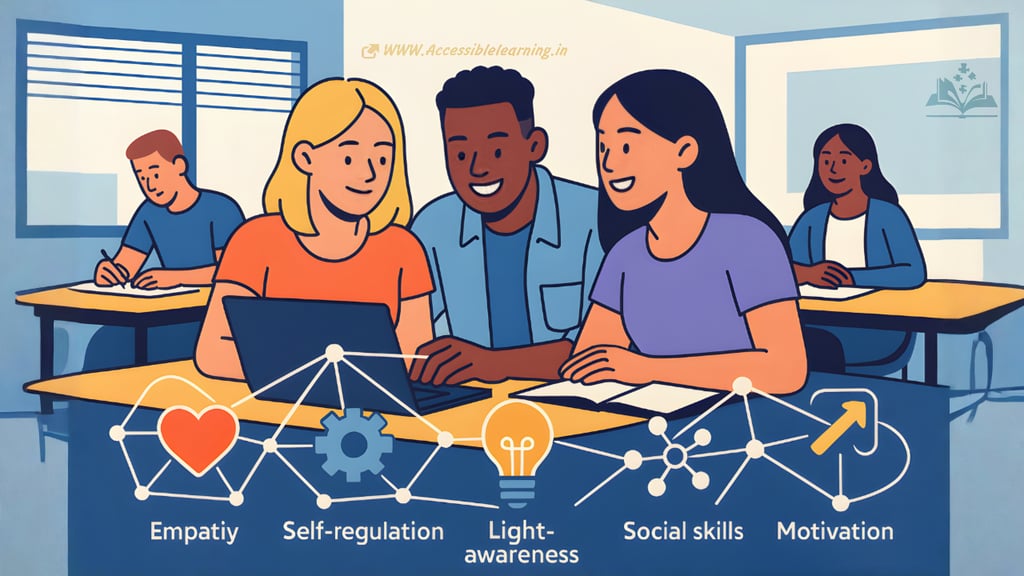
Emotional Intelligence in Today's Educational Landscape
Emotional intelligence has emerged as a cornerstone of holistic student development in contemporary education systems worldwide. As classrooms evolve beyond traditional academic instruction, educators increasingly recognize that managing emotions, building empathy, and fostering interpersonal skills are just as critical as mastering mathematics or science.
The global education community now acknowledges what research has consistently demonstrated: students with developed emotional competencies in areas like self-perception, empathy, impulse control, and stress tolerance show stronger connections to academic performance. This comprehensive guide explores how emotional intelligence transforms modern education, supported by the latest research, practical implementation strategies, and evidence-based outcomes.
What is Emotional Intelligence and Why Does It Matter in Schools?
Emotional intelligence (EI or EQ) refers to the capacity to recognize, understand, manage, and effectively utilize one's own emotions while being attuned to the feelings of others. In educational contexts, this translates to students who can navigate social complexities, build meaningful relationships, and approach learning with resilience and self-awareness.
Enhanced emotional intelligence acts as a catalyst for fostering motivation, self-regulation, and coping mechanisms that help students handle academic stress. These attributes form a resilient foundation that enables learners to focus effectively, endure challenges, and recover from setbacks—essential qualities for both academic achievement and lifelong success.
The Five Core Components of Emotional Intelligence in Education
Self-Awareness: Recognizing and understanding one's own emotions, strengths, limitations, and values
Self-Regulation: Managing disruptive emotions and impulses, maintaining composure under pressure
Motivation: Harnessing emotions to pursue goals with energy and persistence
Empathy: Understanding and responding appropriately to the emotional needs of others
Social Skills: Building and maintaining healthy relationships, communicating effectively, and working collaboratively
The Evidence: Latest Research and Statistics on Emotional Intelligence in Education
Recent data reveals the transformative impact of emotional intelligence programs across educational institutions globally. Understanding these statistics helps educators, administrators, and policymakers make informed decisions about curriculum development and resource allocation.
Academic Performance and Student Success
The connection between emotional intelligence and academic achievement continues to strengthen based on recent research:
Students with high EQ perform 11% better academically, with emotional regulation improving focus and learning outcomes
Students participating in EI-focused programs experience an 11% enhancement in academic performance, as these initiatives help them handle emotions, leading to improved concentration and classroom behavior
Research shows that emotional intelligence, particularly in stress management and overall mood domains, correlates strongly with both academic success and student retention rates
Behavioral and Social Benefits
Beyond academics, emotional intelligence programs demonstrate significant positive effects on student behavior and school climate:
Schools implementing EQ programs see 24% fewer disciplinary issues, as teaching empathy and self-awareness reduces behavioral problems
Schools introducing EI training observe a 9% reduction in problems, including aggression, bullying, and disciplinary incidents
Social-emotional learning (SEL) programs improve EQ scores by 27% through structured interventions
Long-Term Career and Life Outcomes
The benefits of emotional intelligence extend far beyond the classroom:
Emotional intelligence has a 58% influence on job performance, and 90% of top performers demonstrate high emotional intelligence
Students with strong EQ are 2x more likely to pursue leadership roles, as early EQ development encourages confidence and ambition
People with high EQ earn an average of $29,000 more annually than their counterparts
The Growing Market Demand
The Emotional Intelligence market was valued at $868 million in 2021 and is projected to grow at a rate of 25.2% CAGR between 2022 and 2030, reflecting increasing recognition of EI's importance across educational and professional sectors.
The Urgent Need: Addressing the Emotional Recession
While the benefits of emotional intelligence are clear, recent data reveals concerning trends that underscore the urgency of integrating EI into education:
Global emotional intelligence scores have declined for four consecutive years, with average scores dropping 5.54% from 2019 to 2023, and scores declining on every individual competency. This "emotional recession" manifests as increased volatility, reduced empathy, and diminished capacity to navigate emotions effectively.
Generation Z, now entering the workforce, faces unprecedented burnout rates compared to previous generations, stemming from emotional health challenges, loneliness, isolation, and lack of key emotional skills, including navigating emotions, pursuing meaningful goals, and finding intrinsic motivation—skills that current educational systems often fail to develop adequately.
How Emotional Intelligence Transforms Learning Environments
Creating Supportive Classroom Cultures
By emphasizing empathy, self-awareness, and relationship management, educators can create supportive environments conducive to holistic growth and development in students. This approach recognizes that learning requires more than cognitive engagement—it demands emotional readiness and psychological safety.
Enhancing Teacher Effectiveness
Educators must be trained to be emotionally competent to harness learners' different intelligences for enhanced academic performance. The most efficacious programs integrate Social-Emotional Learning (SEL), mindfulness techniques, emotional journaling, and virtual simulations to foster educator competencies.
Recent systematic reviews examining 67 publications from 2013-2024 reveal that successful emotional intelligence training for educators incorporates multiple evidence-based approaches. These programs not only improve teacher well-being but also enhance their capacity to model emotional competence for students.
Fostering Inclusivity and Global Citizenship
Integration of emotional intelligence into school curriculum fosters a culture of inclusivity and understanding by encouraging empathy and respect for diverse perspectives, promoting a more compassionate and tolerant society. This emphasis establishes foundations for harmonious and equitable communities.

Practical Strategies: Implementing Emotional Intelligence in Schools
Integrate Explicit EI Curriculum
Dedicate specific time to teaching emotional intelligence concepts directly. This might include:
Regular lessons on identifying and labeling emotions
Teaching coping strategies for managing stress and frustration
Role-playing exercises for practicing empathy and conflict resolution
Mindfulness and breathing exercises for emotional regulation
Model Emotionally Intelligent Behavior
Teachers and administrators should consistently demonstrate:
Acknowledging and appropriately expressing their own emotions
Showing empathy when students face challenges
Using conflicts as teaching opportunities
Maintaining composure during stressful situations
Create Emotionally Safe Learning Spaces
Establish classroom environments where:
Students feel comfortable expressing emotions without judgment
Mistakes are viewed as learning opportunities
Diverse emotional expressions are normalized and respected
Clear expectations exist for emotional expression and conflict resolution
Incorporate SEL into Existing Subjects
Emotional intelligence doesn't require separate class time—it can be woven into existing curriculum:
Literature classes analyzing character emotions and motivations
History discussions exploring emotional dimensions of historical events
Science lessons on the neurobiology of emotions
Math classes teaching persistence through challenging problems
Provide Professional Development for Educators
Educator training should include modules on EI to enable teachers to nurture emotional competencies in learners. This ongoing professional development ensures teachers have the tools and confidence to implement EI strategies effectively.
Engage Parents and Families
Extend EI education beyond school walls by:
Providing parents with resources on emotional intelligence
Hosting workshops on supporting emotional development at home
Creating consistent language around emotions between school and home
Sharing strategies for managing challenging behaviors
Use Assessment and Data
Track emotional intelligence development through:
Validated assessment tools like the Six Seconds Emotional Intelligence Assessment
Observation-based evaluations of social interactions
Student self-reflection journals
Behavioral incident tracking to measure program impact
Special Considerations for Different Educational Levels
Early Childhood Education
Focus on building emotional vocabulary and recognition. Young children benefit from:
Picture books about emotions
Songs and games that teach feeling words
Simple breathing exercises
Consistent routines that provide emotional security
Elementary Education
Develop more sophisticated emotional regulation and social skills:
Peer mediation programs
Collaborative learning projects
Structured opportunities for emotional expression
Introduction to growth mindset concepts
Secondary Education
Address complex emotional challenges and prepare for adult life:
Discussions about managing academic pressure and future anxiety
Peer support programs
Mental health awareness education
Leadership development through emotional intelligence
Higher Education
In health professions education, EI is particularly important for supporting resilience, job satisfaction, interprofessional collaboration, and improved health outcomes. Programs should include:
Professional development seminars
Clinical placement opportunities emphasizing emotional skills
Reflection and peer feedback mechanisms
Coaching and mentorship programs
Addressing Challenges and Common Concerns
Time Constraints
Many educators worry about adding more to already packed curricula. The solution lies in integration rather than addition—emotional intelligence can be woven into existing subjects and routines without requiring significant additional time.
Measuring Success
Unlike traditional academic subjects, emotional intelligence can seem difficult to assess. However, validated assessment tools, behavioral observation rubrics, and longitudinal tracking of academic and social outcomes provide reliable measures of program effectiveness.
Cultural Considerations
Results vary depending on the type of intelligence measured, the theoretical model used, and the cultural context. Successful programs adapt emotional intelligence frameworks to respect and incorporate cultural values and expressions of emotion.
Gaining Buy-In
78% of parents want emotional intelligence included in curricula, indicating growing demand for EQ-focused education. Sharing research demonstrating academic and life outcomes can help secure support from stakeholders who may initially view EI as "soft skills."
The Role of Technology and Innovation
Emerging technologies offer new avenues for developing emotional intelligence:
AI tools like ChatGPT are transforming education, prompting a shift from knowledge transfer to fostering skills like empathy, creativity, and critical thinking. As automation handles routine tasks, uniquely human emotional capabilities become increasingly valuable.
Virtual reality simulations, emotion-tracking applications, and online social-emotional learning platforms provide engaging ways to practice and develop EI skills in controlled, supportive environments.
The Future of Emotional Intelligence in Education
As we move through 2025 and beyond, several trends are shaping the future of emotional intelligence in education:
Integration with Academic Standards
More educational systems are formally incorporating social-emotional learning standards alongside traditional academic benchmarks, recognizing that both are essential for student success.
Teacher Preparation Programs
Research spanning 2013-2024 shows concentrated efforts in the United States and Spain, among other countries, to develop comprehensive EI training for educators. Teacher preparation programs increasingly include substantial emotional intelligence components.
Holistic Assessment Models
Moving beyond standardized testing, educational institutions are developing comprehensive assessment frameworks that measure emotional and social competencies alongside academic achievement.
Mental Health Integration
Recognition of the connection between emotional intelligence and mental health is driving integration of EI programs with school-based mental health services and support systems.


The integration of emotional intelligence into modern education represents not a trend but a fundamental shift in how we prepare students for meaningful, successful lives. A comprehensive approach that harmonizes Spiritual Quotient, Emotional Quotient, and Physical Quotient alongside cognitive abilities is essential to maximizing students' overall potential.
As we face global challenges including mental health crises, social division, and rapid technological change, emotional intelligence equips students with essential human capabilities that no machine can replicate. By emphasizing empathy, self-awareness, and relationship management, educators create supportive environments conducive to holistic growth and development, establishing foundations for both individual flourishing and collective well-being.
The evidence is clear: students with well-developed emotional intelligence perform better academically, demonstrate stronger social connections, exhibit fewer behavioral problems, and achieve greater success in their personal and professional lives. In an era of increasing complexity and change, emotional intelligence is not a luxury—it's a necessity.
Educational institutions that prioritize emotional intelligence alongside academic rigor prepare students not just to pass tests but to navigate life's challenges with resilience, empathy, and purpose. This represents the true promise of education: developing whole human beings capable of contributing meaningfully to society while leading fulfilling lives.
The time to invest in emotional intelligence education is now. Whether you're an educator, administrator, parent, or policymaker, you have a role to play in ensuring that the next generation develops the emotional competencies they need to thrive. The future of education—and of our society—depends on our commitment to nurturing both minds and hearts.
Frequently Asked Questions
Q: What age should emotional intelligence education begin?
Emotional intelligence development should start from birth. Even infants benefit from caregivers who recognize and respond to their emotional states. Formal EI education can begin in early childhood, with age-appropriate concepts and activities introduced at each developmental stage.
Q: How long does it take to see results from emotional intelligence programs?
Schools that incorporate EI initiatives report that 80% of teachers and students experience reduced stress levels and increased satisfaction. While some benefits like improved classroom climate may be visible within weeks, measurable improvements in academic performance and behavioral outcomes typically emerge over several months to a year of consistent implementation.
Q: Can emotional intelligence be measured accurately?
Yes. Multiple validated assessment tools exist, including self-report measures, ability-based tests, and observational instruments. Empirical studies provide compelling evidence that emotional intelligence independently contributes to academic performance, demonstrating that EI can be reliably measured and tracked over time.
Q: What's the difference between emotional intelligence and social-emotional learning?
Emotional intelligence refers to the competencies themselves—the ability to understand and manage emotions. Social-emotional learning (SEL) describes the educational process through which these competencies are developed. SEL is the instructional approach that builds EI.
Q: How do emotional intelligence programs support students with learning differences?
Students facing learning challenges often experience frustration, anxiety, and low self-esteem. Emotional intelligence programs provide these students with tools to manage difficult emotions, self-advocate effectively, and build resilience. The supportive environments created by EI-focused schools benefit all learners, particularly those who struggle.
Q: Are emotional intelligence skills really teachable?
Absolutely. While individuals may have different starting points, research consistently demonstrates that emotional intelligence competencies can be learned and developed through practice and instruction. Unlike IQ, which remains relatively stable, EI improves with targeted effort and experience.
Q: How can parents support emotional intelligence development at home?
Parents can support EI by modeling emotional awareness, validating children's feelings, teaching emotion vocabulary, helping children identify triggers and patterns, discussing emotions during everyday activities, and maintaining consistent, warm relationships that provide emotional security.
Q: What's the return on investment for schools implementing EI programs?
Beyond improved academic outcomes and reduced disciplinary incidents, schools report enhanced teacher retention, increased parent satisfaction, and better school-community relationships. Disengagement translates to significant economic losses, making investments in emotional intelligence financially justified through improved engagement and long-term outcomes.
Subscribe to Frontier Intelligence
All © Copyright reserved by Accessible-Learning Hub
| Terms & Conditions
Accessible Learning Hub — Actionable clarity for high-agency minds.
Weekly breakdowns on AI breakthroughs, capital flow, and human performance systems. Zero fluff.