

Education in the Age of AI: Skills Every Student Needs for Future Jobs
A practical, student-focused guide exploring how schools can prepare the next generation for AI-powered careers. The description covers essential skills, curriculum changes, responsible AI use, teacher readiness, and real steps schools can take to help students succeed in a technology-driven future.
A LEARNINGAI/FUTURECOMPANY/INDUSTRYEDUCATION/KNOWLEDGE
Shiv Singh Rajput
12/12/20256 min read
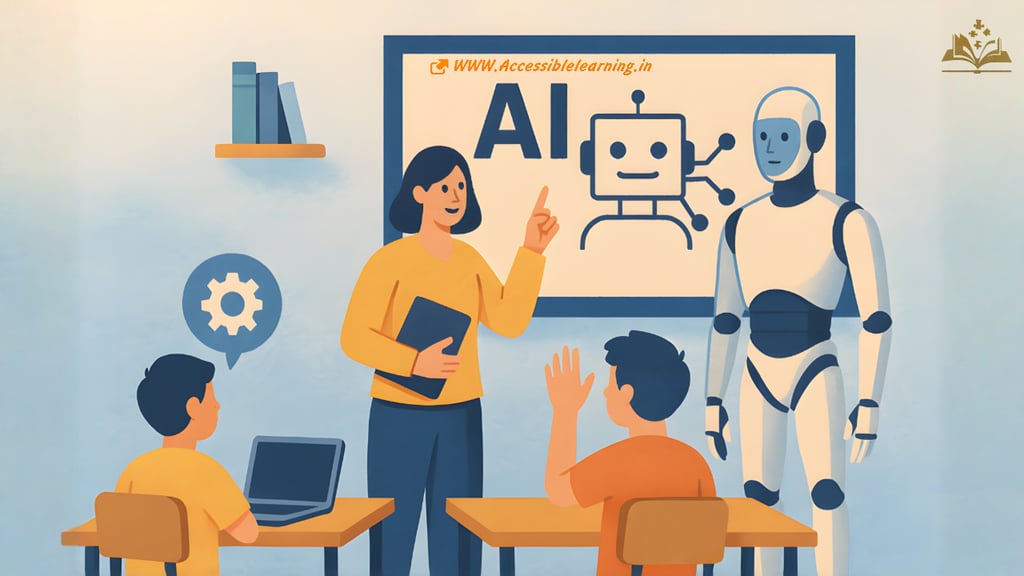
Artificial intelligence has moved from research labs into daily life. It shapes how people work, plan, learn, shop, communicate, and create. As companies adopt AI across every department, the next generation will enter a job market where workflows, decision-making, and skills look different from what schools traditionally prepared students for.
Preparing students for AI-powered jobs doesn’t require turning classrooms into tech hubs. It requires helping young learners understand how AI works, how to use it wisely, and how to stay adaptable in a world where tools change constantly. This article breaks down what schools can do to get students ready for this new reality.
What AI-Powered Jobs Actually Look Like
AI-powered jobs are not limited to AI developers or engineers. Most future roles will be regular professions enhanced by AI tools. These include:
Marketing teams using AI for market research and content drafts
Designers using AI to create variations or generate concepts
Healthcare professionals using AI for diagnostics and patient insights
Teachers using AI to plan lessons or personalize exercises
Retail managers using AI to forecast demand or track inventory
In short, students don’t need to become AI experts. They need to become capable users who understand AI’s strengths and limits.
Skills Students Need for an AI-Driven Economy
To succeed in AI-powered careers, students need a combination of technical, human, and adaptive skills.
AI Literacy
This goes beyond using ChatGPT or tools like it. Students should learn:
How AI models make predictions
Why data quality matters
How algorithms affect recommendations and decisions
What AI can and cannot do
The risks of over-relying on AI
The goal is understanding, not mastery.
Data Literacy
Modern jobs require comfort working with data.
Students should know how to:
Read charts, dashboards, and basic reports
Spot patterns and trends
Differentiate correlation from causation
Understand data privacy and permissions
These skills apply to every field, from business to science to journalism.
Computational Thinking
Even without advanced programming, students benefit from:
Breaking problems into steps
Understanding logic and sequences
Seeing how systems connect
Thinking in terms of inputs and outputs
This improves problem-solving across subjects.
Human Skills That AI Can’t Replace
AI can automate tasks, but not human value. Students should strengthen:
Critical thinking
Creative problem-solving
Teamwork
Communication
Emotional intelligence
Decision-making under uncertainty
These skills are essential in roles where humans and AI work together.
Adaptability and Continuous Learning
Because AI tools evolve rapidly, students must learn to:
Update their knowledge
Try unfamiliar tools
Stay flexible when workflows change
Seek new skills as industries shift
Schools should encourage curiosity, experimentation, and resilience.
Building a Curriculum for the AI Era
A future-ready curriculum doesn’t rely on heavy technology. It focuses on thoughtful integration.
Teach AI Across All Subjects
AI shouldn’t be isolated to computer classes. Examples:
Analyze AI-generated essays in language classes
Explore AI ethics in humanities
Study real-world AI applications in economics
Use AI tools in art for rapid concept development
This shows students how AI intersects with their interests.
Add Core Digital and Data Literacy Modules
Schools can introduce structured modules on:
Safe digital citizenship
Cybersecurity basics
Privacy awareness
Responsible content creation
Data analysis using beginner-friendly tools
These modules can be embedded into existing courses.
Use Project-Based Learning
Hands-on projects teach students how to think and collaborate. Example projects:
Use AI tools to design environmental solutions for the school
Build surveys and analyze student data with basic visualization
Create multimedia content with AI-assisted editing tools
Develop prototypes or mock business plans using AI insights
Students learn how to use AI responsibly while building real-world awareness.
Rethink Assessment Methods
Traditional exams don’t fully measure AI-era skills. Schools should include:
Oral presentations
Live problem-solving
Portfolios documenting growth
Reflection tasks explaining how AI was used
Group projects with defined roles
This encourages genuine understanding instead of shortcut answers.

Classroom Practices That Build AI Readiness
Better classroom habits help students use AI the right way.
Focus on Process, Not Just Results
Students should show:
Drafts
Prompts used (if any)
Iterations
Personal reasoning
This shows teachers that students can think independently.
Let AI Act as a Thought Partner
Instead of banning AI, guide students on:
When to use AI
How to verify outputs
How to build on AI suggestions
How to cite AI usage
This improves digital ethics and critical thinking.
Teach Students to Fact-Check AI
Because AI can generate errors, students should:
Compare multiple sources
Check numbers and statistics
Ask follow-up questions
Challenge AI reasoning
This helps build media literacy too.
Responsible and Ethical AI Education
Students must learn the responsibilities that come with technology.
Explain Bias and Fairness
Use examples like
Biased hiring algorithms
Inequities in facial recognition
Unequal access to AI training data
Teach students how to question whether systems are fair.
Talk About Privacy and Data Safety
Students must understand:
What information not to share
How AI systems use uploaded content
Why some AI tools require restrictions
The difference between safe and unsafe use cases
Teach Academic Integrity in the AI Age
Clearly define:
What counts as acceptable help
What counts as plagiarism
How to properly credit AI tools
Responsible use is a key future skill.
Preparing Teachers for AI Integration
Teachers drive the success of any educational transformation.
Provide Practical Training
Training should cover:
How AI tools can speed up planning
How to integrate AI into lessons
How to monitor and guide student use
How to design AI-resistant assessments
Short, hands-on sessions work better than long, theory-heavy workshops.
Build Teacher Support Networks
Schools can create:
Peer groups
Shared prompt libraries
Demonstration classrooms
Monthly idea exchanges
Collaboration takes the pressure off individual teachers.
Offer Time and Clear Policies
Teachers need:
Planning time to test tools
Clarity on what tools are allowed
Clear guidelines on data safety
Ongoing technical support
This makes the transition smoother and less stressful.
Infrastructure and Safety Requirements
Schools also need the right environment to support AI education.
Ensure Fair Device and Internet Access
Without equal access, the benefits of AI become uneven. Schools should:
Provide shared or personal devices
Maintain strong internet connectivity
Offer offline alternatives where needed
Choose Safe, Age-Appropriate Tools
Schools should review tools for:
Privacy compliance
Data storage policies
Fixing inappropriate outputs
Classroom suitability
Establish Clear AI Use Policies
Good policies define:
Where AI is appropriate
How to disclose its use
Ethical boundaries
Restrictions on sensitive data
Policies protect students and give teachers confidence.
Engage Parents and the Community
AI readiness improves when learning extends beyond school walls.
Educate Parents
Help parents understand:
How AI works
How students are using it
How they can support responsible use at home
What risks to look out for
Build Industry and University Partnerships
These partnerships can offer:
Mentors
Guest sessions
Campus tours
Internships
Student competitions
This moves AI learning from theory to real-world exposure.


A Practical Roadmap for Schools
A simple step-by-step approach ensures smooth adoption.
Set a clear AI vision for the school.
Train a small group of teachers first.
Start with one or two grade-level pilots.
Create AI usage guidelines for students and staff.
Integrate AI tools into selected projects.
Collect feedback, improve, and expand gradually.
This approach avoids overwhelm and builds long-term success.
AI-powered jobs will reward people who can think critically, communicate clearly, understand technology, and use tools responsibly. Schools don’t need to replace teachers with tech. They need to help students combine human strengths with AI capabilities.
By teaching students how to analyze, innovate, and adapt, schools can prepare them for a world where AI supports their work rather than replaces it. The goal isn’t to create perfect technologists. The goal is to create confident, capable learners who can navigate an evolving future with skill and integrity.
FAQ's
Q: Why do students need AI-related skills if they aren’t planning to work in technology?
AI is being integrated into marketing, healthcare, design, finance, education, logistics, customer service, and more. Most future jobs will use AI tools in daily workflows, even if the role isn’t technical. Basic AI literacy helps students adapt and stay competitive.
Q: Do schools need advanced technology or expensive equipment to teach AI readiness?
No. Most AI readiness involves teaching concepts like critical thinking, data literacy, ethics, creativity, and problem-solving. These can be taught with simple tools. Schools can start small and gradually add age-appropriate AI tools as resources allow.
Q: How can schools prevent students from misusing AI tools for cheating?
Instead of banning AI, schools should set clear guidelines, teach students how to use AI responsibly, and design assessments that focus on reasoning, process, and understanding. Reflection notes, oral exams, and project-based tasks reduce misuse without restricting learning.
Q: What should teachers focus on first when integrating AI into their lessons?
Teachers should start by understanding the basics of AI, experimenting with a few approved tools, and identifying where AI can support lesson planning or enrich student projects. Starting small helps teachers build confidence before expanding into more complex use cases.
Q: How can schools ensure equity in AI education?
Schools should give all students access to basic digital resources, offer extra support to students who struggle with technology, and choose safe, vetted tools that work on low-cost devices. AI should help close learning gaps, not widen them.
Q: Will AI replace teachers in the future?
No. AI can help with tasks like planning, practicing worksheets, or feedback, but it cannot replace human judgment, emotional support, relationship-building, or personalized guidance. Teachers remain central to learning, especially as technology becomes more common.
Subscribe to Frontier Intelligence
All © Copyright reserved by Accessible-Learning Hub
| Terms & Conditions
Accessible Learning Hub — Actionable clarity for high-agency minds.
Weekly breakdowns on AI breakthroughs, capital flow, and human performance systems. Zero fluff.