

Edinburgh Festival Fringe Explained: History, Hidden Costs, and Cultural Impact
Discover the Edinburgh Festival Fringe beyond the hype. Explore its history, hidden costs, cultural impact, artist struggles, and why it's the world's biggest arts festival.
EVENT/SPECIALTRAVEL LIFECELEBRATION/FESTIVALS
Kim Shin
7/28/20265 min read
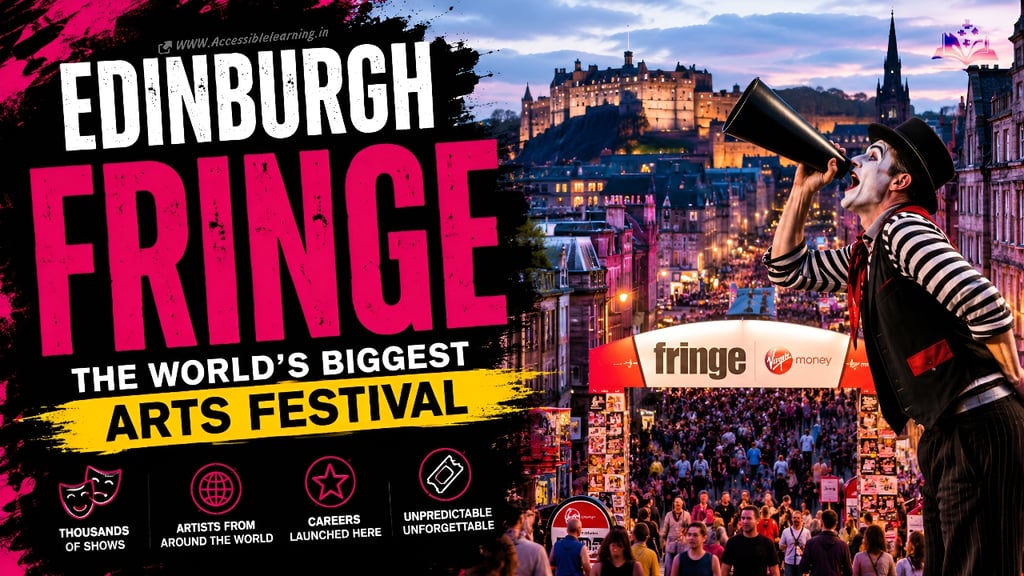
Every August, more than 3,000 shows compete across hundreds of venues in Edinburgh. No central curator decides who performs. Anyone willing to find a venue and pay the costs can join. That radical openness built the world's largest arts festival, but it also created one of the most brutally competitive creative markets on Earth.
Edinburgh Festival Fringe Was Born as an Act of Rebellion
The Fringe did not begin with official approval. In 1947, eight theatre groups arrived in Edinburgh without invitations to the newly established Edinburgh International Festival. They performed anyway.
That decision created a movement instead of another government-backed cultural event.
Today, the Edinburgh Festival Fringe stands as proof that artistic freedom often grows outside institutional control. The festival still accepts almost every legitimate performance, regardless of reputation, nationality, or commercial value.
That openness explains why Oscar winners, unknown comedians, experimental dancers, political activists, and street performers all share the same city.
There Is No Quality Filter, Only Survival
Many visitors expect every Fringe performance to deliver excellence. Reality works differently. The Fringe does not guarantee quality because it refuses to judge artistic merit before performances begin. The result creates an enormous cultural experiment.
Visitors encounter:
Award-winning theatre
Future comedy superstars
Experimental performance art
Amateur productions
Brilliant failures
Complete disasters
That unpredictability defines the Fringe more than celebrity appearances ever could. Some audiences discover unforgettable performances. Others spend an hour watching productions that probably should never have reached a stage. The festival accepts both outcomes.
Thousands of Artists Gamble Their Careers Every Summer
The biggest myth surrounding Edinburgh Festival Fringe involves money. Many people believe performers earn huge profits. Many leave with debt instead. Producing a Fringe show demands significant investment before selling a single ticket.
Artists typically pay for:
Venue hire
Accommodation
Marketing
Posters
Technical equipment
Staff
Travel
Insurance
Edinburgh accommodation prices often surge dramatically during August because demand overwhelms supply. Many performers squeeze into shared flats, sleep on sofas, or travel long distances every day simply to reduce expenses. One poor ticket-selling week can destroy months of financial planning.
Success Depends on Marketing as Much as Talent
Talent alone rarely fills theatres. Every street across central Edinburgh becomes a battlefield of flyers, posters, banners, costume parades, and promotional performances.
Artists hand thousands of flyers to strangers daily.
Some performers spend more time advertising than rehearsing.
Reviews published during the festival can transform ticket sales overnight.
A single strong recommendation from respected critics or influential audience members often creates sold-out performances. Silence usually kills a production faster than criticism.
Comedy Dominates Headlines, But the Fringe Offers Far More
Stand-up comedy receives the largest media attention because major comedians frequently launch new material in Edinburgh. That creates a misleading picture.
The festival also showcases the following:
Drama
Dance
Circus arts
Cabaret
Opera
Children's theatre
Spoken word
Magic
Musicals
Interactive experiences
Multimedia performances
Many groundbreaking productions later tour internationally after finding audiences at the Fringe. For producers and talent scouts, Edinburgh functions as one enormous live audition.
Edinburgh Itself Becomes Part of the Performance
The Fringe does not remain inside theatres. The city transforms completely. Historic churches become performance venues.
Basements become comedy clubs.
University classrooms become theatres.
Pubs become music stages.
Courtyards become circus arenas.
Even ordinary streets become performance spaces where artists compete for attention.
The city operates almost twenty-four hours a day during the festival.
Locals experience both excitement and exhaustion.
Businesses enjoy increased revenue, while residents often struggle with overcrowding, traffic restrictions, rising rents, and packed public transport.


The Economic Impact Reaches Far Beyond Ticket Sales
The Fringe drives one of Scotland's largest seasonal economic boosts. Hotels, restaurants, cafés, transport companies, retailers, publishers, technicians, venue operators, and freelance workers all benefit from the annual influx of visitors.
International tourists plan entire vacations around the festival.
Businesses depend heavily on August revenue.
Yet economic success comes with costs.
Temporary housing shortages intensify.
Accommodation prices climb.
Local infrastructure faces enormous pressure.
Many Edinburgh residents question whether the city should continue expanding the festival without stronger planning. The debate grows louder each year.
Awards Can Change Careers Overnight
Recognition at Edinburgh carries enormous influence. Comedy awards, theatre prizes, and critical acclaim regularly launch performers into television, streaming platforms, international tours, publishing deals, and major film opportunities.
Many globally recognized comedians first attracted industry attention in Edinburgh.
Talent agencies actively monitor performances throughout August.
The Fringe therefore functions as one of the world's largest scouting events for the entertainment industry.
Technology Is Quietly Reshaping the Festival
Digital marketing now matters almost as much as street promotion.
Audience members discover shows through:
Social media
Online reviews
Festival apps
Recommendation algorithms
Influencer coverage
Video clips
Podcast interviews
Independent creators increasingly build audiences before arriving in Scotland.
Artificial intelligence also assists with marketing, scheduling, translation, ticket analysis, and promotional content. Even so, no algorithm replaces genuine audience reactions. A packed room laughing together still delivers stronger publicity than thousands of online impressions.
The Fringe Reflects Society Better Than Most Cultural Events
Every major political, economic, and social issue eventually appears on Fringe stages.
Artists tackle:
Climate change
Immigration
Artificial intelligence
War
Identity
Mental health
Economic inequality
Gender debates
Censorship
Digital surveillance
Some productions provoke standing ovations.
Others trigger heated controversy.
That tension remains essential.
The Fringe has never promised comfort.
It promises expression.
Visitors Need a Strategy or They Will Waste Their Time
The sheer size of the festival overwhelms first-time visitors. Experienced attendees rarely plan every hour. Instead, they combine advance bookings with spontaneous discoveries.
Smart visitors usually:
Book popular headline shows early.
Leave empty time slots for unexpected recommendations.
Walk through major Fringe streets to spot live promotions.
Read fresh daily reviews instead of relying only on advance publicity.
Expect venue changes and schedule adjustments.
Wear comfortable shoes because most travel happens on foot.
Trying to see everything guarantees disappointment. Choosing carefully creates memorable experiences.


Why Edinburgh Festival Fringe Still Matters
Many festivals celebrate finished masterpieces.
Edinburgh celebrates possibility.
That difference explains its global influence.
The Fringe welcomes polished professionals, fearless beginners, experimental creators, and spectacular failures onto the same stage. Critics often complain about commercialization, rising costs, overcrowding, and financial inequality among performers.
Those criticisms hold weight.
Yet removing the festival's openness would destroy the very principle that made it revolutionary.
The Edinburgh Festival Fringe remains messy, expensive, unpredictable, exhausting, and frequently unfair.
It also remains one of the few places where an unknown artist can perform beside established stars, where audiences shape success in real time, and where cultural history still changes one performance at a time.
That combination keeps Edinburgh at the center of the global performing arts calendar, even when the chaos threatens to overwhelm the city that hosts it.
FAQ's
Q: What is the Edinburgh Festival Fringe?
The Edinburgh Festival Fringe is the world's largest open-access performing arts festival, held every August in Edinburgh, Scotland. It features thousands of performances across comedy, theatre, music, dance, circus, cabaret, spoken word, and more.
Q: When is the Edinburgh Festival Fringe held?
The festival takes place annually throughout most of August, running for approximately three weeks. Exact dates vary slightly each year.
Q: Why is the Edinburgh Festival Fringe famous?
The Fringe is famous for its open-access model, allowing almost anyone to stage a performance. It has launched the careers of many internationally recognized comedians, actors, playwrights, and theatre companies.
Q: How many shows are performed at the Edinburgh Festival Fringe?
Each year, the festival hosts thousands of shows across hundreds of venues, making it the largest arts festival in the world by the number of performances and participating artists.
Q: Is the Edinburgh Festival Fringe different from the Edinburgh International Festival?
Yes. The Edinburgh International Festival is a curated event featuring invited performers, while the Edinburgh Festival Fringe is open-access, allowing artists from around the world to participate without an invitation.
Q: How can visitors choose the best Fringe shows?
Visitors should book popular performances in advance, check daily reviews, use the official festival programme, and leave time for spontaneous discoveries. Word-of-mouth recommendations often lead to some of the festival's best experiences.
Subscribe To Our Newsletter
All © Copyright reserved by Accessible-Learning Hub
| Terms & Conditions
Knowledge is power. Learn with Us. 📚

