

Dree Festival: History, Significance, Rituals, and Celebrations of Arunachal Pradesh
Discover the Dree Festival of Arunachal Pradesh, the most important agricultural festival of the Apatani tribe. Learn about its history, rituals, cultural significance, celebrations, and traditions in this complete guide.
CULTURE/TRADITIONEVENT/SPECIALINDIA/BHARAT
Jagdish Nishad
6/26/20265 min read
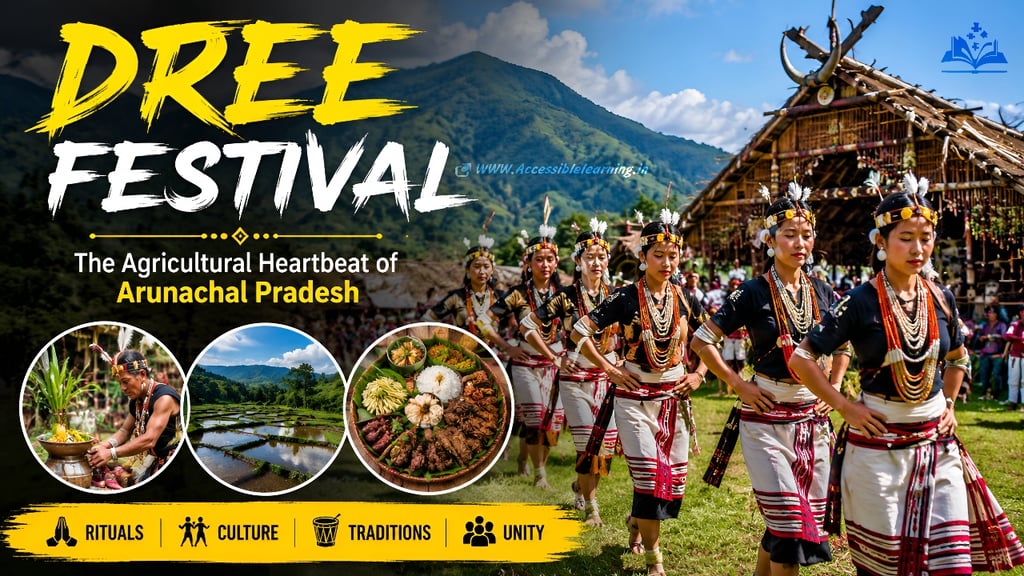
The Dree Festival is one of the most significant agricultural festivals celebrated in the northeastern Indian state of Arunachal Pradesh. Observed primarily by the Apatani community of the Ziro Valley, Dree is much more than a seasonal celebration. It is a sacred expression of gratitude, faith, agricultural wisdom, and community unity that has been preserved for generations.
Every year on July 5, thousands of people gather to celebrate the festival with prayers, rituals, traditional dances, cultural performances, and communal feasts. Rooted deeply in the agricultural cycle, Dree reflects the close relationship between humans, nature, and spirituality. The festival symbolizes hope for a prosperous harvest, protection from natural calamities, and the well-being of the entire community.
As Arunachal Pradesh continues to attract travelers, researchers, and cultural enthusiasts from across the world, Dree Festival stands as a powerful reminder of India's rich indigenous heritage and living traditions.
What is the Dree Festival?
Dree Festival is an agricultural festival celebrated by the Apatani tribe, one of the most culturally distinctive indigenous communities of Arunachal Pradesh. The festival is dedicated to seeking divine blessings for healthy crops, abundant harvests, favorable weather conditions, and protection against pests and diseases that may threaten agricultural productivity.
For the Apatani people, agriculture is not merely an occupation but a way of life. Their traditional farming practices, especially the famous wet rice cultivation system of the Ziro Valley, have sustained the community for centuries. Dree serves as an occasion to honor the spiritual forces believed to influence agricultural success and ecological balance.
Historical Background of Dree Festival
The origins of Dree Festival can be traced back to ancient Apatani traditions and oral histories. Long before modern agricultural techniques emerged, the Apatani people developed a sophisticated understanding of farming and environmental management.
Their ancestors believed that unseen spiritual entities governed natural events such as rainfall, crop growth, soil fertility, and seasonal changes. To maintain harmony between humans and nature, rituals and offerings were performed to appease these deities.
Over time, these practices evolved into the organized celebration now known as Dree Festival. While modernization has influenced many aspects of life in Arunachal Pradesh, the cultural and spiritual significance of Dree remains largely intact.
Today, the festival serves both as a traditional religious observance and a cultural showcase that strengthens community identity.
Why is the Dree Festival Celebrated?
The primary purpose of Dree Festival is to pray for agricultural prosperity and collective well-being. The festival focuses on:
Ensuring healthy crop growth
Protecting fields from pests and diseases
Seeking adequate rainfall
Preventing droughts and natural disasters
Promoting peace and harmony within the community
Expressing gratitude for nature's resources
For farming communities, a successful harvest determines food security and economic stability. Dree embodies the hope that nature will remain generous and balanced throughout the growing season.
The Deities Worshipped During Dree Festival
Several deities play an important role in the rituals associated with Dree Festival. Traditional priests conduct ceremonies to invoke their blessings. Among the most revered are the following:
Tamu
Tamu is believed to protect crops from harmful insects and pests that can damage agricultural fields.
Metii
Metii is associated with safeguarding crops from diseases and other agricultural threats.
Danyi
Danyi represents the Sun and symbolizes life, growth, energy, and prosperity.
Harniang
Harniang is worshipped for fertility, abundance, and agricultural success.
Through prayers and offerings, the community seeks the favor of these spiritual forces to ensure a productive farming season.
Rituals and Ceremonies of Dree Festival
The rituals of Dree Festival are conducted with great reverence and precision.
Sacred Offerings
Traditional priests perform ceremonial offerings that may include symbolic agricultural products and ritual items. These offerings represent gratitude and respect toward the deities.
Community Prayers
Large gatherings are organized where villagers collectively pray for a successful harvest and the well-being of all families.
Traditional Chants
Ancient chants passed down through generations are recited during ceremonies. These chants preserve historical knowledge, cultural values, and spiritual beliefs.
Blessing of Agricultural Fields
Many rituals focus specifically on the protection and prosperity of cultivated land, emphasizing the agricultural foundation of the festival.

Cultural Significance of Dree Festival
Dree Festival serves as a living expression of Apatani identity. The festival plays several important roles:
Preservation of Indigenous Heritage
Traditional songs, dances, attire, language, and rituals are actively practiced during Dree, helping preserve centuries-old cultural traditions.
Strengthening Community Bonds
Families, relatives, and neighbors gather to celebrate together, reinforcing social unity and collective responsibility.
Intergenerational Knowledge Transfer
Young members of the community learn about their history, customs, and agricultural traditions through participation in festival activities.
Cultural Representation
Dree has become an important platform for showcasing the rich cultural heritage of Arunachal Pradesh to visitors and researchers.
Traditional Dances and Performances
One of the most vibrant aspects of Dree Festival is its cultural performances.
Men and women dressed in traditional Apatani attire perform folk dances accompanied by indigenous music and songs. These performances often depict themes related to agriculture, nature, ancestral stories, and community life.
The rhythmic movements, colorful costumes, and traditional instruments create a captivating atmosphere that reflects the spirit of the festival.
Cultural competitions, music events, and youth performances are also commonly organized, blending tradition with contemporary celebration.
Traditional Food and Festive Delicacies
Food plays a central role in Dree celebrations. Families prepare traditional Apatani dishes and share meals with guests and community members. The festival provides an opportunity to celebrate local culinary traditions that have been passed down through generations.
Popular festival foods often include:
Rice-based dishes
Bamboo shoot preparations
Smoked meat specialties
Traditional vegetable recipes
Locally prepared beverages
The communal sharing of food symbolizes unity, hospitality, and gratitude.
Dree Festival in Modern Times
While Dree remains rooted in ancient traditions, the festival has adapted to contemporary society. Today, the celebration often includes the following:
Cultural exhibitions
Educational programs
Traditional sports events
Community awareness campaigns
Art and craft displays
Tourism-related activities
Government agencies, cultural organizations, and local communities work together to promote and preserve the festival. The growing popularity of Dree has also contributed to cultural tourism in Arunachal Pradesh, allowing visitors to experience authentic indigenous traditions while supporting local communities.
Dree Festival and Sustainable Agriculture
The values embedded in Dree Festival resonate strongly with modern sustainability principles. The Apatani community is internationally recognized for its environmentally responsible farming methods. Their traditional agricultural practices emphasize the following:
Efficient water management
Ecological balance
Sustainable land use
Biodiversity conservation
Resource preservation
Dree reflects these principles by promoting respect for nature and acknowledging humanity's dependence on healthy ecosystems.
In an era of environmental challenges, the festival offers valuable lessons about sustainable living and responsible stewardship of natural resources.
Tourism and Visitor Experience
Visitors attending Dree Festival gain an immersive cultural experience unlike any other. Highlights include:
Witnessing traditional rituals
Exploring Apatani culture
Enjoying folk music and dances
Tasting local cuisine
Learning about indigenous farming practices
Interacting with local communities
The scenic beauty of the Ziro Valley further enhances the experience, making Dree one of the most fascinating cultural festivals in Northeast India. Travelers interested in heritage tourism, anthropology, photography, and cultural exploration often consider Dree Festival a must-visit event.
Interesting Facts About Dree Festival
Dree is the most important agricultural festival of the Apatani tribe.
The festival is celebrated annually on July 5.
It takes place primarily in the picturesque Ziro Valley of Arunachal Pradesh.
Dree combines spirituality, agriculture, culture, and community celebration.
Traditional rituals are conducted by indigenous priests.
The festival promotes environmental awareness and sustainable farming values.
Dree attracts visitors from across India and abroad.
It plays a vital role in preserving Apatani cultural identity.
Dree Festival stands as a remarkable celebration of agriculture, faith, culture, and environmental harmony. For the Apatani people, it represents gratitude toward nature, respect for ancestral traditions, and hope for a prosperous future.
Beyond its agricultural significance, Dree serves as a living bridge between the past and the present. It preserves indigenous knowledge, strengthens community bonds, and showcases the cultural richness of Arunachal Pradesh to the world.
In a rapidly changing world, festivals like Dree remind us that sustainable living, cultural heritage, and respect for nature remain essential foundations of human civilization. Through its rituals, celebrations, and timeless values, Dree Festival continues to inspire generations and uphold the enduring spirit of the Apatani community.
Subscribe to Frontier Intelligence
All © Copyright reserved by Accessible-Learning Hub
| Terms & Conditions
Accessible Learning Hub — Actionable clarity for high-agency minds.
Weekly breakdowns on AI breakthroughs, capital flow, and human performance systems. Zero fluff.