

Double Third Festival (Shangsi Festival): History, Traditions, and Living Cultural Heritage
Discover the rich history and traditions of the Double Third Festival (Shangsi Festival), an ancient Chinese spring celebration of purification, love, poetry, and cultural heritage. Explore its origins, customs, and modern-day significance.
CULTURE/TRADITIONCHINACELEBRATION/FESTIVALS
Kim Shin
4/9/20265 min read
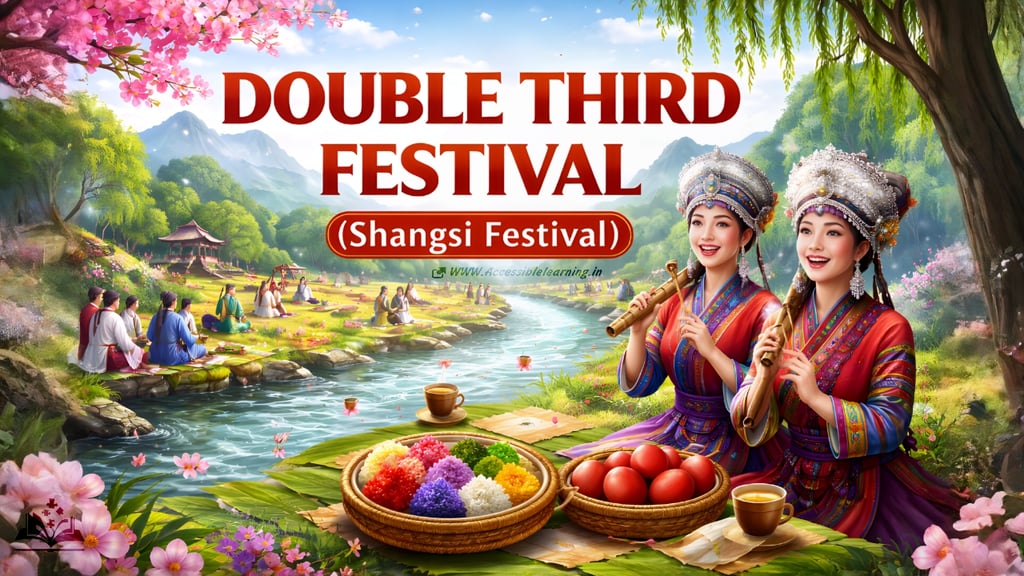
The Double Third Festival, also called the Shangsi Festival, is one of the most ancient and culturally rich celebrations in China. Observed on the third day of the third lunar month, it blends purification rituals, seasonal renewal, artistic expression, and even romance.
While its popularity has shifted over time, the festival remains deeply meaningful, especially among ethnic communities like the Zhuang people. Today, it stands as a powerful symbol of nature, culture, and human connection.
What Makes the Double Third Festival Unique?
Unlike many festivals tied strictly to religion or mythology, Shangsi is unique because it combines:
Spiritual cleansing rituals
Seasonal celebration of spring
Romantic and social interaction
Artistic and literary traditions
It is one of the few festivals where nature, love, and intellectual culture come together in a single celebration.
Deeper Historical Roots
Origins Before Imperial China
The Shangsi Festival predates many structured dynasties and is believed to have originated in primitive river worship rituals. Early communities saw rivers as sacred, life-giving forces.
These early practices included:
Offering sacrifices near water
Washing away misfortune
Praying for fertility and good harvests
Peak Popularity in the Han and Jin Dynasties
During the Han Dynasty, the festival became officially recognized and widely celebrated. By the Jin Dynasty, it had evolved into an elite cultural event. A defining moment came with the famous gathering hosted by Wang Xizhi.
This Orchid Pavilion Gathering (353 AD) transformed Shangsi into a symbol of:
Intellectual elegance
Calligraphy mastery
Poetic creativity
The resulting work, Lanting Xu, is still studied today as a pinnacle of Chinese art.

Expanded Traditions and Ritual Practices
Ritual Offerings and Ancestral Respect
Beyond cleansing, ancient families also:
Made offerings to ancestors
Prayed for protection and prosperity
Honored local deities associated with water and land
This shows how Shangsi connects nature worship with family heritage.
Floating Wine Ritual (Qu Shui Liu Shang)
A refined custom from ancient times involved:
Sitting beside a winding stream
Letting cups of wine float downstream
Composing poetry before drinking
This ritual symbolized:
Flow of life
Spontaneity and creativity
Harmony with nature
Herbal Protection and Healing
In some regions, people collected medicinal herbs during the festival. These herbs were believed to be especially potent on this day.
Common practices included:
Hanging herbs at home entrances
Brewing herbal teas for health
Using plants for spiritual protection
Fertility and Youth Rituals
Historically, Shangsi was also linked to:
Fertility blessings
Youth gatherings
Matchmaking opportunities
Young people dressed in their finest clothes, signaling readiness for adulthood and relationships.
Ethnic Variations and Regional Celebrations
Zhuang Community Celebrations
The most vibrant modern celebrations happen in Guangxi, where the Zhuang ethnic group keeps the tradition alive.
Key features include:
Massive singing competitions
Traditional dance performances
Colorful embroidered costumes
Community feasts
This version of the festival is officially recognized as a regional public holiday.
Other Ethnic Groups
Other communities also celebrate in unique ways:
Yao people: Ritual dances and ancestor worship
Miao people: Music, courtship, and traditional dress
Han Chinese (historically): Poetry, river rituals, and spring outings
Symbolism in Nature and Philosophy
Shangsi reflects deep philosophical ideas rooted in Chinese thought:
Yin-Yang Balance
The festival represents harmony between:
Water (yin)
Spring growth (yang)
Five Elements (Wu Xing)
The use of five-colored rice symbolizes:
Wood, Fire, Earth, Metal, Water
Balance and cosmic order
Renewal Cycle
It aligns with the natural cycle of:
Cleansing → Growth → Prosperity
Food Culture: More Than Just Celebration
Food during Shangsi carries symbolic meaning:
Five-colored sticky rice: Unity and blessings
Eggs: Fertility and new beginnings
Rice wine: Joy and social bonding
Seasonal greens: Health and vitality
In Guangxi, families often prepare meals together, reinforcing community ties.

Role in Literature and Art
The Shangsi Festival has inspired centuries of Chinese art:
Classical poetry describing spring landscapes
Paintings of scholars by rivers
Calligraphy masterpieces
Even today, it influences:
Cultural performances
Film and television depictions
Educational storytelling
Shangsi Festival in Modern China
While not widely celebrated nationwide anymore, the festival has seen a cultural revival:
Government and Cultural Promotion
Organized festivals in Guangxi
Tourism campaigns
Heritage preservation programs
Digital and Youth Engagement
Social media storytelling
Online cultural events
Revival of traditional clothing (Hanfu movement)
Lesser-Known Facts
Shangsi was once considered as important as Qingming Festival in ancient China
It is sometimes called the “Chinese Valentine’s Day of Spring” (distinct from Qixi Festival)
The number “3” symbolizes growth and vitality in Chinese culture
The festival influenced East Asian traditions in nearby regions
Why the Festival Still Matters Today
The Double Third Festival continues to hold relevance because it:
Encourages reconnection with nature
Preserves ancient cultural identity
Promotes community bonding
Celebrates youth, love, and creativity
In a modern, digital world, its message feels surprisingly timeless.
The Double Third Festival (Shangsi Festival) is not just a historical tradition. It is a living expression of how people once understood the world around them through water, seasons, poetry, and relationships.
From ancient river rituals to vibrant ethnic celebrations in Guangxi, Shangsi continues to evolve while staying rooted in its original spirit: renewal, harmony, and human connection.
FAQ's
Q: What is the Double Third Festival (Shangsi Festival)?
The Double Third Festival, also known as the Shangsi Festival, is an ancient Chinese celebration held on the third day of the third lunar month. It traditionally focuses on purification rituals, spring renewal, cultural gatherings, and social interaction.
Q: When is the Shangsi Festival celebrated?
The festival is observed on the third day of the third lunar month, which usually falls between late March and early April in the Gregorian calendar, depending on the lunar cycle.
Q: What is the historical origin of the Double Third Festival?
The festival dates back over 2,000 years to early Chinese river purification rituals. It became more structured during the Zhou and Han Dynasties, later evolving into a cultural and literary event.
Q: Why is the Shangsi Festival important?
It represents renewal, cleansing, and harmony with nature. It also reflects ancient Chinese values related to health, relationships, artistic expression, and seasonal change.
Q: How is the Double Third Festival celebrated today?
Modern celebrations include:
Cultural performances and festivals
Singing competitions (especially in Guangxi)
Family outings and picnics
Traditional food preparation
Heritage and tourism events
Q: Which regions in China celebrate the Shangsi Festival the most?
The festival is most actively celebrated in the Guangxi Zhuang Autonomous Region, along with some southern provinces and ethnic minority communities such as the Zhuang, Miao, and Yao.
Q: What are the main traditions of the Shangsi Festival?
Key traditions include:
River bathing for purification (historically)
Spring outings and nature walks
Singing and courtship rituals
Poetry and calligraphy gatherings
Preparing symbolic foods
Q: What foods are eaten during the Double Third Festival?
Popular foods include five-colored sticky rice, dyed eggs, rice wine, and fresh seasonal vegetables. These foods symbolize health, harmony, and prosperity.
Q: Is the Shangsi Festival related to love or romance?
Yes, especially among the Zhuang people, where it is known for singing festivals and courtship traditions. Young men and women express feelings through folk songs, making it similar to a traditional romantic festival.
Q: What is the significance of water in the Shangsi Festival?
Water symbolizes purification and renewal. Ancient rituals involved bathing in rivers to wash away bad luck and protect against illness and negative energy.
Q: How is the Shangsi Festival different from other Chinese festivals?
Unlike major festivals like Chinese New Year or Mid-Autumn Festival, Shangsi focuses more on nature, purification, and social interaction rather than family reunions or religious worship.
Q: Is the Double Third Festival a public holiday in China?
It is not a nationwide public holiday, but it is officially recognized in Guangxi, where people may get time off to celebrate.
Q: What is the Orchid Pavilion Gathering, and why is it important?
The Orchid Pavilion Gathering was a famous literary event in 353 AD where scholars composed poetry beside a flowing stream. It is closely associated with the festival and is considered a milestone in Chinese cultural history.
Q: Why is it called the “Double Third” Festival?
The name comes from the date itself: the third day of the third lunar month. In Chinese culture, the number three symbolizes growth, vitality, and life energy.
Q: Is the Shangsi Festival still relevant today?
Yes, the festival is experiencing a cultural revival through tourism, ethnic celebrations, and digital media. It continues to promote cultural identity, tradition, and connection with nature.
Q: How can tourists experience the Double Third Festival?
Visitors can experience the festival by traveling to Guangxi during the celebration, attending cultural performances, enjoying traditional foods, and participating in local festivities.
Subscribe to Frontier Intelligence
All © Copyright reserved by Accessible-Learning Hub
| Terms & Conditions
Accessible Learning Hub — Actionable clarity for high-agency minds.
Weekly breakdowns on AI breakthroughs, capital flow, and human performance systems. Zero fluff.