

Digital Wellbeing: Balancing Screen Time and Study
Digital well-being is essential for students navigating a screen-focused learning world. This article explores how screen time affects focus, health, and academic performance, and shares practical strategies to balance digital use with effective study habits for long-term success.
A LEARNINGNEW YOUTH ISSUESEDUCATION/KNOWLEDGE
Shiv Singh Rajput
12/30/20254 min read
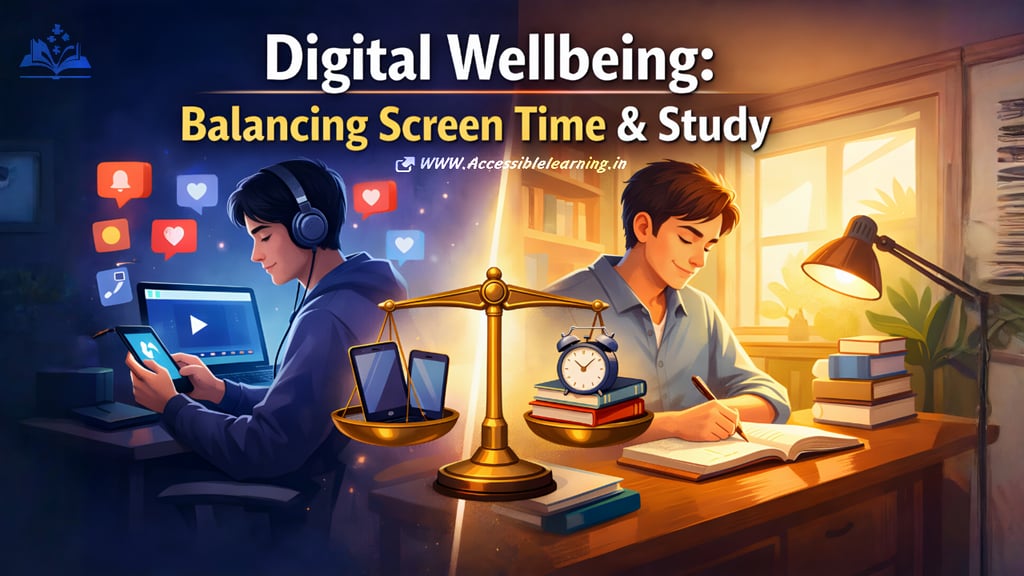
Digital technology has become inseparable from modern education. Students rely on screens for classes, assignments, research, communication, and even revision. While this digital access has made learning faster and more flexible, it has also introduced new challenges that directly affect focus, health, and academic performance. Digital well-being is about creating a balanced relationship with technology so it supports learning instead of disrupting it.
This extended guide takes a deeper look at digital well-being, covering its academic, physical, mental, and social dimensions, and offers practical, realistic strategies students can apply in daily life.
What Digital Well-Being Really Means for Students
Digital well-being is not about reducing screen time to zero. It is about using digital tools in a way that aligns with your goals, values, and health.
For students, digital well-being includes:
Using screens purposefully for learning
Avoiding unnecessary digital distractions
Maintaining physical comfort and eye health
Protecting mental focus and emotional stability
Creating balance between online and offline life
A healthy digital routine helps students stay engaged with studies while still enjoying technology responsibly.
Types of Screen Time and Why They Matter
Understanding different types of screen time helps students make better choices.
Active screen time: This includes attending online classes, researching, coding, designing, writing, or practicing skills. This type usually supports learning and creativity.
Passive screen time: This includes endless scrolling, binge-watching, or consuming content without interaction. Excessive passive use often leads to fatigue and reduced motivation.
Social screen time: Messaging, video calls, and social media interaction can support relationships but may also increase comparison, anxiety, or distraction if not controlled.
Balancing these types is more important than simply counting hours.
Cognitive Impact of Excessive Screen Use
Heavy screen exposure can quietly affect how the brain processes information.
Frequent task switching reduces deep focus and memory retention
Short-form content can weaken attention span over time
Overdependence on digital search reduces critical thinking
Constant stimulation increases mental fatigue
Students who struggle to concentrate often benefit more from better screen management than from studying longer hours.
Physical Health Effects Students Often Ignore
Digital well-being is closely linked to physical health.
Eye health: Long screen sessions can cause dry eyes, blurred vision, and headaches. Following the 20-20-20 rule helps reduce strain.
Posture and body pain: Poor sitting posture during long study sessions leads to neck, shoulder, and back pain. Ergonomic seating and regular movement are essential.
Sedentary lifestyle: Excessive screen time reduces physical activity, which affects energy levels, mood, and overall health.
Healthy bodies support better learning outcomes.
Mental and Emotional Effects of Screen Overuse
Digital overload does not just affect focus. It also affects emotional well-being.
Increased stress from constant notifications
Anxiety triggered by social media comparison
Difficulty relaxing due to always being connected
Reduced self-esteem linked to online validation
Managing digital exposure helps students feel calmer, more confident, and emotionally stable.
Why Multitasking Hurts Study Quality
Many students believe they can study while checking messages or watching videos. In reality:
The brain switches tasks instead of multitasking
Learning becomes shallow and slower
Mistakes increase and understanding decreases
Single-task study sessions produce better results in less time.
Creating a Digital-Friendly Study Environment
A well-designed study environment improves focus.
Keep phones out of reach during study
Use a clean, minimal digital workspace
Close unnecessary browser tabs
Study in a quiet space with good lighting
Small environmental changes make a big difference.
Smart Use of Technology for Academic Success
Technology can improve learning when used intentionally.
Use educational apps instead of general browsing
Record and review lectures selectively
Use AI tools for clarification, not shortcuts
Organize notes with digital folders and tags
The goal is control, not dependence.
Managing Social Media as a Student
Social media is one of the biggest challenges to digital well-being.
Set specific time limits for daily use
Avoid checking social media during study hours
Unfollow accounts that cause stress or distraction
Replace late-night scrolling with rest or reading
Healthy boundaries reduce mental noise.
The Importance of Digital Breaks
Breaks are not wasted time. They help the brain reset.
Effective break ideas include:
Walking or stretching
Breathing exercises
Short offline conversations
Listening to music without screens
Breaks without screens are more refreshing than digital ones.

Digital Wellbeing and Time Management
Poor screen habits often lead to poor time management.
Plan daily study blocks
Assign specific time slots for online activities
Review screen usage weekly
Adjust routines based on academic workload
Time awareness leads to better balance.
Developing Self-Discipline in a Digital World
Digital well-being starts with self-awareness.
Ask yourself:
Is this screen time helping my goal
Am I using this intentionally or out of habit
Can I delay this activity until later
Discipline grows through small, consistent choices.
Role of Parents, Teachers, and Institutions
Digital well-being is not only an individual responsibility.
Teachers can design focused digital learning experiences
Institutions can promote balanced screen policies
Parents can encourage healthy routines at home
Support systems make healthy habits easier to maintain.
Preparing Students for a Digital Future
Learning to manage screen time is a life skill. Future careers will demand long hours with technology, remote collaboration, and digital problem-solving. Students who develop digital well-being early are better prepared for:
Professional productivity
Mental resilience
Long-term health
Ethical and mindful technology use
Digital well-being is about balance, not restriction. Screens are powerful tools for learning, but without boundaries, they can quietly reduce focus, health, and happiness. By understanding how screen time affects study and by building intentional habits, students can use technology to support both academic success and personal well-being.
FAQ's
Q: What is digital well-being for students?
Digital well-being for students means using digital devices in a healthy, balanced way that supports learning, mental health, physical comfort, and overall life balance without causing stress or distraction.
Q: How much screen time is healthy for studying?
There is no fixed number of hours. Healthy screen time depends on purpose and balance. Focused study sessions with regular breaks and limited distractions are more important than total hours spent on screens.
Q: Does reducing screen time improve academic performance?
Yes, managing screen time often improves focus, memory retention, and productivity. Fewer distractions lead to deeper learning and better understanding of study material.
Q: How can students avoid distractions while studying online?
Students can avoid distractions by turning off notifications, using focus modes, keeping only study-related tabs open, and placing phones away from the study area.
Q: Is all screen time bad for mental health?
No, not all screen time is harmful. Purposeful screen use such as learning, creating, or communicating meaningfully can support mental well-being. Problems arise from excessive or passive use without limits.
Q: How does screen time affect sleep in students?
Late-night screen use can disturb sleep by overstimulating the brain and reducing melatonin levels. Avoiding screens before bedtime helps improve sleep quality and concentration the next day.
Q: What is the best way to take breaks during digital study sessions?
The best breaks involve stepping away from screens. Light movement, stretching, short walks, or quiet rest help refresh the mind more effectively than scrolling on a phone.
Q: Can digital well-being help reduce stress and anxiety?
Yes, balanced screen habits reduce mental overload, improve focus, and limit social comparison, which can lower stress and anxiety levels over time.
Subscribe to Frontier Intelligence
All © Copyright reserved by Accessible-Learning Hub
| Terms & Conditions
Accessible Learning Hub — Actionable clarity for high-agency minds.
Weekly breakdowns on AI breakthroughs, capital flow, and human performance systems. Zero fluff.