

Digital Well-Being in a Tech-Heavy World: How to Stay Balanced
Learn what digital well-being really means in today’s tech-heavy world and how to build healthier digital habits without quitting technology. Practical strategies for balance, focus, mental health, and mindful screen use.
A LEARNINGNEW YOUTH ISSUESAI/FUTURE
Shiv Singh Rajput | Sachin K Chaurasiya
2/10/20267 min read
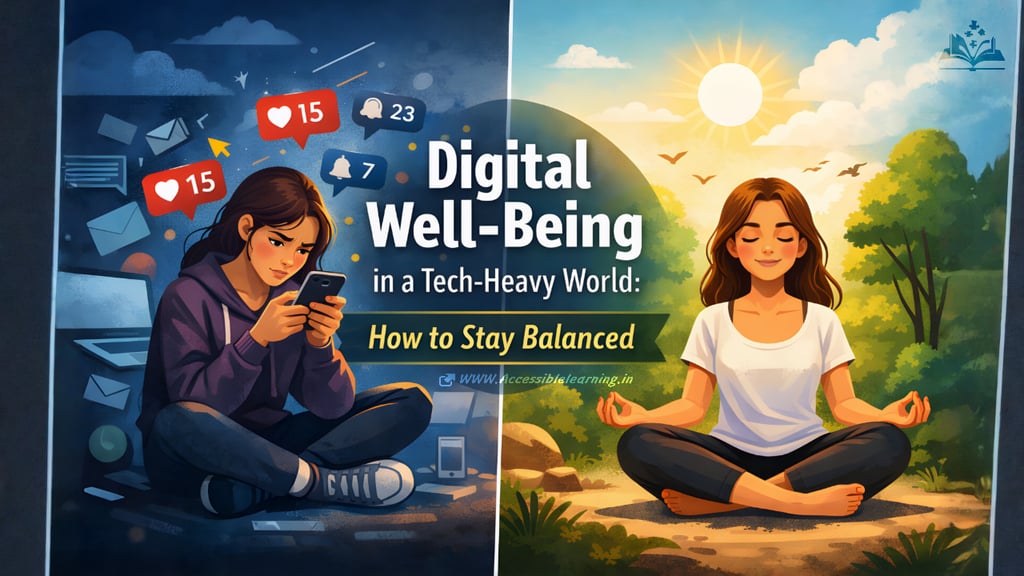
Technology has become inseparable from modern life. From the moment we wake up to the moment we fall asleep, screens guide how we work, learn, communicate, and relax. While digital tools have improved productivity and access to information, they have also introduced new challenges for mental health, focus, and overall well-being.
Digital well-being is not about rejecting technology. It is about using it consciously, in ways that support a healthy mind, body, and lifestyle. In a tech-heavy world, staying balanced requires awareness, boundaries, and intentional habits.
This article explores what digital well-being truly means, why it matters today, and how you can build a healthier relationship with technology without sacrificing progress or convenience.
What Is Digital Well-Being?
Digital well-being refers to the state of maintaining a healthy, mindful, and balanced relationship with digital technology. It focuses on how technology affects:
Mental health and emotional stability
Attention span and cognitive performance
Physical health, including sleep and posture
Social relationships and real-world engagement
True digital well-being is not measured by screen time alone. It is defined by how technology makes you feel, think, and behave over time.
Why Digital Well-Being Matters More Than Ever
Constant Connectivity and Mental Overload
Smartphones, social media, and instant messaging keep the brain in a near-constant state of alertness. This continuous stimulation can lead to mental fatigue, anxiety, and reduced ability to concentrate.
Shrinking Attention Spans
Frequent notifications, short-form content, and multitasking train the brain to seek quick rewards. Over time, this makes deep thinking, reading, and sustained focus more difficult.
Sleep Disruption
Late-night screen use interferes with natural sleep cycles. Blue light exposure and mental stimulation delay melatonin release, leading to poor sleep quality.
Emotional Comparison and Stress
Social platforms often present idealized versions of life. Constant exposure can trigger comparison, self-doubt, and unrealistic expectations, especially among students and young adults.
Digital well-being is no longer optional. It is essential for long-term mental clarity, productivity, and emotional health.
Signs of Poor Digital Well-Being
You may need to reassess your digital habits if you notice:
Checking your phone reflexively without purpose
Feeling anxious or restless when disconnected
Difficulty focusing on a single task
Reduced enjoyment of offline activities
Sleep problems linked to screen use
Mental exhaustion despite low physical effort
Recognizing these signs is the first step toward balance.
Core Principles of Digital Well-Being
1. Intentional Technology Use
Every digital action should have a reason. Scrolling without intention often leads to wasted time and mental drain.
Ask yourself:
Why am I using this app right now?
Is this helping or distracting me?
2. Quality Over Quantity
Not all screen time is equal. Learning, creating, or meaningful communication has a very different impact than endless passive consumption.
Focus on:
Educational content
Skill development
Creative expression
Purpose-driven work
3. Boundaries, Not Bans
Extreme digital detoxes often fail because they are unrealistic. Sustainable well-being comes from clear boundaries, not total restriction.
Examples:
No phone during meals
Fixed social media time windows
Screen-free hour before sleep
Practical Strategies to Stay Digitally Balanced
Design a Healthy Digital Routine
Structure reduces mindless usage. Set clear time blocks for work, learning, communication, and rest.
Use technology to support balance, not disrupt it. Calendar reminders, focus timers, and task managers can help.
Manage Notifications Ruthlessly
Most notifications are not urgent. Disable non-essential alerts and keep only what truly matters.
This simple step can dramatically reduce mental noise and stress.
Practice Single-Tasking
Multitasking reduces efficiency and increases cognitive fatigue. Focus on one task at a time, especially during deep work or study sessions.
Create Tech-Free Zones
Designate specific places where devices are not allowed, such as:
Bedroom
Dining area
Study breaks
These zones help the brain associate certain spaces with rest and presence.
Use Digital Well-Being Tools
Many devices now offer built-in features such as:
Screen time tracking
App usage limits
Focus and do-not-disturb modes
These tools provide awareness and accountability, not control.

The Psychological Impact of Long-Term Screen Exposure
Extended digital exposure reshapes how the brain processes information. Studies in cognitive psychology show that constant digital stimulation can reduce tolerance for silence and slow activities. Over time, the brain becomes conditioned to expect rapid feedback, making everyday tasks feel boring or mentally exhausting.
This does not mean technology damages the brain permanently, but it does change mental habits. Digital well-being requires retraining the brain to feel comfortable with slower, deeper forms of engagement such as reading, reflection, or long conversations.
Digital Dopamine Loops and Habit Formation
Many digital platforms are designed around variable reward systems. Likes, notifications, and infinite scrolling trigger dopamine responses similar to gambling mechanics.
This leads to:
Compulsive checking behaviors
Fear of missing out
Reduced impulse control
Understanding this design reality is crucial. Digital well-being is not only about self-control but also about recognizing when technology is intentionally trying to hold attention longer than necessary.
The Link Between Digital Overuse and Emotional Regulation
Heavy technology use can weaken emotional self-regulation. Constant distraction prevents the brain from fully processing emotions, leading to emotional buildup rather than resolution.
Balanced digital habits allow:
Emotional reflection
Stress processing
Better decision-making
Moments of boredom and stillness are not wasted time. They are necessary for emotional stability.
Physical Health and Digital Well-Being
Digital well-being is also physical well-being.
Common Physical Effects of Tech Overuse
Eye strain and blurred vision
Neck, shoulder, and lower back pain
Reduced physical activity
Shallow breathing patterns
Simple Corrective Habits
Follow the 20-20-20 rule for eyes
Adjust screen height to eye level
Stand or stretch every 45–60 minutes
Take short walks without your phone
Small physical changes significantly improve long-term comfort and energy.
Digital Well-Being in Social Relationships
Technology shapes how relationships form and function. While it increases connectivity, it can reduce emotional presence.
Warning signs include:
Phubbing (ignoring people to check phones)
Superficial conversations
Reduced empathy in online communication
Healthy digital well-being supports:
Undistracted conversations
Intentional online interactions
Clear separation between online identity and real self
Strong relationships require attention, not constant availability.
Digital Well-Being and Children or Teenagers
Young minds are especially sensitive to digital patterns.
Key concerns include:
Developing attention issues
Reduced patience
Sleep disturbances
Social comparison pressure
Healthy guidance focuses on:
Teaching intentional use, not strict bans
Encouraging creative and educational screen time
Modeling healthy digital habits as adults
Children learn balance by observing it.
Reframing Productivity in a Digital World
More tools do not equal more productivity. In many cases, digital overload reduces output while increasing stress.
True digital productivity includes:
Fewer tools, used consistently
Clear priorities over constant responsiveness
Protecting deep work time
Digital well-being improves productivity by reducing cognitive clutter.
Mindful Consumption vs Passive Consumption
Not all digital content serves the same purpose.
Passive consumption includes:
Endless scrolling
Autoplay content
Reaction-based browsing
Mindful consumption includes:
Reading with intention
Learning-focused videos
Creating instead of consuming
Shifting even 20 percent of digital time toward mindful use creates noticeable mental clarity.


Digital Well-Being for Students and Professionals
For Students
Excessive digital use can impact memory, learning depth, and academic performance.
Healthy habits include:
Studying without phone interruptions
Using AI tools as learning aids, not shortcuts
Balancing online learning with offline revision
For Working Professionals
Remote work and digital communication blur work-life boundaries.
Key practices:
Set clear work hours
Avoid checking emails late at night
Take screen breaks to prevent burnout
Productivity improves when the mind is not constantly overstimulated.
The Role of AI and Automation in Digital Well-Being
AI tools can either enhance or harm digital balance, depending on how they are used.
Healthy use includes:
Automating repetitive tasks
Using AI for research support, not thinking replacement
Saving mental energy for creativity and decision-making
Unhealthy use happens when AI replaces reflection, judgment, or learning entirely. Digital well-being requires keeping humans in control of thinking.
Building a Long-Term Healthy Relationship With Technology
Digital well-being is not a one-time fix. It is an ongoing practice that evolves with your lifestyle, career, and goals.
To sustain balance:
Review your digital habits regularly
Adjust boundaries as responsibilities change
Stay curious about how technology affects your mood and focus
The goal is not to use less technology but to use it better.
A tech-heavy world is not the enemy. Unconscious usage is.
Digital well-being is about awareness, intention, and control. When technology serves human values rather than dominating attention, it becomes a powerful ally instead of a silent stressor.
By setting boundaries, choosing meaningful digital activities, and respecting mental limits, anyone can stay balanced in a connected world.
The future will only become more digital. Learning how to stay well within it is one of the most important life skills of our time.

FAQ's
Q: What does "digital well-being" actually mean?
Digital well-being means having a healthy and intentional relationship with technology where digital tools support your mental health, focus, and daily life instead of controlling your attention or emotions.
Q: Is digital well-being the same as reducing screen time?
No. Digital well-being is not only about using screens less. It focuses on how and why you use technology. Purposeful, meaningful screen use matters more than total hours.
Q: How does excessive technology use affect mental health?
Unbalanced technology use can increase stress, anxiety, poor focus, emotional fatigue, and sleep problems, especially when usage is passive, constant, or driven by notifications.
Q: Can digital well-being improve productivity?
Yes. When distractions are reduced and digital tools are used intentionally, mental clarity improves. This leads to better focus, deeper work, and less burnout.
Q: How can students practice digital well-being while studying online?
Students can improve digital well-being by limiting distractions during study time, avoiding multitasking, using AI tools responsibly, and balancing online learning with offline revision and rest.
Q: What are simple daily habits to improve digital well-being?
Small habits like turning off unnecessary notifications, avoiding screens before sleep, taking regular breaks, and creating phone-free moments during the day make a big difference over time.
Q: How does social media impact digital well-being?
Social media can affect self-esteem, attention span, and emotional health when used excessively. Intentional use, time limits, and mindful content choices help reduce negative effects.
Q: Are digital well-being tools actually effective?
They are effective when used for awareness and self-control. Screen time reports, focus modes, and app limits help users understand and adjust their digital behavior.
Q: How does digital well-being relate to sleep quality?
Late-night screen use disrupts natural sleep cycles by stimulating the brain and suppressing melatonin. Reducing screen exposure before bed improves sleep quality and energy levels.
Q: Is digital well-being important for children and teenagers?
Yes. Healthy digital habits during early years support attention development, emotional regulation, and social skills. Guidance and role modeling matter more than strict restrictions.
Q: Can AI tools support digital well-being instead of harming it?
Yes. When used to reduce repetitive work, support learning, and save mental energy, AI tools can enhance digital well-being. Problems arise when they replace thinking or reflection.
Q: How do I know if my digital habits are unhealthy?
If technology use leaves you mentally drained, disrupts sleep, reduces focus, or interferes with real-life relationships, it may be time to reset your digital habits.
Subscribe to Frontier Intelligence
All © Copyright reserved by Accessible-Learning Hub
| Terms & Conditions
Accessible Learning Hub — Actionable clarity for high-agency minds.
Weekly breakdowns on AI breakthroughs, capital flow, and human performance systems. Zero fluff.