

Digital Minimalism: Why It Matters Today
Digital minimalism is a mindful approach to using technology with intention. This article explores why digital minimalism matters today, how excessive screen use affects focus and mental well-being, and practical ways to build a healthier, more balanced digital life.
MODERN DISEASESHEALTH/DISEASENEW YOUTH ISSUES
Shiv Singh Rajput
12/25/20254 min read
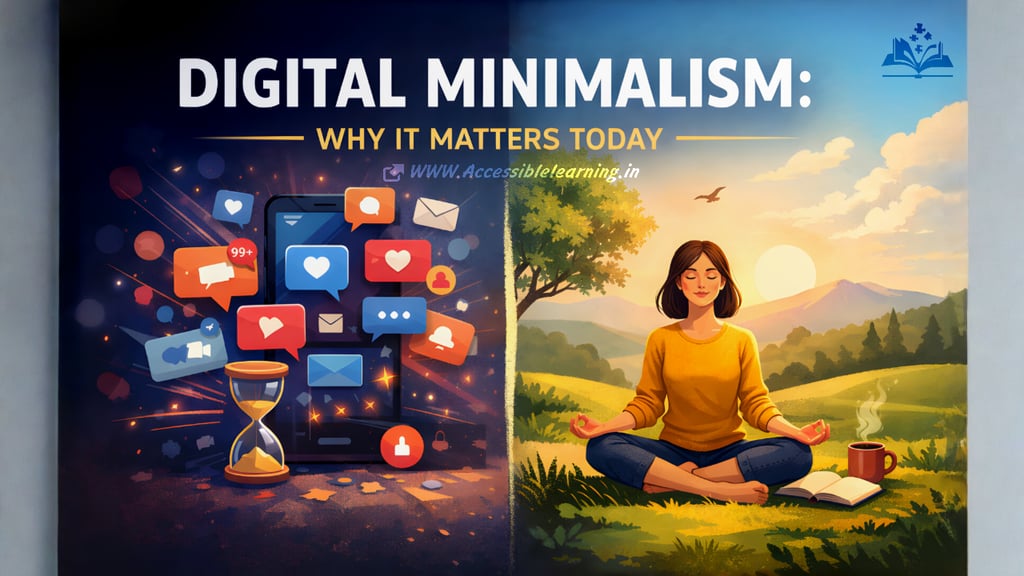
Digital technology is deeply woven into modern life. From work and education to entertainment and relationships, screens shape how we think, communicate, and spend time. While technology has improved efficiency and access to information, it has also introduced constant distraction, mental overload, and reduced attention spans. Digital minimalism addresses this imbalance by promoting intentional and meaningful use of technology.
This approach is not about rejecting digital tools but about using them in ways that support well-being, focus, and long-term fulfillment.
Understanding Digital Minimalism in a Modern Context
Digital minimalism is a lifestyle philosophy centered on clarity and intention. It encourages people to carefully choose digital tools that align with their values and remove those that create unnecessary noise.
In today’s environment, most digital platforms are designed to maximize engagement rather than user well-being. This makes passive consumption the default behavior. Digital minimalism challenges this pattern by shifting control back to the individual.
Instead of asking, “What’s trending?” a digital minimalist asks, “What actually helps me live better?”
The Hidden Cost of Constant Connectivity
Cognitive Overload and Mental Fatigue
The human brain is not designed to process endless streams of information. Continuous exposure to emails, messages, videos, and updates creates cognitive overload. This leads to decision fatigue, reduced creativity, and slower problem-solving.
Digital minimalism helps reduce mental clutter, allowing the brain to rest and function more effectively.
Reduced Attention Span and Deep Thinking
Frequent digital interruptions train the brain to seek novelty. Over time, this makes sustained concentration difficult. Reading long content, learning complex skills, or engaging in deep work becomes challenging.
By limiting distractions, digital minimalism restores the ability to focus deeply and think clearly.
Emotional Impact and Self-Comparison
Social media platforms often present curated versions of life. Constant exposure to these highlights can trigger feelings of inadequacy, fear of missing out, and low self-worth.
Digital minimalism encourages mindful consumption and reduces exposure to content that negatively impacts emotional health.
Why Digital Minimalism Is More Important Than Ever
The Rise of Remote Work and Online Learning
With remote work and digital education becoming standard, screen time has increased significantly. Without boundaries, work and personal life blend together, leading to burnout.
Digital minimalism helps create structure by defining clear work hours, limiting unnecessary tools, and protecting personal time.
Algorithm-Driven Behavior
Algorithms shape what people see, think about, and engage with. Over time, this can narrow perspectives and reinforce unhealthy habits.
Being selective about platforms and content helps individuals break free from algorithmic control and regain autonomy.
Decline of Meaningful Free Time
Many people feel they have no time, yet hours are spent scrolling or consuming content without satisfaction. Digital minimalism reclaims time for meaningful activities like learning, creativity, and real-world interaction.
Additional Benefits of Digital Minimalism
Improved memory and information retention
Increased creativity and original thinking
Better emotional regulation
Stronger sense of purpose
Reduced dependency on validation from likes or comments
Greater awareness of personal habits and triggers
These benefits contribute to long-term personal growth and resilience.
Digital Minimalism and Personal Identity
Digital platforms often encourage constant self-presentation. Over time, people may start shaping their identity around online approval rather than personal values.
Digital minimalism allows individuals to separate self-worth from online metrics. This leads to more authentic self-expression and confidence.
Practical Digital Minimalism Strategies
Practice Intentional Entry
Before opening any app or website, define a purpose. Close it once that purpose is fulfilled.
Schedule Low-Tech Time
Dedicate specific hours or days for minimal screen use. This helps reset attention and reduces dependency.
Reduce Digital Clutter
Unsubscribe from unnecessary emails, unfollow low-value accounts, and remove unused apps.
Replace Digital Habits With Meaningful Alternatives
Instead of scrolling, choose activities that provide long-term satisfaction, such as writing, exercising, learning, or connecting with others.
Digital Minimalism for Creators and Professionals
For writers, designers, developers, and entrepreneurs, digital minimalism is especially valuable. Creative work requires uninterrupted thinking and mental space.
By minimizing distractions and focusing on high-impact tools, professionals can produce better work, make clearer decisions, and maintain creative energy.
Digital Minimalism Is Not Anti-Technology
A common misconception is that digital minimalism opposes technology. In reality, it promotes smarter use. The goal is not less technology, but better technology usage.
When tools are chosen intentionally, technology becomes supportive rather than overwhelming.

Long-Term Impact of Digital Minimalism
Over time, digital minimalism reshapes habits, attention, and priorities. Individuals become more aware of how they spend time and energy. Life feels less rushed and more intentional.
As digital environments grow more complex, digital minimalism offers a stable foundation for mental clarity and personal control.
Digital minimalism matters today because attention is limited and increasingly exploited. Without conscious boundaries, technology can quietly take over daily life.
By adopting digital minimalism, people regain control over their time, focus, and mental well-being. It is not a strict rulebook but a flexible mindset that supports clarity, balance, and meaningful living in a digital world.
FAQs
Q: What is digital minimalism in simple terms?
Digital minimalism means using technology with intention. It focuses on keeping digital tools that genuinely improve your life and reducing or removing those that distract, overwhelm, or add little value.
Q: Is digital minimalism the same as quitting social media?
No. Digital minimalism does not require quitting social media completely. It encourages mindful use. If a platform supports your goals or relationships, you can keep it. The key is control, not elimination.
Q: How does digital minimalism improve mental health?
By reducing constant notifications, comparisons, and information overload, digital minimalism lowers stress and mental fatigue. Many people experience improved focus, better sleep, and a calmer state of mind.
Q: Can digital minimalism help with productivity?
Yes. Fewer distractions lead to deeper focus and better quality work. Digital minimalism helps people spend time on high-impact tasks instead of reacting to constant digital interruptions.
Q: Is digital minimalism suitable for students and professionals?
Absolutely. Students benefit from improved concentration and learning, while professionals gain better time management and reduced burnout, especially in remote or screen-heavy work environments.
Q: How long does it take to see results from digital minimalism?
Small benefits, like reduced stress and better focus, can appear within days. Long-term changes in attention, habits, and well-being usually develop over weeks with consistent practice.
Q: Do I need special tools or apps to practice digital minimalism?
No. Digital minimalism is primarily about mindset and habits. Simple actions like turning off notifications, setting boundaries, and choosing purposeful screen time are often enough.
Subscribe To Our Newsletter
All © Copyright reserved by Accessible-Learning Hub
| Terms & Conditions
Knowledge is power. Learn with Us. 📚

