

Digital Literacy: A Must-Have Skill for Today's Generation
Discover why digital literacy is essential in 2025. Explore workplace demands, cybersecurity threats, AI skills, and practical strategies to build digital competence across all ages and industries.
A LEARNINGAI/FUTURE
Sachin K Chaurasiya
12/7/20258 min read
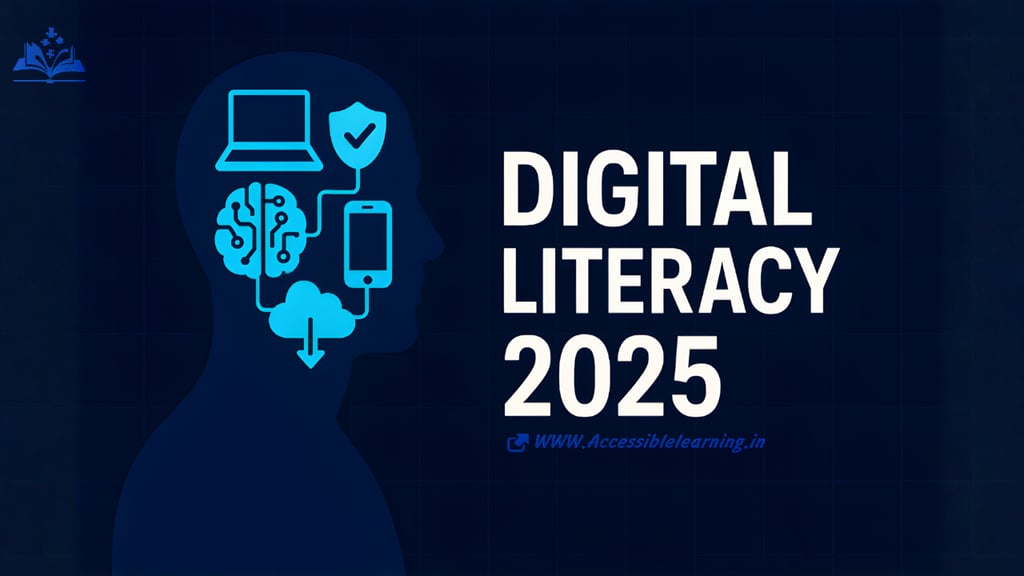
In a world where technology shapes every aspect of our lives—from how we work and learn to how we communicate and solve problems—digital literacy has evolved from a nice-to-have skill into an absolute necessity. Whether you're a student preparing for future careers, a professional navigating workplace technologies, or simply someone trying to stay safe online, understanding and mastering digital tools is no longer optional.
What is Digital Literacy and Why Does it Matter More Than Ever?
Digital literacy goes far beyond knowing how to send emails or scroll through social media. It encompasses the confident, critical, and responsible use of digital technologies, including everything from basic computer operations to advanced skills like data analysis, cybersecurity awareness, and artificial intelligence literacy.
The landscape has transformed dramatically. In 2024, an estimated seventy percent of men used the internet, compared with sixty-five percent of women, revealing persistent gender gaps even as connectivity expands. More striking is the divide between developed and developing regions: ninety-three percent of people in high-income countries used the internet, compared with only twenty-seven percent in low-income countries.
The Real-World Impact: Numbers That Demand Attention
The statistics paint a compelling picture of both progress and challenge:
Global literacy landscape: The global youth literacy rate reached ninety-three percent in 2024, reflecting educational expansion for younger generations. However, only about fifty percent of adults in developing countries are digitally literate, creating a significant gap that affects economic participation and social inclusion.
Workplace demands: The employment landscape has been fundamentally reshaped by digital requirements. Ninety-two percent of jobs analyzed require digital skills, yet a substantial portion of the workforce lacks these fundamental capabilities. Forty-four percent of workers' skills will be disrupted in the next five years, making continuous learning essential for career survival.
The skills crisis: Perhaps most concerning is that only sixteen percent of the world's population has high-level digital skills as of 2023. This creates a paradox where employers desperately need digitally skilled workers, but the talent pipeline remains severely constrained.
Why Today's Generation Faces Unique Digital Challenges
The "Digital Native" Myth Debunked
There's a widespread assumption that young people who grew up with smartphones and social media are automatically digitally literate. Research thoroughly contradicts this belief. The 2018 International Computer and Information Literacy study showed that only two percent of students scored at the highest level of computer and information literacy.
Students today may spend hours daily on digital devices, but using technology for interaction and leisure doesn't necessarily translate to familiarity with tools for academic or professional work. Being skilled at TikTok doesn't mean understanding cloud storage, file management systems, or professional software platforms.
Recent assessments confirm this trend is worsening, not improving. U.S. eighth graders' digital literacy skills declined between 2018 and 2023 on the International Computer and Information Literacy Study, despite students spending more time online than ever before.
The Educational Performance Gap
European data reveals a sobering reality: Forty-three percent of students do not reach the basic level of digital skills in standardized assessments. Even top-performing countries face significant challenges in preparing students for a digital economy.
Age-based disparities remain pronounced. Digital literacy skills diminish with age, with only thirty percent of adults over sixty-five proficient, creating generational divides that affect everything from family communication to healthcare access.
Core Components of Digital Literacy in 2025
Foundational Digital Skills
These represent the baseline competencies everyone needs:
Basic computer operations: Understanding hardware, operating systems, file management, and navigation
Internet literacy: Effective web browsing, search strategies, evaluating online information reliability
Digital communication: Professional email etiquette, video conferencing, collaborative platforms
Document management: Creating, editing, and organizing digital files across various formats
Information and Media Literacy
In an era of misinformation and AI-generated content, critical evaluation has become paramount. Only nine percent of fifteen-year-olds in OECD countries could distinguish fact from opinion in digital texts, highlighting a critical gap in analytical capabilities.
Key competencies include:
Identifying credible sources versus unreliable content
Recognizing bias, propaganda, and manipulation techniques
Understanding how algorithms shape information exposure
Fact-checking and cross-referencing claims
Cybersecurity Awareness
Digital threats continue escalating in sophistication and frequency. Fifty-five percent of online fraud cases could have been prevented with better digital literacy skills, demonstrating how foundational knowledge translates directly to protection.
Essential cybersecurity literacy includes:
Creating and managing strong passwords and authentication
Recognizing phishing attempts, scams, and social engineering
Understanding data privacy settings and personal information protection
Safe browsing practices and secure online transactions
Awareness of malware, ransomware, and common attack vectors
Data and Computational Thinking
As organizations become increasingly data-driven, the ability to work with information becomes valuable across all sectors:
Basic data analysis and visualization interpretation
Spreadsheet proficiency for organizing and analyzing information
Understanding statistics and how data informs decisions
Logical problem-solving and algorithmic thinking
AI Literacy and Emerging Technologies
The rise of artificial intelligence has created entirely new competency requirements. Seventy-one percent of employers now prefer AI skills over experience in hiring decisions, marking a dramatic shift in workforce expectations.
Modern digital literacy includes:
Understanding how AI systems work and their limitations
Recognizing AI-generated content and potential biases
Using AI tools effectively and ethically
Knowing when human judgment remains essential


The Workplace Revolution: Digital Skills as Career Currency
Economic Imperative
The economic implications of the digital skills gap are staggering. Eighty-three million jobs will be displaced by 2025, while sixty-nine million jobs will be created, with most new roles demanding sophisticated digital capabilities.
The global digital literacy training market is projected to reach ten billion dollars by 2025, reflecting massive investment in bridging this gap. Organizations recognize that their competitiveness depends on workforce digital competence.
Industry-Specific Demands
Different sectors have developed specialized digital skill requirements:
Healthcare: Electronic health records, telemedicine platforms, medical imaging software, data privacy compliance
Finance: Financial modeling software, blockchain technology, algorithmic trading systems, digital security protocols
Education: Learning management systems, virtual classroom tools, educational technology platforms, digital assessment tools
Manufacturing: IoT systems, supply chain management software, automation controls, predictive maintenance platforms
The Employability Advantage
Digital literacy is linked to higher employability, with a twenty-one percent increased odds of employment among digitally literate individuals. This isn't about elite tech positions—digital competencies now span entry-level roles, customer service positions, and traditional skilled trades.
Workers with comprehensive digital skills command higher salaries, enjoy greater career mobility, and demonstrate enhanced problem-solving capabilities that translate across industries.
Critical Challenges and Barriers
The Access Divide
The digital literacy gap between urban and rural populations is approximately twenty percent, creating geographic inequities that compound economic disadvantages. Access to reliable internet, modern devices, and quality digital education remains unevenly distributed.
Educational System Limitations
Fifty-nine percent of teachers worldwide feel unprepared to teach digital literacy skills, creating a cascade effect where inadequate educator training translates to insufficient student preparation. Many curricula haven't kept pace with technological evolution, teaching outdated skills while emerging competencies go unaddressed.
The Awareness Gap
Many individuals don't recognize their digital literacy deficiencies until facing employment barriers or security incidents. Sixty-five percent of users struggle with misinformation, yet few seek out media literacy training proactively.
Socioeconomic and Demographic Disparities
Women are eight percent less likely to be digitally literate compared to men globally, reflecting systemic barriers including cultural expectations, educational access, and technology sector representation.
Lower-income populations face compounding disadvantages: limited device access, unreliable connectivity, fewer educational opportunities, and less exposure to diverse digital tools.
Practical Strategies for Building Digital Literacy
For Individuals
Self-directed learning pathways
Leverage free online courses through platforms like Coursera, edX, Khan Academy, and Google Digital Garage
Practice with real-world projects that build tangible skills
Join online communities focused on specific technologies or skills
Follow technology news and trends to maintain current awareness
Structured skill development
Start with foundational skills before attempting advanced concepts
Focus on practical applications relevant to your career or interests
Seek certification programs that validate competencies
Build a portfolio demonstrating your digital capabilities
Critical thinking cultivation
Question information sources and verify claims
Understand how platforms profit from your attention and data
Practice identifying manipulative content and techniques
Develop healthy digital habits and boundaries
For Educators and Institutions
Curriculum integration
Embed digital literacy across subjects rather than isolating it
Use project-based learning that requires technological problem-solving
Teach computational thinking alongside traditional subjects
Include ethical discussions about technology's societal impact
Educator preparation
Provide comprehensive professional development for teachers
Create peer learning communities for skill sharing
Partner with technology companies for access to current tools
Support ongoing teacher learning as technologies evolve
Equitable access
Ensure all students have device and connectivity access
Provide alternative learning modes for diverse needs
Address cultural and linguistic barriers in digital content
Create inclusive digital environments
For Organizations
Employee development programs
Conduct skills assessments to identify gaps
Offer tiered training from basic to advanced levels
Create mentorship programs pairing digitally skilled with developing employees
Provide time and resources for continuous learning
Cultural transformation
Normalize asking questions about technology
Celebrate digital skill development and application
Integrate digital competency into performance expectations
Foster experimentation and learning from technological failures
Strategic workforce planning
Anticipate emerging skill requirements in your industry
Build partnerships with educational institutions
Invest in upskilling rather than only recruiting new talent
Develop clear career pathways for digitally skilled employees

The Future Landscape: Preparing for What's Next
Emerging Skill Requirements
As technology continues evolving, new digital literacy dimensions emerge:
Quantum computing literacy: Understanding quantum principles and their applications will become relevant beyond specialized research roles
Extended reality (XR) fluency: Virtual, augmented, and mixed reality platforms will require new interaction paradigms
Blockchain and distributed systems: Understanding decentralized technologies becomes important across finance, supply chain, and digital identity
Ethical AI governance: As AI systems make consequential decisions, understanding their ethical implications becomes essential for all knowledge workers
Lifelong Learning Imperative
The half-life of digital skills continues shortening. What's cutting-edge today may be obsolete within years. Success in this environment requires:
Cultivating learning agility and adaptability
Building metacognitive skills—learning how to learn
Maintaining curiosity about technological developments
Developing resilience when facing unfamiliar systems
FAQ's
Q: How long does it take to become digitally literate?
Digital literacy exists on a spectrum rather than as a binary state. Basic competency can be achieved in weeks with focused effort, while advanced skills require months to years of practice. The key is continuous development rather than reaching a finish line.
Q: Can older adults develop digital literacy effectively?
Absolutely. While statistics show age-related gaps, these reflect access and educational opportunities more than inherent capability. Tailored instruction that respects prior knowledge, proceeds at appropriate paces, and emphasizes practical applications proves highly effective across all age groups.
Q: What's the difference between digital literacy and computer skills?
Computer skills represent technical knowledge—operating specific software or devices. Digital literacy encompasses broader capabilities, including critical thinking about technology, understanding digital contexts, ethical technology use, and adaptive learning. Someone might have strong computer skills but lack digital literacy in evaluating online information credibility.
Q: How can parents support children's digital literacy development?
Model healthy technology use, engage in conversations about online experiences, co-explore digital platforms together, set appropriate boundaries while explaining reasoning, teach critical evaluation of content, discuss online safety and privacy, and integrate technology as a creative and learning tool rather than just entertainment.
Q: Which digital skills should someone prioritize first?
Start with fundamentals: basic device operation, internet navigation, email communication, file management, and online safety. Build from there toward your specific needs—professional software for work, creative tools for hobbies, or analytical skills for data-related fields.
Q: How does digital literacy relate to digital citizenship?
Digital citizenship encompasses ethical, responsible, and respectful behavior in digital spaces. It's built upon digital literacy—you need competence to participate, but citizenship adds dimensions of social responsibility, ethical consideration, and community contribution to that technical capability.
Q: Will AI make traditional digital skills obsolete?
AI will transform how we use technology but won't eliminate the need for digital literacy. In fact, AI literacy—understanding when and how to use AI tools, recognizing their limitations, and applying human judgment—becomes a new essential skill. The ability to work alongside AI systems requires strong foundational digital competence.
Digital literacy isn't a destination but an ongoing journey of growth, adaptation, and discovery. Whether you're a student entering the workforce, a professional seeking to remain competitive, an educator shaping future generations, or an organization building capability, the imperative is clear: digital competence has become as fundamental as reading, writing, and numeracy.
The statistics reveal significant gaps, but they also highlight tremendous opportunity. Every person who develops digital literacy expands their possibilities—accessing better employment, making informed decisions, protecting themselves online, and participating fully in digital society.
The digital divide won't close on its own. It requires intentional effort from individuals, educational institutions, employers, policymakers, and communities. By prioritizing digital literacy development, we create a more equitable, prosperous, and connected world where everyone can harness technology's power rather than being overwhelmed by it.
Begin where you are. Identify one digital skill you'd like to develop, find a quality resource, and commit to consistent practice. Share your knowledge with others. Advocate for digital literacy education in your community. Challenge yourself to continuously learn and adapt.
In today's generation, digital literacy isn't just about keeping pace with technology—it's about shaping how technology serves humanity, using digital tools to solve meaningful problems, and ensuring that everyone has the opportunity to thrive in an increasingly digital world.
Subscribe To Our Newsletter
All © Copyright reserved by Accessible-Learning Hub
| Terms & Conditions
Knowledge is power. Learn with Us. 📚

