

Desert Festival: The Heartbeat of Central Australia's Creative Spirit
Discover Desert Festival in Alice Springs, Australia's premier multi-arts celebration. Explore Indigenous culture, live music, visual arts, performances, travel tips, and everything you need to know about Central Australia's iconic cultural festival.
CULTURE/TRADITIONTRAVEL LIFEAUSTRALIA
Kim Shin
6/30/20264 min read
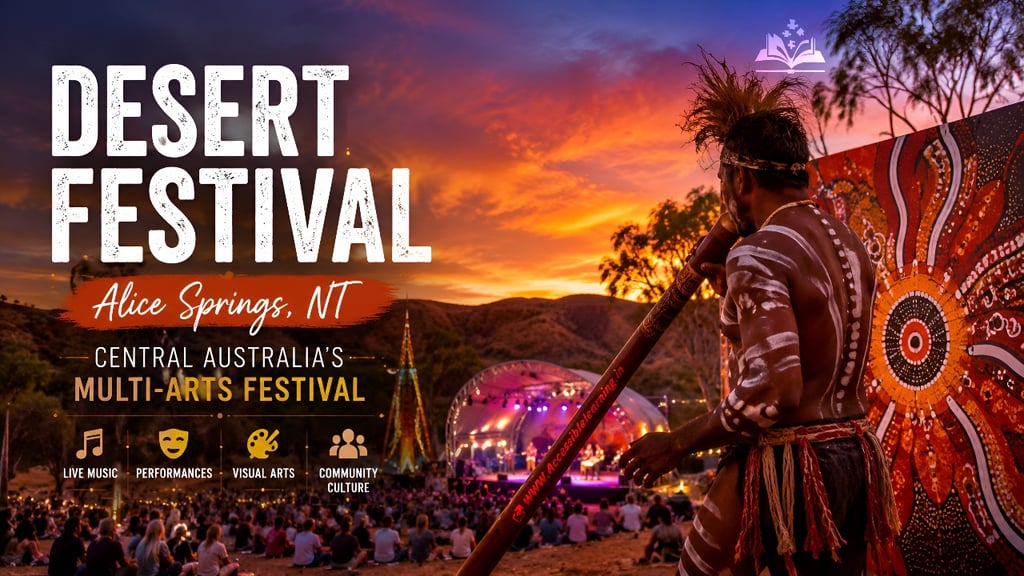
Location: Mparntwe (Alice Springs), Northern Territory, Australia
Festival Type: Multi-Arts and Cultural Festival
Established: 2001
Region: Central Australia (Red Centre)
In the middle of Australia's vast red desert lies one of the country's most distinctive cultural celebrations. The Desert Festival, held in Mparntwe (Alice Springs), is more than an arts event. It is a reflection of Central Australia's identity, stories, communities, and creative energy.
For more than two decades, the festival has brought together musicians, visual artists, performers, storytellers, dancers, filmmakers, and local communities to showcase the cultural richness of the Australian desert. What makes Desert Festival unique is not celebrity headliners or commercial spectacle. Its strength comes from its connection to place, people, and culture.
Whether you are an art lover, cultural traveler, photographer, or someone seeking a deeper understanding of Australia's Red Centre, Desert Festival offers an experience unlike any other.
What Is the Desert Festival?
The Desert Festival is Central Australia's longest-running multi-arts festival. First launched in 2001 as the Alice Springs Festival, it was created to celebrate the artistic diversity of the region while providing opportunities for local artists and communities to share their work. Over the years, it evolved into a major cultural event featuring music, theatre, dance, visual arts, spoken word, workshops, and experimental artistic collaborations.
Unlike many large festivals that import talent from major cities, Desert Festival has traditionally focused on showcasing the creative voices emerging from Central Australia itself.
The festival's identity is deeply tied to the desert environment, Indigenous cultures, and the stories that have shaped life in Australia's interior for thousands of years.
Why Desert Festival Matters
Many visitors arrive in Alice Springs expecting dramatic landscapes and iconic outback scenery. What often surprises them is the strength of the local arts scene.
Desert Festival serves as a platform where:
Indigenous and non-Indigenous artists collaborate.
Local communities share their stories.
Emerging artists gain exposure.
Experimental performances find audiences.
Traditional culture meets contemporary creativity.
The result is a festival that feels authentic rather than manufactured. Instead of simply entertaining visitors, it invites them to engage with the realities, histories, and aspirations of Central Australia.
Festival Highlights
Live Music Performances
Music has always been one of the festival's strongest attractions. Visitors can experience:
Indigenous music performances
Contemporary Australian artists
Folk and acoustic sessions
Experimental sound projects
Community choirs
Desert-inspired musical collaborations
Many performances take place outdoors, creating a memorable atmosphere beneath the clear desert night sky.
Theatre and Performing Arts
The festival regularly presents the following:
Original theatre productions
Community-led performances
Contemporary dance
Physical theatre
Circus arts
Interactive experiences
Unlike traditional theatre festivals, many performances use unconventional venues across Alice Springs, transforming public spaces into creative environments.
Visual Arts Exhibitions
Central Australia is internationally known for its Indigenous art movement. During the Desert Festival, galleries and public spaces host the following:
Contemporary art exhibitions
Indigenous art showcases
Installations
Photography exhibitions
Public art projects
Collaborative works
These exhibitions often explore themes such as Country, identity, community, environment, and cultural continuity.
Workshops and Community Programs
One of the festival's defining characteristics is participation. Visitors can join:
Painting workshops
Craft sessions
Storytelling events
Music workshops
Cultural activities
Artist talks
These programs help bridge the gap between artist and audience, creating a more immersive experience.


Indigenous Culture at the Center
Any discussion of Desert Festival must acknowledge the importance of Indigenous culture. Mparntwe (Alice Springs) sits on Arrernte Country, and Indigenous voices have long been central to the festival's programming.
Many events celebrate the following:
Traditional storytelling
Language preservation
Cultural knowledge
Contemporary Indigenous art
Music and dance traditions
Intergenerational learning
Rather than treating Indigenous culture as a side attraction, Desert Festival places it at the heart of the experience.
The Desert Setting
The location itself plays a major role in the festival's appeal. Alice Springs is surrounded by:
The MacDonnell Ranges
Ancient desert landscapes
Red sand plains
Dramatic rock formations
Vast night skies
Artists frequently draw inspiration from these landscapes, making the environment an active participant in the festival experience.
The contrast between contemporary art and ancient desert landscapes creates an atmosphere that cannot easily be replicated elsewhere.
Economic and Cultural Impact
Desert Festival contributes significantly to the following:
Tourism
The event attracts visitors from across Australia and overseas, supporting:
Hotels
Restaurants
Tour operators
Retail businesses
Creative industries
Local Artists
The festival provides valuable opportunities for artists to:
Exhibit work
Build professional networks
Reach new audiences
Develop creative projects
Community Development
Community engagement remains one of the festival's strongest achievements, helping strengthen connections between diverse cultural groups across the region.
Travel Guide for Festival Visitors
Getting to Alice Springs
By Air
Alice Springs Airport receives regular flights from major Australian cities, including:
Sydney
Melbourne
Adelaide
Darwin
By Train
The legendary Ghan rail journey offers one of Australia's most iconic travel experiences.
By Road
Many travelers choose a road trip through the Northern Territory to experience the Outback firsthand.
Where to Stay
Accommodation options include:
Luxury desert resorts
Boutique hotels
Caravan parks
Budget hostels
Serviced apartments
Booking early is strongly recommended during festival periods.
What to Pack
The desert climate can be unpredictable. Bring:
Lightweight clothing
A warm jacket for evenings
Sunscreen
Sunglasses
Comfortable walking shoes
Reusable water bottle
Camera equipment
Desert temperatures can vary dramatically between day and night.
Attractions to Visit While in Alice Springs
Extend your stay and explore:
Alice Springs Desert Park
A world-class attraction showcasing the plants, animals, and cultural traditions of Central Australia's desert ecosystems.
West MacDonnell Ranges
Famous for:
Simpsons Gap
Standley Chasm
Ormiston Gorge
Ellery Creek Big Hole
Royal Flying Doctor Service Museum
Learn about one of Australia's most remarkable healthcare innovations.
Indigenous Art Galleries
Alice Springs is considered one of Australia's most important Indigenous art centers.
Challenges Facing Regional Arts Festivals
Like many regional festivals, Desert Festival faces ongoing challenges:
Rising operating costs
Limited funding
Tourism fluctuations
Remote logistics
Workforce shortages
Despite these obstacles, the festival's longevity demonstrates the resilience and commitment of Central Australia's creative community.
The Future of Desert Festival
After more than two decades, Desert Festival has become part of the cultural identity of Central Australia. Its future will likely continue to focus on:
Supporting local artists
Strengthening Indigenous cultural representation
Expanding community participation
Encouraging artistic experimentation
Promoting sustainable cultural tourism
The festival's greatest strength remains its authenticity. It does not attempt to imitate larger metropolitan festivals. Instead, it embraces what makes the Australian desert unique and transforms that identity into a powerful creative experience.
Desert Festival is not simply another arts event on Australia's calendar. It is a celebration of place, culture, creativity, and community in one of the world's most extraordinary landscapes.
For visitors, it offers a rare opportunity to experience Central Australia through the eyes of its artists and communities. For locals, it provides a platform to share stories that might otherwise remain unheard.
In an era where many festivals chase scale and commercial appeal, Desert Festival proves that authenticity, cultural depth, and local connection can create something far more memorable.
That is why it remains one of Australia's most important regional arts festivals and one of the most compelling reasons to visit Alice Springs.
Subscribe To Our Newsletter
All © Copyright reserved by Accessible-Learning Hub
| Terms & Conditions
Knowledge is power. Learn with Us. 📚

