

Deepfake Threats Explained: The Technology, Dangers, and Future Challenges
A clear and in-depth guide to deepfake technology, how it works, its benefits, and the rising risks it poses to individuals, businesses, and society. Learn about detection methods, global regulations, security threats, misuse scenarios, and practical ways to protect yourself in a world where synthetic media is becoming harder to spot.
SCAMNEW YOUTH ISSUESHARSH REALITYAI/FUTUREA LEARNING
Shiv Singh Rajput
11/28/20257 min read
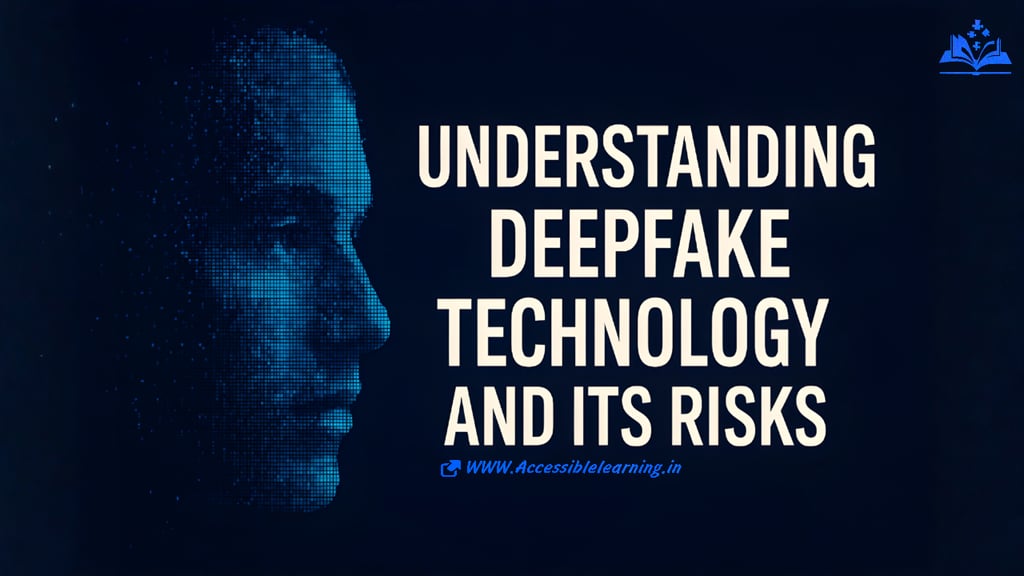
Deepfake technology has quickly moved from experimental research labs into mainstream digital life. It can entertain, educate, and empower creativity, but it also introduces new dangers that affect individuals, businesses, governments, and society at large. As synthetic media becomes more realistic, understanding how deepfakes work and how they can be misused is essential for everyone.
What Exactly Are Deepfakes?
Deepfakes are highly realistic synthetic images, videos, or audio produced using machine learning. Algorithms study a person’s likeness—face structure, voice tone, gestures, and expressions—and then generate new content that looks or sounds authentic.
Unlike traditional photo manipulation, deepfakes can create full-motion video or speech that convincingly imitates real people, making them significantly more powerful and harder to detect.
How Deepfakes Work (A More Detailed Breakdown)
Deepfakes rely on a mix of advanced AI systems. Here is a deeper look at the process.
Data Acquisition
The model gathers raw data from:
Social media photos
Interviews and YouTube videos
Live streams
Podcasts or speeches
Public datasets
Higher-resolution data leads to more convincing results.
Model Training
AI learns facial and vocal patterns using:
GANs (Generative Adversarial Networks), where two neural networks compete to improve realism
Autoencoders that compress and reconstruct facial features
Diffusion models that generate frames with high detail
Voice cloning networks for pitch, tone, and rhythm
The deepfake becomes more accurate as the model learns millions of micro-patterns.
Synthesis
The trained model generates:
Face swaps
Lip-sync videos
Voice clones
Full-body digital doubles
Synthetic avatars or personas
Some modern systems even generate deepfakes in real time during video calls.
Post-Processing
Techniques enhance the output by adjusting:
Lighting and shadows
Color grading
Background blending
Motion smoothing
Audio matching
This final step makes the fake appear natural and seamless.
Real-World Uses of Deepfake Technology
Deepfake technology isn’t always harmful. Some beneficial uses include:
Film and TV: Bringing deceased actors back to the screen, recreating historical figures, stunt scenes, and de-aging actors.
Education: Realistic historical reenactments, medical simulations, skill training.
Accessibility: Personalized voice restoration for patients with speech loss.
Marketing & Advertising: Virtual brand ambassadors, multilingual video campaigns.
Gaming: Digital twins, hyper-realistic characters, interactive storytelling.
The challenge is preventing misuse while supporting innovation.

The Major Risks Deepfakes Introduce
Deepfakes pose increasing danger because they are cheap to create, easy to distribute, and difficult to verify.
Political Manipulation and Election Interference
Deepfakes can:
Fabricate candidate statements
Create fake scandals
Show politicians engaging in illegal or immoral actions
Spread disinformation faster than fact-checkers can respond
Even a short clip can damage trust before it is proven fake.
Financial Fraud and Corporate Scams
Deepfake audio and video have been used in:
CEO impersonation to authorize transfers
Fake customer support calls
Employee impersonation during remote communication
Breaking into voice-verification security systems
Social engineering attacks disguised as “urgent” executive requests
Financial institutions now treat deepfakes as a top-tier cybersecurity threat.
Non-Consensual Sexual Content
One of the most harmful uses is generating explicit videos of private individuals without consent. Victims suffer:
Emotional trauma
Reputation damage
Social harassment
Career impact
Difficulty removing content once shared
Women and minors are disproportionately targeted.
Blackmail and Extortion
Attackers create fake “compromising videos” to:
Demand money
Damage reputations
Manipulate relationships
Harass public figures
Because the media looks real, victims often fear the consequences even when they are innocent.
Impersonation of Family Members
Realistic voice clones are being used in:
Fake emergency calls
“Kidnapping” scams
Fraudulent requests for money from relatives
Manipulating elderly individuals
These scams create emotional shock that makes victims act quickly.
Corporate Reputation Attacks
A deepfake can:
Misrepresent a CEO
Fake a product failure
Create false public service announcements
Mislead investors
Spread misinformation about mergers or crises
Just one convincing fake can collapse stock prices or trigger public panic.
Undermining Journalism and Evidence
Deepfakes create two serious challenges:
False media that is believed
Real media that is dismissed as fake (“the liar’s dividend”)
This weakens trust in news, documentary evidence, and public communication.
Bypassing Biometric Security
AI-generated faces and voices threaten systems such as
Face unlock
Voice authorization
Security surveillance
Social media verification
Cybercriminals can use deepfakes to break into sensitive accounts or systems.
AI Social Bots and Manipulated Personas
Deepfake avatars can be used to:
Operate fake political influencers
Spread propaganda
Disrupt public discussions
Scam users through online romance or friendship
Impersonate customer support agents
Social engineering is becoming harder to detect.
Why Deepfakes Are Now Harder to Spot
Advancements in AI have significantly increased realism:
Better skin texture and lighting
More accurate eye movement
Perfect lip-sync
Higher-resolution outputs
Realistic emotional expressions
Smooth frame transitions
Many deepfakes today can fool both humans and automated tools unless closely analyzed.
Advanced Deepfake Detection Techniques
Experts use a combination of methods:
AI Deepfake Detection Models
These detect:
Irregular pixel patterns
Biological inconsistencies
Compression artifacts
Frame-level distortions
Lip-sync mismatches
Forensic Analysis
Techniques include:
Metadata examination
Error Level Analysis
Shadow and lighting mismatch checks
Eye-reflection inspection (catchlights)
Audio Forensics
Checking for:
Robotic transitions
Unnatural breathing
Missing frequency details
Repetitive tone patterns
Provenance & Watermarking
Future devices may embed secure signatures directly into cameras so the original footage is verifiable.
Detection tools improve every year, but the battle remains ongoing.

The Current State of Global Laws
Regulation varies across regions, focusing mainly on:
Banning non-consensual explicit deepfakes
Criminalizing deepfake-based fraud
Requiring political deepfakes to be labeled
Giving victims rights to removal and compensation
Encouraging watermarking of synthetic media
Many countries are still drafting new rules as the technology evolves.
How Individuals Can Stay Safe
Be cautious with unexpected voice or video messages.
Always double-check urgent requests, especially for money.
Use strong multi-factor authentication.
Limit posting high-quality facial videos online.
Verify suspicious media with trusted sources.
Report deepfake harassment or fraud immediately.
Awareness is the first line of defense.
How Businesses Can Protect Themselves
Train employees on deepfake-related social engineering.
Implement strict verification processes for financial approvals.
Deploy AI-powered deepfake detection tools.
Use encrypted communication channels for sensitive conversations.
Add digital signatures to official announcements or videos.
Prepare a crisis response plan for synthetic-media attacks.
Organizations must treat deepfakes as a modern cybersecurity threat.
Ethical Considerations for Developers and Creators
Responsible use includes:
Obtaining consent before using someone’s likeness
Clearly labeling synthetic content
Avoiding tools that enable harassment or impersonation
Building safeguards that restrict misuse
Supporting strong watermarks and provenance standards
Ethics must guide innovation to prevent harm.
The Future of Deepfake Technology
Deepfakes will become:
More realistic
Easier to generate
Integrated into entertainment, gaming, advertising, and communication
Part of virtual assistants and digital identity systems
Meanwhile, detection and regulations will mature, but misuse will continue evolving. Society’s ability to recognize and manage synthetic media will determine how safe our digital world becomes.
Deepfakes represent both a powerful creative tool and a significant threat. They challenge the foundations of trust, identity, and digital communication. By staying informed, enforcing strong verification practices, and promoting responsible AI development, individuals and organizations can reduce the risks while still benefiting from the positive uses of synthetic media.


FAQs
Q: What exactly makes deepfakes dangerous?
Deepfakes are dangerous because they can mimic real people in ways that are hard to distinguish from authentic media. This allows attackers to spread misinformation, commit fraud, impersonate family members, damage reputations, and produce non-consensual explicit content. The realism and speed of generation make them a powerful tool for manipulation.
Q: How can I tell if a video or audio clip is a deepfake?
Some early deepfakes had obvious signs like unnatural blinking or distorted facial edges. Today, high-quality deepfakes often show almost no visible flaws. You can still watch for:
Lip-sync mismatches
Unnatural head movements
Inconsistent lighting or shadows
Robotic or irregular voice tonality
“Too-perfect” facial expressions
For high-risk content, manual observation is not enough. Use trusted fact-checkers, official sources, or dedicated detection tools.
Q: Can deepfakes be detected automatically?
Yes, but detection isn’t perfect. AI detectors compare pixel patterns, motion consistency, audio frequencies, and metadata. These tools improve every year, but new deepfake methods often bypass them. Detection is an ongoing race between creators and researchers.
Q: Are deepfakes illegal?
Deepfakes are legal in some contexts (film, education, satire), but illegal when used for:
Fraud
Identity theft
Non-consensual explicit content
Election interference
Many governments are developing stronger laws, but global regulation is still evolving.
Q: Can deepfakes be used for good purposes?
Yes. They help in movie production, virtual training, voice restoration for medical patients, gaming, historical re-creations, and advertising. The key is consent, transparency, and ethical use.
Q: How do deepfake voice scams work?
Attackers gather audio samples from social media or online content, clone the voice using AI, and then call victims pretending to be:
Relatives
Bosses
Bank officials
Emergency responders
These scams often claim urgency to trigger emotional responses.
Q: Is it possible to protect myself from being deepfaked?
You cannot stop someone from trying, but you can reduce the risk by:
Avoiding unnecessary posting of high-quality face/voice content
Using privacy controls on social platforms
Educating family members about voice scams
Using verification steps for money requests
Q: How are businesses affected by deepfakes?
Businesses face:
CEO fraud
Fake internal communications
Stock manipulation
Reputation attacks
Customer identity scams
To mitigate this, companies now use multi-factor verification, internal guidelines, and synthetic-media detection systems.
Q: Can deepfakes fool facial recognition or voice-based security systems?
Yes. Advanced deepfakes have bypassed voice authentication and even fooled some facial recognition tools. This is why organizations are moving toward multi-layered security instead of relying on biometric-only verification.
Q: What should I do if someone creates a deepfake of me?
Steps you can take:
Report it to the platform immediately.
Collect evidence (screenshots, links).
File a police complaint if it involves harassment or fraud.
Notify employers or relevant institutions if reputation is affected.
Contact a lawyer if the content is damaging or explicit.
Platform takedown speed varies, but pressure for stricter policies is increasing.
Q: Will deepfakes become even more realistic?
Yes. AI models continue to improve, producing higher-resolution faces, natural movements, accurate lip-sync, and real-time generation. Future deepfakes may be indistinguishable from real footage without cryptographic verification.
Q: How can society fight deepfake misuse?
A combination of approaches:
Stronger laws
Better detection technology
Public awareness
Media literacy education
Digital watermarking or provenance verification
Ethical development practices by AI companies
No single solution works alone. A combined effort makes deepfake abuse harder.
Q: Are social media companies doing enough?
Most platforms have policies to remove harmful deepfakes, especially those involving:
Political deception
Harassment
Explicit content without consent
However, enforcement is inconsistent. Many experts believe platforms need stronger detection, clearer labeling, and faster response systems.
Q: Can ordinary people create deepfakes?
Yes. Tools and apps now allow beginners to create face swaps and voice clones with just a few clicks. This accessibility is a major reason deepfake misuse is growing.
Q: Why is it called a “deep” fake?
The term comes from “deep learning,” the AI method used to generate the fake. It refers to neural networks with many layers (“deep” networks) that learn patterns from data.
Subscribe to Frontier Intelligence
All © Copyright reserved by Accessible-Learning Hub
| Terms & Conditions
Accessible Learning Hub — Actionable clarity for high-agency minds.
Weekly breakdowns on AI breakthroughs, capital flow, and human performance systems. Zero fluff.