

Darwin Festival Explained: Culture, Music, Indigenous Heritage & Hidden Realities
Discover Darwin Festival's raw cultural power, Indigenous heritage, tropical logistics, economic impact, and why Australia's northern arts festival stands apart.
CULTURE/TRADITIONCELEBRATION/FESTIVALSAUSTRALIA
Indie Clark
7/26/20266 min read
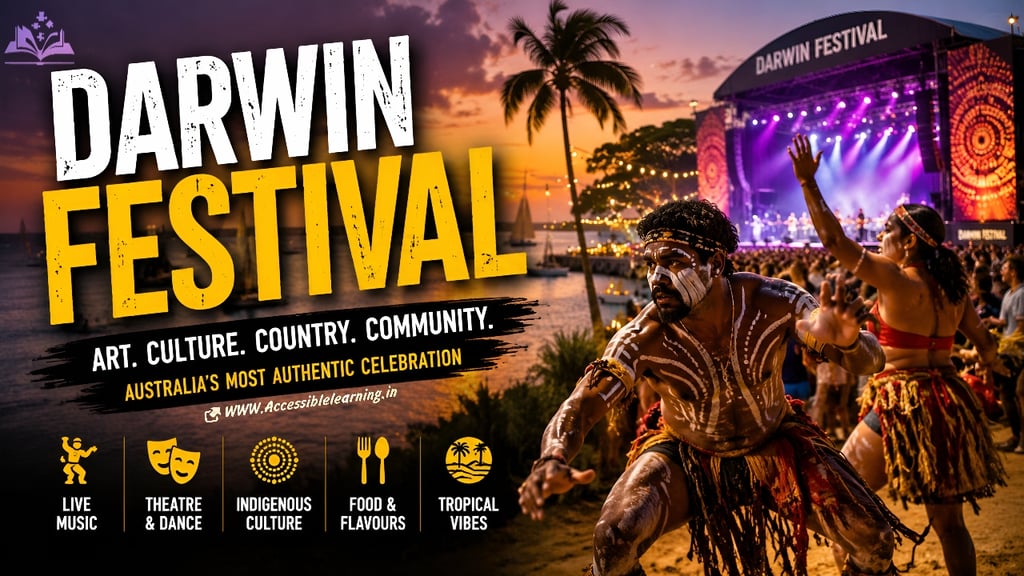
Every August, more than 100,000 attendances flow through Darwin Festival events, transforming Australia's smallest capital city into one of the country's busiest cultural stages. That number matters because Darwin itself has a population of only around 150,000. Few festivals anywhere reshape an entire city this dramatically.
What Is Darwin Festival, Really?
Darwin Festival isn't just another music festival with food trucks and overpriced drinks. It serves as the Northern Territory's largest annual arts and cultural event, combining live music, theatre, comedy, dance, visual art, cabaret, Indigenous storytelling, outdoor performances, and culinary experiences.
The festival usually runs for 18 days during August, deliberately targeting the dry season. That decision isn't marketing. It's survival.
Darwin's tropical climate spends much of the year delivering oppressive humidity, heavy rain, and thunderstorms. August offers cool evenings, clear skies, and almost guaranteed outdoor conditions. Without that weather window, the festival would struggle to exist at its current scale.
Unlike many metropolitan festivals built around celebrity performers, Darwin Festival leans heavily into place. The city itself becomes the stage.
Why Darwin Festival Exists Beyond Entertainment
Most festivals promise culture.
The Darwin Festival actually reflects one.
Darwin sits closer to Jakarta than Sydney. It lives at the crossroads of Australia, Southeast Asia, and the Pacific. That geography shapes everything from food stalls to musical influences.
Visitors don't experience a polished version of Australia.
They experience an Australia that many southern cities would barely recognize.
The festival actively promotes:
Indigenous Australian performances
Torres Strait Islander artists
Southeast Asian collaborations
Contemporary Australian creators
Local Northern Territory talent
International touring productions
That mixture creates something few Australian festivals achieve: authenticity without pretending authenticity can be packaged.
Indigenous Culture Isn't Decoration Here
Many festivals squeeze Indigenous performances into an opening ceremony before shifting attention elsewhere. Darwin Festival has increasingly placed First Nations artists near the center of programming. That matters because the Northern Territory contains some of Australia's oldest continuous cultural traditions.
Audiences regularly encounter the following:
Traditional dance
Contemporary Indigenous theatre
Language preservation projects
Storytelling performances
Music blending ancient traditions with modern production
Visual art exhibitions
The strongest productions refuse to romanticize Indigenous history. They discuss land rights, identity, colonization, and modern community life with uncomfortable honesty.
That honesty separates Darwin Festival from tourism campaigns that reduce Aboriginal culture to photo opportunities.


The Hidden Logistics Most Visitors Never Notice
Festivals sell magic.
Organizers manage controlled chaos.
Darwin Festival faces logistical challenges many major events never encounter.
Tropical Infrastructure
Outdoor stages require weather-resistant engineering despite dry-season timing.
Equipment must tolerate tropical heat.
Power systems need redundancy.
Dust management becomes constant work.
Distance Costs Real Money
Darwin sits thousands of kilometers from Australia's largest production hubs.
Almost everything costs more.
Artists.
Lighting rigs.
Stage equipment.
Freight.
Accommodation.
Technical crews.
Those transportation expenses push budgets higher than similar festivals held in Melbourne or Sydney.
A Small Workforce Handles Massive Demand
Darwin simply doesn't have an endless pool of technicians, hospitality workers, security staff, and event specialists.
Temporary recruitment becomes essential.
Volunteers also play an enormous role.
Without them, the festival couldn't operate.
Music Doesn't Dominate. Variety Does.
Many festivals chase the same formula:
Big headline act.
Social media hype.
Crowds.
Repeat.
Darwin Festival spreads attention across multiple art forms.
Visitors might spend one evening watching the following:
Contemporary theatre
Experimental dance
Jazz
Stand-up comedy
Indigenous storytelling
Electronic music
Classical performances
Film screenings
That diversity attracts audiences across generations instead of chasing one demographic. It also creates a festival where discovery matters more than celebrity.
Darwin's Food Scene Quietly Steals the Show
Ignoring Darwin's food culture means missing half the festival. The city's multicultural population shapes one of Australia's most distinctive culinary scenes.
Festival dining regularly features influences from:
Indigenous bush foods
Vietnamese cuisine
Thai cooking
Malaysian flavors
Indonesian dishes
Greek traditions
Filipino specialties
Modern Australian chefs
Fresh seafood dominates many menus.
Local tropical produce appears everywhere.
Instead of copying Melbourne's restaurant culture, Darwin embraces its northern identity.
The result feels refreshingly confident.
The Festival Pumps Millions Into Darwin's Economy
Arts festivals often defend themselves with emotional arguments. The economics tell a stronger story.
Darwin Festival drives spending across the following:
Hotels
Airlines
Restaurants
Local bars
Retail businesses
Tour operators
Taxi services
Ride-share platforms
Visitors frequently extend their stay to explore:
Kakadu National Park
Litchfield National Park
Tiwi Islands
Mindil Beach
Crocodile attractions
The festival doesn't simply generate ticket sales. It fuels an entire regional tourism ecosystem.


Darwin Festival Hasn't Escaped Modern Criticism
Every successful festival eventually faces uncomfortable questions. Darwin Festival isn't exempt.
Common criticisms include:
Ticket Prices
Premium performances can become expensive.
Families often struggle to attend multiple events.
Arts remain accessible in theory but not always in practice.
Limited Capacity
Darwin isn't Sydney.
Accommodation fills quickly.
Flights become expensive.
Late planners often discover that the city's infrastructure has reached its limit.
Environmental Pressure
Large crowds create:
Waste
Increased energy consumption
Transport emissions
Pressure on public spaces
Organizers continue improving sustainability, but no major festival achieves a zero-impact footprint.
Why Darwin Festival Feels Different From Australia's Mega Festivals
Compare the Darwin Festival with giant commercial festivals, and one difference becomes obvious.
It doesn't chase scale for its own sake.
Instead, it prioritizes experience.
Visitors actually wander between venues.
Artists interact with audiences.
Local businesses become participants rather than background scenery.
The city feels involved instead of overwhelmed.
That intimacy creates stronger memories than oversized crowds packed behind barriers.
Planning Your Visit Without Making Rookie Mistakes
If you're attending Darwin Festival, remember these realities:
Book flights several months early.
Reserve accommodation before the program launches if possible.
Expect warm days despite the dry season.
Carry water constantly.
Mix ticketed shows with free outdoor events.
Explore Darwin beyond festival venues.
Leave room in your schedule for spontaneous performances.
The biggest mistake visitors make involves treating the festival like a checklist. The best experiences usually happen between scheduled events.
Darwin Festival's Cultural Legacy Matters More Than Its Entertainment
Australia doesn't suffer from a shortage of festivals. It suffers from sameness. Many events recycle identical headline acts, identical food vendors, identical branding, and identical social media aesthetics.
Darwin Festival refuses that shortcut.
It embraces regional identity instead of hiding it.
It elevates Indigenous voices instead of treating them as symbolic additions.
It celebrates Australia's tropical north without pretending every visitor will find the climate comfortable or the stories easy to hear.
That honesty gives the festival unusual credibility.
People don't leave talking only about concerts.
They leave talking about Darwin itself.
And that's the real achievement.
Darwin Festival succeeds because it refuses to imitate Australia's larger cultural events. It embraces its tropical setting, celebrates the diversity of the Northern Territory, and gives Indigenous and regional voices a platform that feels central rather than symbolic. Yes, travel costs can be high, accommodation fills quickly, and the logistics challenge both organizers and visitors. Yet those same constraints create an experience that feels rooted in place instead of manufactured. If you want polished spectacle, you'll find plenty of alternatives. If you want to understand why Australia's far north has a cultural identity unlike anywhere else in the country, Darwin Festival remains one of the strongest reasons to make the journey.
Frequently Asked Questions
Q: When does the Darwin Festival take place?
The festival usually runs over 18 days in August, during Darwin's dry season when evenings remain comfortable for outdoor events.
Q: Is Darwin Festival family-friendly?
Yes. The program includes children's activities, outdoor performances, food markets, music, theatre, and interactive events suitable for all ages, alongside late-night shows for adults.
Q: Do I need tickets for every event?
No. Many headline performances require tickets, but the festival also offers numerous free concerts, public art installations, community events, and open-air entertainment.
Q: Why is Darwin Festival considered unique in Australia?
Its location, strong First Nations representation, Southeast Asian cultural influence, tropical setting, and city-wide programming create an atmosphere unlike festivals in Sydney, Melbourne, or Brisbane.
Q: How far in advance should I book accommodation?
Book several months ahead. Hotels and flights often sell out quickly because Darwin has limited accommodation compared with Australia's larger cities.
Q: Is the festival worth visiting if I'm not interested in live music?
Absolutely. Theatre, comedy, visual arts, dance, Indigenous storytelling, food experiences, workshops, and cultural exhibitions make the festival appealing well beyond its music lineup.
Subscribe To Our Newsletter
All © Copyright reserved by Accessible-Learning Hub
| Terms & Conditions
Knowledge is power. Learn with Us. 📚

