

Daikoku Matsuri at Kanda Myojin Shrine: Tokyo’s Quiet Festival of Prosperity
Daikoku Matsuri at Kanda Myojin Shrine is a traditional Japanese festival dedicated to Daikokuten, the deity of prosperity, food, and honest work. Held in early January, this quiet yet meaningful ritual reflects Tokyo’s deep connection between faith, labor, and gratitude, blending ancient Edo beliefs with modern life.
CULTURE/TRADITIONEVENT/SPECIALTRAVEL LIFECELEBRATION/FESTIVALSJAPAN
Kim Shin
1/9/20264 min read
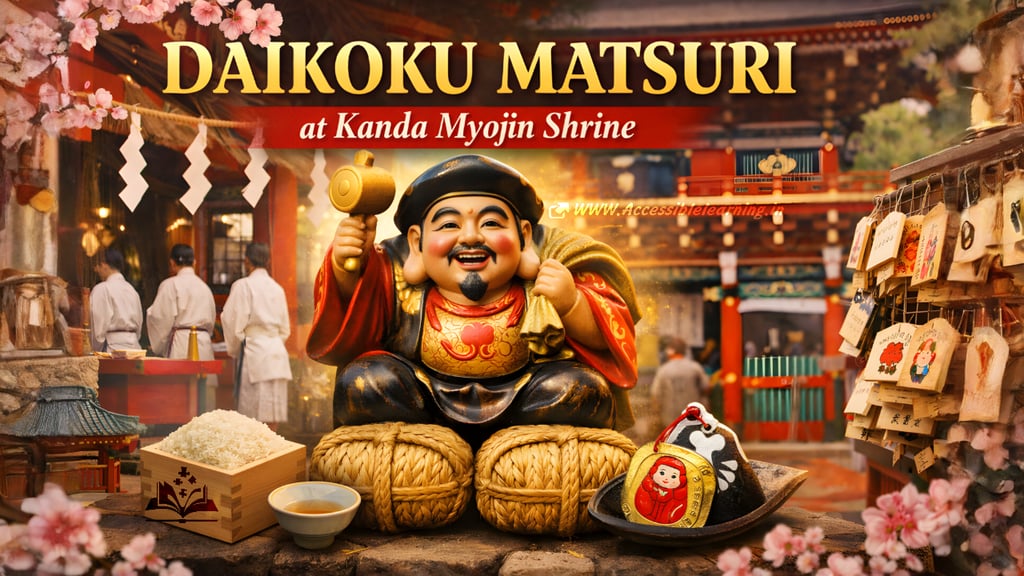
A Deep Cultural Ritual of Prosperity, Work, and Quiet Faith in Tokyo!
Daikoku Matsuri at Kanda Myojin Shrine is one of those Japanese festivals that does not rely on spectacle to leave an impression. Instead, it works slowly, through symbols, rituals, and centuries of belief. This festival honors Daikokuten, a deity closely tied to food, wealth, labor, and ethical success. In a city shaped by constant motion, Daikoku Matsuri offers a pause, and in that pause, meaning emerges.
The Origins of Daikokuten in Japanese Belief
Daikokuten has a layered identity. His roots trace back to Mahākāla, a Hindu-Buddhist deity, later absorbed into Japanese Buddhism and Shinto practices. Over time, Daikokuten evolved from a fierce protector into a gentle guardian of households, farmers, and merchants.
By the Edo period, Daikokuten became a symbol of:
Full storehouses
Stable livelihoods
Honest business
Domestic happiness
This evolution explains why Daikoku Matsuri feels practical rather than abstract. It is faith grounded in everyday life.
Why Kanda Myojin Became Central to Daikoku Worship
Kanda Myojin’s location was strategic even in ancient times. Positioned near major trade routes and artisan districts of Edo, the shrine naturally became a spiritual anchor for commerce.
Key historical roles of the shrine include
Protector of Edo Castle
Guardian of merchant neighborhoods
Spiritual authority for trade guilds
Daikoku Matsuri grew here because prosperity was not theoretical. It was lived, counted, stored, and shared.
Exact Timing and Seasonal Meaning
Daikoku Matsuri is held during early January, aligning with Japan’s New Year customs. This timing is intentional.
January represents:
Resetting intentions
Reviewing the past year’s outcomes
Asking for balance, not excess
Praying to Daikokuten at the start of the year reflects a mindset of preparation rather than desperation.
Detailed Ritual Flow of Daikoku Matsuri
The festival follows structured Shinto rites, each with symbolic meaning.
Purification (Harae): Participants cleanse hands and mouth, reinforcing spiritual clarity before prayer.
Offering Ceremony: Rice, salt, sake, and seasonal foods are offered to Daikokuten, acknowledging nature’s role in human success.
Norito Prayers: Priests recite formal prayers requesting protection over labor, trade, and households.
Talisman Distribution: Charms related to business stability, food security, and fortune are distributed to attendees.
These steps emphasize order, patience, and humility.
The Role of Rice in Daikoku Matsuri
Rice is not symbolic wealth. It is real wealth in traditional Japan.
During Daikoku Matsuri:
Rice bales represent stored effort
Offerings honor farmers and laborers
Blessings acknowledge food as the foundation of all prosperity
This agricultural focus grounds the festival in survival, not luxury.
Business and Economic Relevance Today
Even in modern Tokyo, Daikoku Matsuri holds economic relevance.
Small shop owners attend quietly
Corporate representatives send prayers on behalf of teams
Startups seek symbolic blessings for stability
The festival bridges ancient belief and modern risk-taking without contradiction.
Psychological and Social Meaning
Beyond religion, Daikoku Matsuri serves a social function.
It encourages:
Gratitude over entitlement
Long-term thinking over quick gains
Respect for unseen labor
In a productivity-driven society, this message feels surprisingly modern.
How Daikoku Matsuri Differs from Other Japanese Festivals
Unlike summer matsuri filled with music and crowds, Daikoku Matsuri is:
Calm
Ceremony-focused
Introspective
It is closer to a conversation than a performance.
Visitor Etiquette and Cultural Awareness
Visitors should understand:
Photography may be restricted during rituals
Loud conversation is discouraged
Bowing is part of participation, not performance
Respect here is more important than understanding every word.

Relationship with Other Kanda Myojin Festivals
Daikoku Matsuri complements larger events like Kanda Matsuri, which celebrates community and power. Daikoku Matsuri focuses inward, reminding individuals why they work and what they work for.
Together, these festivals represent balance between public celebration and private intention.
Why Daikoku Matsuri Still Matters
In an era of digital income, remote work, and automation, Daikoku Matsuri asks a simple question:
What does prosperity mean when food, time, and attention are fragile?
The festival does not answer directly. It invites reflection.
Daikoku Matsuri at Kanda Myojin Shrine is not about chasing fortune. It is about deserving it.
Through rice, prayer, silence, and ritual, it teaches that true abundance comes from respect, patience, and shared effort.
For writers, thinkers, and travelers seeking depth over display, Daikoku Matsuri offers something rare in modern life: A moment where work, belief, and gratitude stand quietly together.
FAQ's
Q: What is Daikoku Matsuri at Kanda Myojin Shrine?
Daikoku Matsuri is a traditional Shinto festival held at Kanda Myojin Shrine to honor Daikokuten, the deity of prosperity, food, and honest labor. The festival focuses on gratitude for past blessings and prayers for stable success in the year ahead.
Q: When is Daikoku Matsuri celebrated?
Daikoku Matsuri is usually observed in early January, during Japan’s New Year period. This timing reflects renewal, fresh beginnings, and careful intention-setting for the coming year.
Q: Who should attend Daikoku Matsuri?
The festival is attended by business owners, workers, farmers, creatives, and families. Anyone seeking stability, meaningful growth, or gratitude-based prosperity can participate, regardless of religious background.
Q: What rituals are performed during Daikoku Matsuri?
The festival includes purification rituals, offerings of rice and sake, formal Shinto prayers, and the distribution of good-luck charms related to work, food security, and household well-being.
Q: Is Daikoku Matsuri different from Kanda Matsuri?
Yes. Kanda Matsuri is a large, lively public celebration held in spring, while Daikoku Matsuri is a quieter, ritual-focused event centered on reflection, prayer, and personal intention.
Q: Can tourists participate in Daikoku Matsuri?
Yes, visitors are welcome. Tourists are encouraged to observe respectfully, follow shrine etiquette, and experience the rituals quietly, even if they are unfamiliar with Shinto practices.
Q: What does Daikokuten symbolize in Japanese culture?
Daikokuten symbolizes abundance rooted in effort, ethical success, food security, and family stability. His image reflects joy, generosity, and balance rather than excess or greed.
Subscribe To Our Newsletter
All © Copyright reserved by Accessible-Learning Hub
| Terms & Conditions
Knowledge is power. Learn with Us. 📚

