

Cyberbullying: How to Identify and Handle It
Cyberbullying is a growing online threat that affects mental health, safety, and confidence, especially among students and young adults. This in-depth guide explains how to identify cyberbullying, understand its real-world impact, and handle it safely using practical steps, digital tools, and emotional support.
AWARE/VIGILANTA LEARNINGEDUCATION/KNOWLEDGE
Shiv Singh Rajput
1/2/20266 min read
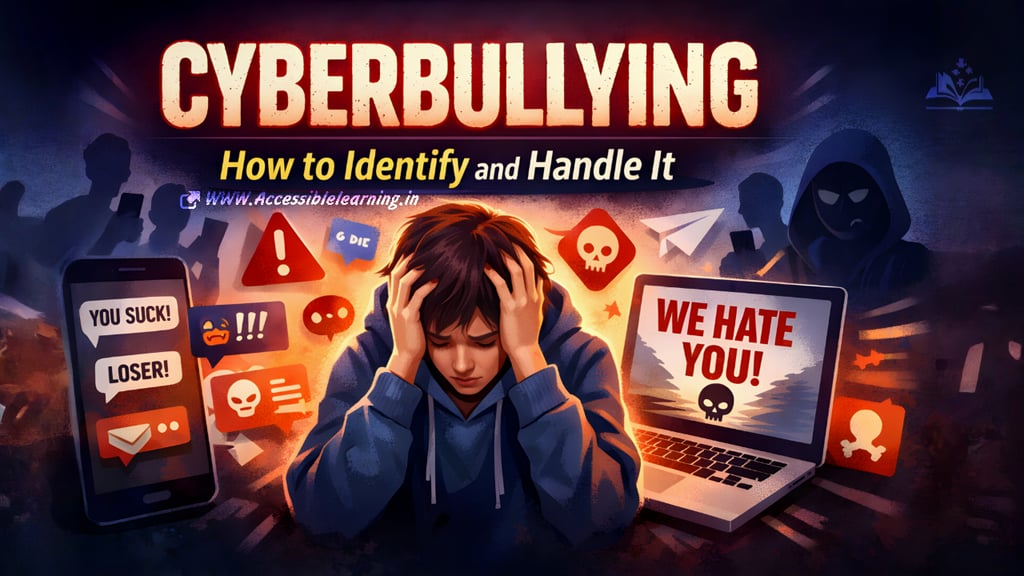
Cyberbullying is no longer rare, hidden, or limited to a few platforms. It has become part of everyday digital life, especially for students, young adults, and anyone who spends time online. Unlike traditional bullying, cyberbullying follows you everywhere. Your phone, your laptop, your social accounts. There is no clear “off” switch.
Understanding how cyberbullying works, how it shows up in real situations, and how to respond calmly and effectively is essential for protecting both mental health and personal safety.
What Cyberbullying Really Means Today
Cyberbullying is the repeated use of digital tools to harm, intimidate, shame, or control another person. It often involves an imbalance of power. This power can come from popularity, group size, anonymity, or access to private information.
What makes cyberbullying especially damaging is scale and permanence. Hurtful content can spread to hundreds or thousands of people in minutes, and screenshots can exist forever, even after deletion.
Cyberbullying can happen on:
Social media platforms
Messaging apps and group chats
Online games and voice chats
Email and forums
Comment sections and livestreams
It can be public, private, or both at the same time.
Common Forms of Cyberbullying (With Real-World Context)
Persistent Harassment
This includes repeated insults, mocking, name-calling, or aggressive messages meant to wear someone down over time.
Example: Someone comments negatively on every post you make, even after you stop responding.
Group Attacks and Dogpiling
Multiple people target one individual, often encouraged by likes, shares, or laughing reactions.
Example: A post goes viral within a school or college group, and dozens of people join in with jokes and insults.
Rumors, Lies, and False Narratives
False stories, edited screenshots, or misleading clips are shared to damage someone’s image.
Example: A private joke is taken out of context and presented as proof of bad behavior.
Impersonation
Fake accounts are created to act as the victim, post embarrassing content, or message others in their name.
Example: A fake profile sends rude messages to classmates to turn people against you.
Exposure of Private Information
This includes sharing personal messages, photos, contact details, or secrets without consent.
Example: A screenshot from a private chat is posted publicly to embarrass someone.
Threats and Coercion
Messages meant to scare, control, or blackmail someone.
Example: Threatening to leak images or information unless the person does something.
Silent Bullying and Social Exclusion
Being intentionally ignored, removed from groups, or excluded from online spaces.
Example: Everyone is added to a class group except one person, and the exclusion is deliberate.
Gaming-Based Bullying
Targeting players through insults, sabotage, repeated reporting, or harassment in voice chat.
Example: A team repeatedly targets one player and encourages others to report them.
Why Cyberbullying Hurts More Than It Seems
Many people dismiss online abuse as “not real,” but the brain does not make that distinction. The emotional response to online humiliation is the same as face-to-face rejection or threat.
Cyberbullying impacts:
Self-confidence and identity
Concentration and academic performance
Sleep patterns and physical health
Trust in friendships and relationships
Willingness to participate online or offline
Because the abuse can be constant and unpredictable, victims often feel trapped, watched, or powerless.
Subtle Warning Signs That Often Go Unnoticed
Not everyone openly says they are being bullied. Watch for patterns.
Emotional changes:
Sudden mood swings after using the phone
Anxiety when notifications appear
Feelings of shame or worthlessness
Behavioral changes:
Avoiding social media after being very active
Leaving group chats without explanation
Avoiding school, college, or online events
Digital behavior changes:
Frequently changing usernames or profile photos
Deleting posts quickly
Creating backup or “private” accounts
When these signs appear together, cyberbullying is often involved.
How Cyberbullying Escalates If Ignored
Cyberbullying rarely stays at the same level. If unchecked, it often moves through stages:
Mocking or teasing
Repetition and group involvement
Public humiliation
Threats or exposure of private information
Long-term emotional harm
Early action can stop escalation before serious damage is done.

How to Handle Cyberbullying Step by Step
Protect Your Immediate Safety
If there are threats, stalking, blackmail, or personal information being shared, your safety comes first. Tell a trusted adult or authority figure, or seek professional help immediately.
Avoid Public Arguments
Responding emotionally in public comments often fuels the situation. Bullies thrive on reaction and attention.
If a response is necessary, keep it brief and firm, then disengage.
Document Everything
Evidence is critical. Save:
Full screenshots showing usernames and timestamps
URLs to profiles or posts
Messages that show patterns of harassment
Any threats or private information shared
Store these securely.
Use Platform Controls Strategically
Blocking alone is not always enough. Combine:
Blocking and muting
Reporting the account and content
Restricting who can comment, message, or tag you
Filtering keywords and phrases
Review settings regularly, especially after an incident.
Report Beyond the Platform
If the bullying involves classmates, coworkers, or known individuals, report it to:
School or college authorities
Workplace HR
Parents or guardians
Online behavior still has offline consequences.
Strengthen Digital Security
Cyberbullying often overlaps with privacy risks. Take time to:
Change passwords
Enable two-factor authentication
Remove unknown followers
Limit search visibility by phone or email
Check app permissions
This reduces future targeting.
Supporting Someone Else Who Is Being Cyberbullied
Silence helps bullies. Support helps victims.
Helpful actions:
Reach out privately and show support
Encourage evidence collection
Report harmful content
Correct false information calmly when safe
Stay present and check in regularly
Avoid:
Sharing or reacting to harmful posts
Encouraging revenge
Minimizing the situation
Even small support can reduce isolation.
The Role of Parents, Educators, and Institutions
Parents and guardians should focus on safety and trust, not punishment. Taking away devices without discussion often stops victims from speaking up.
Schools and colleges should treat cyberbullying as a community safety issue, not “online drama.” Clear reporting systems, counseling access, and accountability matter.
When Legal or Professional Help Is Necessary
Cyberbullying crosses into serious territory when it involves:
Threats of violence
Sexual harassment or blackmail
Sharing intimate images without consent
Stalking or repeated cross-platform harassment
Hate-based targeting
In such cases, legal advice or law enforcement involvement may be necessary. Seeking help is not overreacting. It is protecting yourself.
Building Long-Term Digital Resilience
While no one can fully prevent cyberbullying, these habits reduce risk:
Keep personal information limited
Separate public and private accounts
Think before sharing emotional or sensitive content
Maintain strong offline support networks
Take breaks from platforms when overwhelmed
Your value is not measured by comments, likes, or online opinions.
Cyberbullying is a serious issue, but it is manageable with awareness, evidence, support, and the right response. No one deserves to feel unsafe or humiliated online. Taking action early and asking for help are signs of strength, not weakness.


FAQ's
Q: Is cyberbullying a serious issue or just online drama?
Cyberbullying is a serious issue. Online harassment can cause long-term stress, anxiety, depression, and social withdrawal. Because it can be constant and public, its impact is often stronger than face-to-face bullying.
Q: How can I tell if something counts as cyberbullying?
If the behavior is repeated, humiliating, threatening, or meant to harm you emotionally or socially, it qualifies as cyberbullying. Even a single incident can be serious if it involves threats, leaked private content, or public shaming.
Q: Should I respond to a cyberbully or ignore them?
In most cases, do not engage publicly. Responding emotionally often escalates the situation. Save evidence first, set clear boundaries if needed, and then block and report.
Q: What kind of proof should I collect?
Collect screenshots that clearly show usernames, messages, dates, and times. Save profile links and any threatening or private content. Evidence is essential for reporting to platforms, schools, or authorities.
Q: Does blocking someone stop cyberbullying?
Blocking helps but does not always stop it. Some bullies create new accounts or involve others. Blocking should be combined with reporting, privacy controls, and evidence collection.
Q: What should I do if someone is spreading rumors about me online?
Document the posts, report them, and avoid trying to defend yourself in every comment. If the rumor involves people you know, inform a trusted authority such as a teacher, college official, or workplace supervisor.
Q: What if the cyberbully is anonymous?
Do not try to track them down yourself. Preserve evidence, report the account, tighten your privacy settings, and escalate if threats or personal information are involved.
Q: Is cyberbullying illegal?
Some forms of cyberbullying are illegal, especially threats, stalking, sexual harassment, blackmail, and sharing private or intimate images without consent. Laws vary by country, but serious cases should always be reported.
Q: How can I help a friend who is being cyberbullied?
Listen without judgment, help them save evidence, encourage reporting, and check in regularly. Simply being present can make a big difference.
Q: Can cyberbullying affect academic or work life?
Yes. It often leads to poor concentration, anxiety, absenteeism, and reduced performance. Schools and workplaces have a responsibility to address it when it affects safety or well-being.
Subscribe to Frontier Intelligence
All © Copyright reserved by Accessible-Learning Hub
| Terms & Conditions
Accessible Learning Hub — Actionable clarity for high-agency minds.
Weekly breakdowns on AI breakthroughs, capital flow, and human performance systems. Zero fluff.