

CRISPR 2.0 Explained: Can Gene Editing Reduce Inherited Trauma?
Explore the emerging concept of CRISPR 2.0 and its potential to reshape how inherited trauma is understood and managed. This in-depth article breaks down the science of CRISPR, the role of Epigenetics, and the ethical, biological, and societal implications of editing stress-related gene expression. Learn what’s possible, what’s not, and what the future of trauma and gene editing may look like.
A LEARNINGHEALTH/DISEASEEDUCATION/KNOWLEDGE
Sachin K Chaurasiya | Shiv Singh Rajput | Kim Shin
4/22/20265 min read
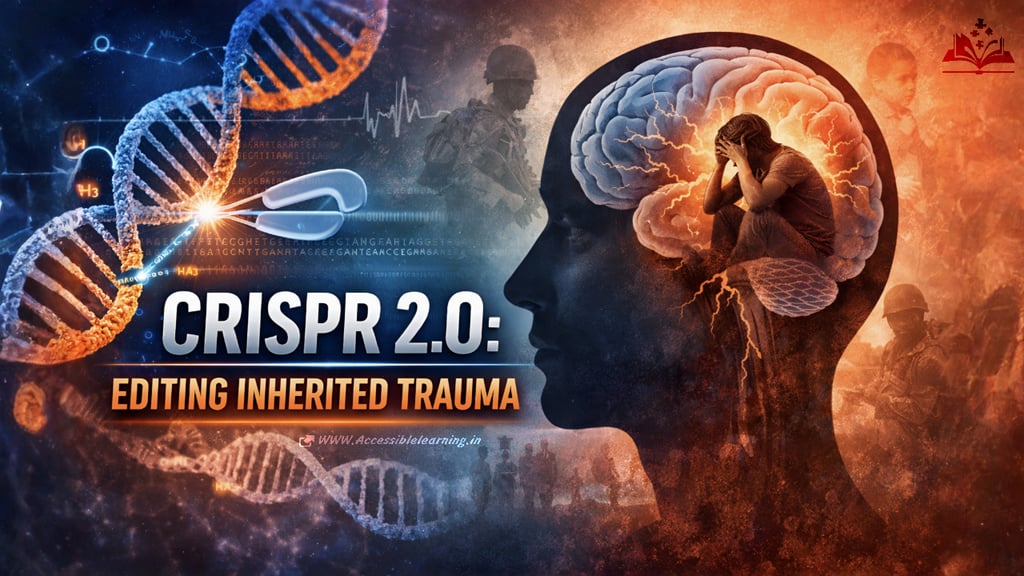
The conversation around CRISPR is evolving quickly. What began as a tool to fix genetic mutations is now being explored in a far more layered context: whether biology carries traces of emotional trauma across generations and if those traces can be adjusted.
This idea, often framed as CRISPR 2.0, sits at the intersection of genetics, neuroscience, and mental health. It is not about erasing identity or rewriting human experience. It is about understanding how deeply stress can shape biology and whether science can responsibly intervene.
Trauma and the Body: A Systems-Level View
Trauma does not act in isolation. It affects multiple systems at once, creating a ripple effect throughout the body.
Immune System
Chronic stress can trigger long-term inflammation. This has been linked to:
Autoimmune disorders
Cardiovascular issues
Increased vulnerability to illness
Emerging research suggests that epigenetic changes may influence immune system sensitivity across generations.
Metabolic Function
Trauma can alter how the body processes energy. Some studies link inherited stress exposure to:
Higher risk of obesity
Insulin resistance
Changes in appetite regulation
Sleep and Circadian Rhythms
Disrupted sleep patterns are common in trauma-affected individuals. These patterns may also have biological components that persist across generations.
CRISPR 2.0 research is beginning to explore how these interconnected systems could be regulated at a molecular level.
The Microbiome Connection
One of the more unexpected areas of research involves the gut microbiome. The gut and brain are closely linked through the gut-brain axis. Trauma can:
Alter gut bacteria composition
Influence neurotransmitter production
Affect mood and stress resilience
There is growing interest in whether epigenetic editing could indirectly stabilize this system or whether microbiome therapies could work alongside gene editing approaches.
Developmental Windows: Why Timing Matters
Not all stages of life are equally sensitive to intervention.
Critical periods include the following:
Prenatal development
Early childhood
Adolescence
During these phases, the brain and body are highly adaptable. Epigenetic markers are more dynamic, which means the following:
Trauma can have stronger long-term effects
Interventions may also be more effective
CRISPR 2.0 could potentially be used in tightly controlled clinical settings during these windows, though this raises significant ethical concerns.
Delivery Challenges in Gene Editing
One of the biggest technical barriers is not editing genes—it’s delivering the tools safely and precisely.
Current delivery methods:
Viral vectors (engineered viruses)
Lipid nanoparticles
Direct injection into specific tissues
Each method has trade-offs:
Risk of immune response
Limited targeting precision
Difficulty reaching brain cells
For trauma-related applications, targeting the brain adds another layer of complexity due to the blood-brain barrier.
Reversibility and Control
A key advantage of newer CRISPR-based systems is the possibility of reversibility. Unlike permanent DNA edits, epigenetic modifications can potentially be:
Temporary
Adjustable over time
Fine-tuned based on response
This opens the door to treatments that are not “one-way decisions,” which is crucial when dealing with something as complex as emotional regulation.

Data, AI, and Predictive Biology
CRISPR 2.0 does not operate in isolation. It relies heavily on data.
Role of AI in this space:
Identifying patterns in epigenetic data
Predicting how gene networks respond to stress
Personalizing interventions
Large datasets combining genetics, lifestyle, and mental health records are helping researchers understand the following:
Who is at risk
Which genes are involved
What interventions might work best
This moves the field toward precision mental health care.
Legal and Regulatory Landscape
Gene editing, especially in humans, is tightly regulated. Different countries have different approaches, but common themes include:
Strict limits on germline editing (changes passed to future generations)
Approval required for clinical trials
Ethical review boards overseeing research
Any attempt to use CRISPR 2.0 for inherited trauma would face intense scrutiny, particularly if it involves altering reproductive cells.
Economic and Accessibility Factors
Even if the technology becomes viable, access is a major concern.
Potential issues:
High cost of treatment
Limited availability in developing regions
Unequal access creating biological disparities
If only a small segment of the population can afford such interventions, it could widen existing social gaps rather than reduce suffering.
Alternative and Complementary Approaches
CRISPR 2.0 is just one path. Other emerging approaches are also exploring trauma at a biological level:
Psychedelic-Assisted Therapy
Controlled use of substances like psilocybin is being studied for deep trauma processing.
Neurofeedback
Training the brain to regulate its own activity patterns.
Pharmacogenomics
Tailoring medications based on genetic profiles.
These approaches may work alongside gene editing rather than compete with it.
Long-Term Societal Impact
If CRISPR 2.0 becomes part of mainstream healthcare, it could reshape how society views mental health.
Possible shifts:
Reduced stigma around biological aspects of trauma
Earlier intervention in at-risk populations
Blurring lines between treatment and enhancement
It may also challenge long-held beliefs about resilience, responsibility, and what it means to heal.
Philosophical Questions That Remain
Beyond science and ethics, deeper questions emerge:
Is suffering always something to eliminate, or can it have meaning?
If we reduce biological sensitivity to trauma, do we also reduce empathy?
What defines a “normal” emotional response?
These are not questions science alone can answer.
The idea of editing inherited trauma sits at the edge of what modern science can currently achieve. With tools like CRISPR and deeper insights from Epigenetics, we are beginning to understand how past experiences can echo through biology.
CRISPR 2.0 does not offer a simple solution. It introduces a new layer of possibility—one that could reduce biological vulnerability, but not replace the human process of healing.
What lies ahead is not a world without trauma but a world where its biological weight might be lighter and where science and human experience work together rather than apart.


FAQ's
Q: What is CRISPR 2.0 in simple terms?
CRISPR 2.0 refers to advanced uses of CRISPR that focus on controlling how genes behave rather than permanently changing DNA. It includes techniques that can switch genes on or off, especially those linked to stress and emotional regulation.
Q: Can CRISPR remove inherited trauma completely?
No, CRISPR cannot erase trauma or memories. What it may eventually do is reduce the biological sensitivity to stress by modifying gene expression patterns linked to trauma responses.
Q: How is inherited trauma passed through generations?
Inherited trauma is linked to Epigenetics, where environmental stress leaves chemical marks on genes. These marks can influence how future generations respond to stress without changing the DNA sequence itself.
Q: Is CRISPR 2.0 currently used for mental health treatment?
No, it is not currently used in clinical mental health treatments. Most research is still in experimental or early-stage development, especially in areas involving the brain and behavior.
Q: Which conditions are linked to inherited trauma?
Inherited trauma has been associated with an increased risk of conditions like Post-Traumatic Stress Disorder, anxiety disorders, depression, and heightened stress responses.
Q: What are the risks of using CRISPR for trauma-related editing?
Potential risks include unintended gene effects, long-term biological consequences, ethical concerns, and the challenge of targeting complex brain systems safely.
Q: Can gene editing replace therapy or psychological treatment?
No. Gene editing may support mental health in the future, but it cannot replace therapy, emotional processing, or environmental support systems that are essential for healing.
Q: Is editing inherited trauma ethically acceptable?
This is still debated. Questions around consent, identity, fairness, and potential misuse make this a highly sensitive area in both science and society.
Q: How long will it take for CRISPR 2.0 to become a real treatment option?
It may take years or even decades. Extensive research, clinical trials, and regulatory approvals are required before such applications could become safe and widely available.
Q: What is the future of CRISPR in mental health?
The future may involve combining gene editing with personalized medicine, therapy, and AI-driven diagnostics to create more targeted and effective mental health interventions, rather than relying on a single solution.
Subscribe to Frontier Intelligence
All © Copyright reserved by Accessible-Learning Hub
| Terms & Conditions
Accessible Learning Hub — Actionable clarity for high-agency minds.
Weekly breakdowns on AI breakthroughs, capital flow, and human performance systems. Zero fluff.