

Cologne Carnival Guide: Best Days to Visit, Where to Go, and What to Expect
Cologne Carnival (Kölner Karneval) is Germany’s biggest street festival, known for epic parades, creative costumes, live music, and the famous Rosenmontag celebration. This in-depth travel guide covers Carnival history, the best days to visit, top locations, traditions like “Kölle Alaaf” and “Kamelle,” what to wear, safety tips, and how to plan the perfect Cologne Carnival trip.
CULTURE/TRADITIONEVENT/SPECIALGERMANYCELEBRATION/FESTIVALS
Kim Shin
2/1/20267 min read
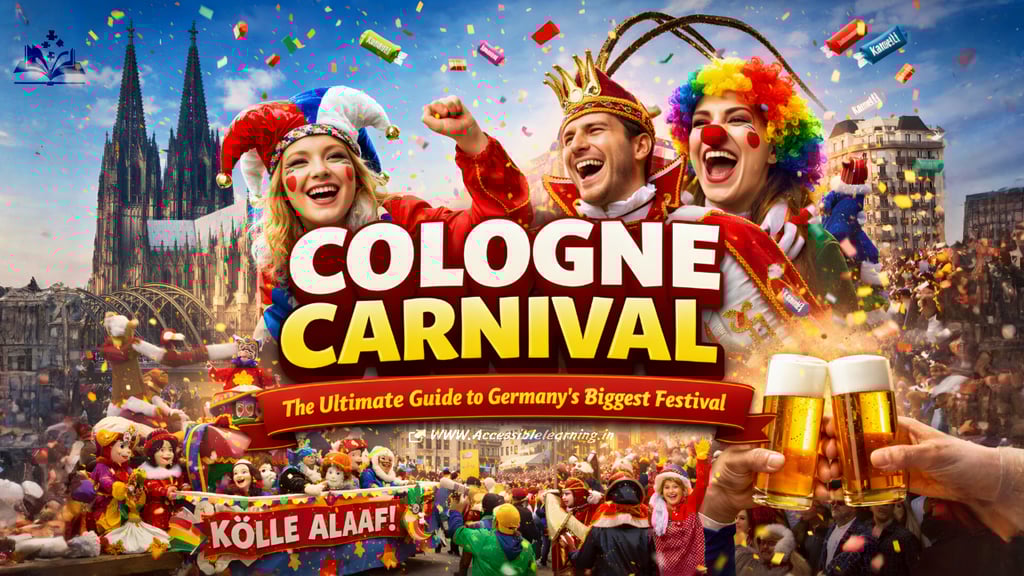
If you want to experience a European festival that feels truly alive, deeply cultural, and wildly joyful, then Cologne Carnival (Kölner Karneval) should be at the top of your travel list.
This isn’t just a parade or a weekend celebration. In Cologne (Köln), Carnival is treated like a fifth season. The city turns into a stage of music, costumes, laughter, satire, street parties, and traditions that locals have carried for generations. During Carnival week, strangers sing together, streets become dance floors, and everyone becomes part of the same story.
Whether you’re going for the parades, the nightlife, the culture, or the social energy, Cologne Carnival is one of those events that doesn’t just entertain you; it pulls you in.
What is Cologne Carnival?
Cologne Carnival is Germany’s most famous Carnival festival and one of Europe’s biggest street celebrations. It includes:
Large-scale parades with creative floats
Street parties across the city
Traditional songs and live performances
Comedy, satire, and political humor
Costumes worn by locals of all ages
Sweets (“Kamelle”) thrown into the crowd
A unique local identity that makes it feel like a different world
For travelers, it’s the perfect mix of:
Culture
Community
Celebration
Visual beauty
Unplanned fun
Why Cologne Carnival is world-famous
Cologne Carnival stands out from other festivals because of how personal it is.
Locals don’t watch it; they become it
In many festivals, people are spectators.
In Cologne, almost everyone participates. It’s not something you attend; it’s something you join.
It’s huge, but still feels authentic
Despite its global popularity, it doesn’t feel commercial. It feels local because it is.
The mix of tradition and madness is perfect
You’ll see classic uniforms, ceremonial groups, and cultural processions… right next to a superhero dancing with a pirate at 11 AM.
That blend is the charm.
Cologne Carnival History (Simple but meaningful)
Carnival in Cologne has deep roots going back centuries, connected to the Christian calendar. Traditionally, it’s a final burst of celebration and feasting before Lent (a season of fasting and reflection leading up to Easter).
Over time, Cologne developed a structured Carnival culture, especially in the 1800s, when organized committees started planning parades and public celebrations. That structure is why Cologne Carnival feels so massive and well-arranged today.
When does Cologne Carnival happen?
Carnival season officially begins on:
11 November at 11:11 AM
It’s symbolic, fun, and a famous Carnival moment.
But the main action happens during the big Carnival week, usually in February or early March (dates change yearly based on Easter).
If your goal is the full experience, focus on the main Carnival week, because that’s when Cologne becomes fully transformed.

The Main Carnival Days (What happens each day)
If you’re planning a trip, you need to understand this timeline. Every day has a different “energy.”
Weiberfastnacht (Thursday): The start of street Carnival
This is the official explosion point.
Street celebrations start early
People show up in costume from morning
The party begins in public squares and streets
A playful tradition: women cut off men’s ties (symbolically)
Travel vibe: high energy, exciting, culturally iconic.
Carnival Friday: Music, bars, and local parties
Still big celebrations, but slightly more flexible.
more indoor events
more bar-to-bar culture
lots of concerts and Carnival songs
Travel vibe: good for meeting locals without peak crowd pressure.
Carnival Saturday: Peak party atmosphere
Saturday is one of the loudest and busiest days.
nonstop movement
street party zones are packed
nightlife can go very late
Travel vibe: if you love festivals, this is your day.
Carnival Sunday: Community + family-friendly celebrations
Sundays often include smaller parades and more community events.
enjoyable daytime experience
better for families
easier for photography
Travel vibe: balanced — party + culture + comfort.
Rosenmontag (Rose Monday): The grand parade
This is the crown jewel of Cologne Carnival. The Rosenmontag Parade is legendary:
huge satirical floats
marching bands
costume groups
city-wide celebration
massive crowd energy
People shout:
“Kamelle!”
to receive candy and chocolates thrown from floats.
Travel vibe: bucket-list-level experience.
Carnival Tuesday: The final wave
This day is emotional in a fun way; people celebrate because the season is ending.
You’ll feel the last burst of energy.
Ash Wednesday: The sudden silence
What’s fascinating is how fast Cologne changes.
After days of noise, the city becomes calm again. It’s almost like the festival never happened.
Where does Cologne Carnival take place? (Best areas)
Carnival is spread across the city, but these locations matter most.
Top street party areas
Altstadt (Old Town): classic and scenic
Heumarkt: major party hotspot
Alter Markt: traditional vibes + performances
Zülpicher Straße: youth-heavy, wild energy
If you want something intense, go to Zülpicher Straße.
If you want a cultural + scenic vibe, go to Altstadt.
The meaning of “Kölle Alaaf!” (and why it matters)
You will hear “Kölle Alaaf!” everywhere. It’s not just a slogan. It’s a cultural identity statement, a Carnival greeting meaning something like:
“Cologne above all” / “Long live Cologne.”
When you say it back, locals usually smile; it’s like you’re accepting their city spirit.
Cologne Carnival costumes: more than just fashion
Costumes are part of the soul of Carnival.
Why locals wear costumes:
It removes social boundaries
It turns the city into a theatre
It makes strangers instantly connect
It’s playful freedom with a cultural base
You’ll see:
clowns
superheroes
kings/queens
animals
retro characters
creative political satire outfits
Travel tip:
Wear something simple if you want. Even a funny hat + face paint work. The goal is participation, not perfection.
What makes the parades special?
Cologne Carnival parades are not only beautiful, they’re clever.
Parade highlights:
floats made with artistic craftsmanship
satirical political commentary (in humorous form)
themed performances
traditional groups in historic uniforms
bands playing local Carnival music
It’s a rare example of celebration + culture + comedy together.
Food & drink you must try during Cologne Carnival
You can’t understand Cologne without tasting Cologne.
Most popular Carnival foods:
Bratwurst (German sausage)
Pretzels
Schnitzel
Currywurst
Local bakery snacks (especially sweet pastries)
The local beer: Kölsch
Kölsch is Cologne’s iconic beer served in small glasses.
This is the trick:
Because glasses are small, you don’t feel like you drank much… until later 😄
Budget and Costs (What travelers should expect)
Carnival season is peak travel time in Cologne.
Typical cost changes during Carnival week:
Hotels increase heavily (often 2x or more)
City center stays become expensive
Transport remains affordable
Food prices stay mostly stable, but bars can be crowded and pricier
Smart money tips:
book accommodation early (3–6 months recommended)
stay slightly outside center but near public transport
eat heavier meals earlier in the day
carry cash for street food + small payments
Where to stay in Cologne during Carnival
Choosing location is everything.
Best areas to stay (walkable + convenient):
Near Cologne Cathedral (Dom area)
Neumarkt
Deutz (across the river, easy access)
Altstadt edge areas (but book early!)
If you stay too far outside, returning at night may be tiring, especially with crowd congestion.
Transport tips (very important during Carnival)
Cologne Carnival means:
road closures
tight crowds
limited taxi access
Best transport strategy:
Use trams + U-Bahn
Avoid driving
Walk when possible
Set meeting points with friends (network can be slow in crowds)


Safety, etiquette, and cultural respect
Cologne is generally safe, but Carnival crowds require smart travel behavior.
Safety tips:
Keep your phone and wallet zipped
don’t carry passport in crowds
don’t accept open drinks
stay hydrated and eat properly
Local etiquette:
Join the vibe but stay respectful
Don’t mock traditions
Don’t push aggressively in parade crowds
If someone says “Kölle Alaaf!”, respond back
Cologne Carnival is friendly. The culture rewards friendly people.
Photography + Content Creation Tips (for creators)
If you’re a creator, Cologne Carnival is pure content gold.
Best content opportunities:
street portraits in costumes
cinematic wide shots at parades
candy-throw moments
night street lights + live music scenes
Cathedral + Carnival contrast (historic + modern chaos)
Creator tip:
Use:
a small camera/phone gimbal
lens wipe cloth (beer splash + rain is common)
wrist strap (crowds!)
Morning is best for clean shots. Night is best for dramatic shots.
Best travel experience: how many days should you stay?
To feel Cologne Carnival properly, you need enough time.
Ideal plan:
3 days: great for Rosenmontag + one street party day
4–5 days: best for full story (Thursday to Monday)
1–2 days: possible, but you’ll feel rushed
If you want one “perfect” schedule, plan around:
Thursday (Weiberfastnacht) + Monday (Rosenmontag)
Why Cologne Carnival feels unforgettable
Cologne Carnival is not just about parades, costumes, or beer. It’s about the feeling of a city collectively deciding:
“Life should be celebrated loudly.”
That’s why it stays in your memory. You don’t just return home with photos; you return with stories, random friendships, unexpected laughter, and the kind of joy that modern travel rarely gives.
If you’re looking for a European trip that blends:
culture
celebration
community
and pure fun
Then Cologne Carnival is one of the best festivals on Earth to experience.
FAQ's
Q: What is Cologne Carnival?
Cologne Carnival (Kölner Karneval) is Germany’s largest Carnival celebration and one of Europe’s biggest street festivals. It features parades, costumes, street parties, traditional music, satire floats, and major events like Weiberfastnacht and the Rosenmontag Parade.
Q: When does Cologne Carnival take place?
Cologne Carnival season officially starts on 11 November at 11:11 AM, but the main Carnival week happens in February or early March, depending on Easter.
Q: What is the best day to visit Cologne Carnival?
The best day is Rosenmontag (Rose Monday), when the biggest and most famous parade takes place. If you want a full experience, visit from Thursday (Weiberfastnacht) to Monday (Rosenmontag).
Q: Do tourists need to wear costumes at Cologne Carnival?
Costumes are not required, but they are strongly recommended. Most people in Cologne participate by dressing up, and even a simple costume helps you feel included in the celebration.
Q: Where is the best place to enjoy Cologne Carnival?
The best areas include:
Altstadt (Old Town)
Heumarkt
Alter Markt
Zülpicher Straße (more youth/party-heavy)
Old Town is best for a classic cultural experience, while Zülpicher Straße is known for intense street party vibes.
Q: What does “Kölle Alaaf” mean?
“Kölle Alaaf” is the official Cologne Carnival greeting. It roughly means “Cologne above all” or “Long live Cologne.” People shout it during parades and celebrations.
Q: What is “Kamelle” at Cologne Carnival?
“Kamelle” refers to the candy and chocolates thrown from parade floats into the crowd. People shout “Kamelle!” to ask for sweets during the parade.
Q: Is Cologne Carnival family-friendly?
Yes, especially during daytime events and Sunday celebrations. However, late-night street parties (especially Saturday night) can be crowded and alcohol-heavy, so families should focus on daytime parades and cultural areas.
Q: Is Cologne Carnival safe for travelers?
Generally yes, but it’s extremely crowded. Travelers should:
keep valuables secured
avoid carrying passports in crowds
stay alert in packed streets
stick to public transport and walking routes
Q: How many days do you need for Cologne Carnival?
For the best experience:
3 days is enough for highlights
4–5 days gives the full Carnival feeling
1 day works only if you want the Rosenmontag Parade
Subscribe to Frontier Intelligence
All © Copyright reserved by Accessible-Learning Hub
| Terms & Conditions
Accessible Learning Hub — Actionable clarity for high-agency minds.
Weekly breakdowns on AI breakthroughs, capital flow, and human performance systems. Zero fluff.