

Chinese New Year’s Eve: Meaning, Traditions, Food, and Celebration Guide
Chinese New Year’s Eve (Chúxī) is the most important night of the Lunar New Year, centered around family reunions, symbolic traditions, ancestor rituals, lucky foods, and cultural celebrations that welcome prosperity and happiness. Explore the meaning, customs, and modern ways this festival is celebrated across China and worldwide.
CULTURE/TRADITIONEVENT/SPECIALCHINACELEBRATION/FESTIVALS
Kim Shin
2/6/20268 min read
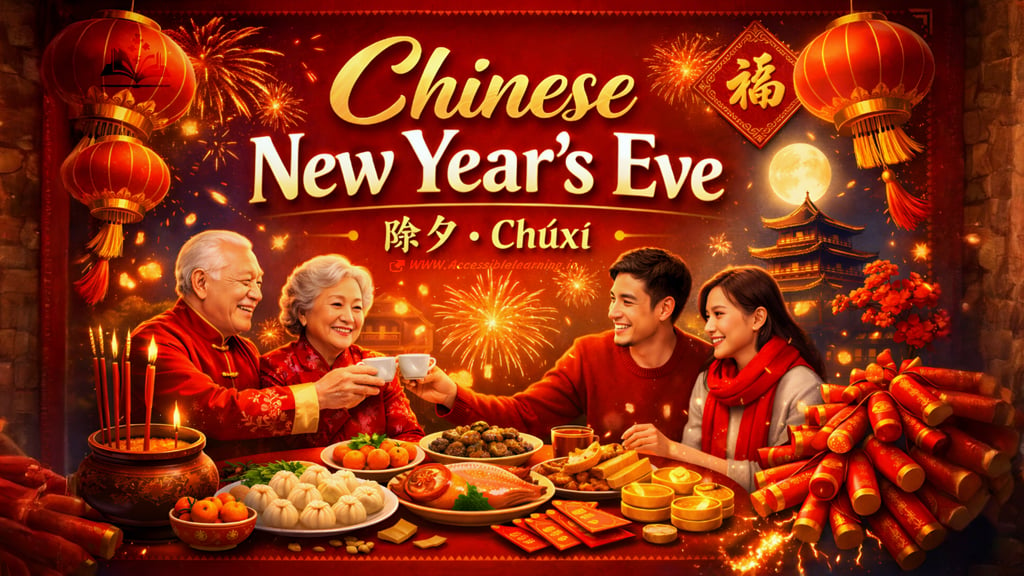
Chinese New Year’s Eve is not simply the night before the new year. In Chinese tradition, it is the most meaningful evening of the entire lunar calendar, filled with family emotion, spiritual symbolism, and carefully followed customs meant to end the old year cleanly and welcome the new one with prosperity.
This night is called 除夕 (Chúxī), meaning “the evening of removing the old year.” It represents a cultural reset: people gather, clean their homes, honor ancestors, share food, forgive conflicts, and prepare their hearts for renewal.
Unlike party-style New Year celebrations, Chinese New Year’s Eve is deeply human-centered: it celebrates family bonds, peace after hardship, and the hope that the coming year will be kinder.
What Is Chinese New Year’s Eve?
Chinese New Year’s Eve is the last night of the lunar year, celebrated right before the first day of the Spring Festival (Chinese New Year). It is the transition point between:
the “closing” of one year
the “opening” of a new cycle of luck, health, and fortune
This night carries the energy of “ending properly” because in Chinese culture, how you close the year affects how you enter the next one.
Why Chinese New Year’s Eve Is So Important in Chinese Culture
Chinese New Year’s Eve is important not only because it’s a holiday, but also because it expresses the strongest values in Chinese society:
Family reunion above everything
This is the night when family members try their best to return home. Even if someone lives in another city or another country, they make this time sacred.
It reflects a deep belief:
| A year is not complete until the family gathers.
A spiritual and emotional “reset”
The night is built around themes like:
cleansing bad luck
releasing negativity
restoring harmony
blessing the coming year
It is tradition, psychology, and spirituality blended together.
It’s the start of “luck season.”
In Chinese belief, the first days of the lunar new year are highly symbolic. Eve acts as the doorway.
That’s why people become extra careful:
with words
with actions
with behavior
with rituals
Because the energy you carry now is believed to shape the months ahead.
Traditions of Chinese New Year’s Eve (Chúxī): What People Do and Why
Chinese New Year’s Eve is packed with rituals that may look simple, but each has meaning.
Deep cleaning the house (扫尘 Sǎochén)
This happens before the evening begins. Families clean thoroughly to:
“sweep away” bad luck
remove stagnation and negativity
make space for abundance
This is not just a chore; it’s symbolic life management: a clean home = a clean fortune.
Decorating with red symbols of protection
Red is the dominant color because it represents:
good fortune
life energy
joy
protection from evil
Homes are decorated with:
春联 (Chūnlián): red couplets with poetic blessings
福 (Fú): the fortune character (often upside down to mean “fortune arrives”)
red lanterns
paper cuttings
door guardian images
These decorations are not for style; they’re spiritual signals:
| “This home welcomes luck, not misfortune.”
Paying debts and closing unfinished business
A lesser-known but culturally powerful practice: many people try to settle:
unpaid debts
unresolved disagreements
unfinished duties
The belief is simple:
Don’t carry old burdens into a new year.
It’s like a cultural version of “cleaning your mind.”
Wearing new clothes
New clothes symbolize:
a new beginning
freshness
new identity
improved fortune
Many families buy at least one new item, even a small accessory, to represent renewal.
The Reunion Dinner (年夜饭 Niányèfàn): The Most Important Meal of the Year
At the center of Chinese New Year’s Eve is the reunion dinner: a feast of unity.
It is hosted most often at the home of:
grandparents
parents
the eldest family members
Even if the year was hard, this dinner is seen as a moment when:
anger is paused
love becomes a priority.
connection becomes stronger
People say this meal tastes different not because of spices, but because of meaning.
Seating itself carries meaning
In traditional families:
elders are seated first
younger members serve tea
respect is expressed through small gestures
This is how values are practiced, not spoken.

Foods of Chinese New Year’s Eve and Their Symbolic Meanings
Food is a language on this night. People “eat blessings.”
Dumplings (饺子 Jiǎozi): wealth and fortune
Especially popular in Northern China. Dumplings resemble ancient gold ingots.
Some families put a coin or special piece inside one dumpling. Whoever gets it is believed to have strong luck.
Fish (鱼 Yú): surplus and abundance
Fish is essential due to the phrase:
年年有余 (Niánnián yǒuy ú)
“May you have surplus year after year.”
Traditional belief: fish should not be fully eaten, leaving some behind to symbolize “extra.”
Spring rolls (春卷): gold bars
Spring rolls look like golden bars and represent money and prosperity.
Longevity noodles (长寿面): long life
Long noodles represent:
long life
unbroken fortune
Cutting the noodles is often avoided, as it symbolizes “cutting life.”
Glutinous rice cake (年糕 Niángāo): growth and promotion
“Niángāo” sounds like “year higher,” symbolizing progress:
higher status
higher income
better life
Tangyuan (汤圆): family unity
Round rice balls symbolize togetherness, completeness, and a peaceful home.
More common in southern regions.
Honoring Ancestors: The Spiritual Side of Chinese New Year’s Eve
For many families, Chúxī includes ancestor rituals, such as:
lighting incense
preparing food offerings
bowing in respect
praying for health and protection
This practice carries the belief that a family includes:
living members
past generations
spiritual continuity
Even modern families who aren’t religious keep this tradition because it creates emotional grounding:
“We remember who we come from.”
The Legend Behind Firecrackers: The Nian Monster Story
A famous myth explains why red and loud noises matter. The story says a beast called Nian (年兽) would attack villages every new year. People discovered Nian feared:
loud noises
red color
bright light
So families began using:
firecrackers
fireworks
red decorations
Even today, this legend influences why the holiday feels so energetic.
In modern cities, fireworks may be restricted for safety and pollution, but people still celebrate using:
lantern displays
light shows
community events
Staying Awake Late (守岁 Shǒusuì): “Guarding the Year”
One of the most touching traditions is 守岁, staying awake late into the night.
Traditionally, it is believed to:
protect the family
increase parents’ longevity
keep misfortune away
The modern version includes:
conversations
TV programs
snacks
mahjong/cards
laughter with relatives
It’s less about superstition now and more about:
spending time while everyone is together.
The Role of the CCTV Spring Festival Gala (春晚 Chūnwǎn)
In modern China, Chinese New Year’s Eve often includes watching CCTV’s Spring Festival Gala, one of the largest TV broadcasts in the world.
The show includes:
comedy sketches
music and dance
celebrity performances
cultural showcases
patriotic themes
For many families, it plays in the background like a soundtrack of the evening.
It acts as a cultural glue:
Even if you’re far away, you feel connected.
Red Envelopes (红包 Hóngbāo): Money, Blessings, and Protection
Red envelopes are given to:
children
unmarried relatives
younger family members
They represent:
blessings
protection from evil
transfer of good fortune
Traditionally, the red color matters more than the amount.
Digital Hongbao: a modern twist
WeChat and other apps made digital hongbao popular. Families now send lucky money digitally, and it has become a fun game as well.
Chinese New Year’s Eve Etiquette: What to Do and What to Avoid
This night has strong “energy rules.” Even families that don’t follow everything still respect these ideas.
Common “Do’s”
✅ speak kindly
✅ use lucky phrases
✅ wish health and wealth
✅ show respect to elders
✅ keep the home bright and lively
✅ share food generously
Common “Don’ts”
❌ fight or argue
❌ say negative words (death, illness, poverty)
❌ break dishes or glass
❌ cry (seen as inviting sadness)
❌ talk about failure or bad events
It may sound strict, but it has a beautiful meaning:
| Protect the atmosphere, because atmosphere becomes destiny.


How Chinese New Year’s Eve Is Celebrated Outside China
Chinese communities worldwide keep Chúxī alive:
Singapore
Malaysia
Indonesia
USA & Canada
Australia
UK
Thailand
India (Kolkata, Mumbai, etc.)
They may adjust traditions depending on location, but the core remains:
reunion dinner
red décor
blessings
honoring heritage
In mixed families or multicultural communities, Chinese New Year’s Eve is often celebrated together with local traditions, creating a new shared culture.
How Chinese New Year’s Eve Is Changing Today (Modern Life vs Tradition)
Modern celebrations are evolving:
Restaurant reunion dinners
Many families now book banquet halls or restaurants for convenience.
Smaller households
Urban life and smaller families mean fewer people at the table, but the symbolism remains.
Online celebrations
Families in different countries now celebrate through:
video calls
sending digital hongbao
watching the gala online
New priorities
Younger generations may focus more on:
relationships
mental peace
travel experiences
personal goals
Yet the night still holds emotional power.
Why Chinese New Year’s Eve Still Feels Deeply Human
Chinese New Year’s Eve survives centuries because it speaks to something universal:
the need to return home
the desire to start fresh
the hope that next year will be better
the comfort of family and familiar food
In a world where people are constantly rushing, this night forces a pause and whispers:
“Before you go forward, come back to your roots.”
Chinese New Year’s Eve (Chúxī) is more than tradition. It is an emotional ceremony of closure and renewal. It combines food, symbolism, family bonding, cultural identity, and spiritual hope into a single night.
Whether you celebrate it in Beijing, Singapore, London, or Delhi, the meaning stays the same:
End the old year with respect. Begin the new year with joy.
FAQ's
Q: What is Chinese New Year’s Eve called in Chinese?
Chinese New Year’s Eve is called 除夕 (Chúxī) in Chinese. It means “the evening of removing the old year” and is the most important night before the Lunar New Year begins.
Q: Why is Chinese New Year’s Eve important?
Chinese New Year’s Eve is important because it is the traditional time for family reunions, the reunion dinner (年夜饭), ancestor-honoring rituals, and symbolic activities meant to welcome good luck, prosperity, and harmony for the coming year.
Q: What is the reunion dinner on Chinese New Year’s Eve?
The reunion dinner, called 年夜饭 (Niányèfàn), is a large family feast held on Chinese New Year’s Eve. It is considered the most meaningful meal of the year and symbolizes togetherness, unity, and abundance.
Q: What foods are eaten on Chinese New Year’s Eve, and what do they mean?
Common Chinese New Year’s Eve foods include:
Dumplings (饺子) for wealth
Fish (鱼) for surplus and abundance
Longevity noodles for long life
Rice cake (年糕) for growth and promotions
Spring rolls for prosperity
These foods are eaten because their shape or pronunciation symbolizes good fortune.
Q: Why do people eat fish on Chinese New Year’s Eve?
People eat fish because of 鱼. (yú) sounds like 余 (yú), which means “surplus.” It represents the wish:
年年有余 (Niánnián yǒuyú) — “May you have abundance every year.”
Q: What is Shǒusuì (守岁) on Chinese New Year’s Eve?
守岁 (Shǒusuì) is the tradition of staying awake late on Chinese New Year’s Eve. It is believed to protect the household, bring longevity to parents, and welcome the new year with positive energy.
Q: Why is red color used on Chinese New Year’s Eve?
Red is used because it symbolizes luck, happiness, celebration, and protection. According to tradition, red scares away evil spirits and bad fortune, especially linked to the legend of the monster Nian.
Q: What are red envelopes (hongbao) given for on Chinese New Year’s Eve?
Red envelopes (红包 hóngbāo) are given to pass on blessings and luck. They usually contain money and are traditionally given by elders or married adults to children and younger unmarried family members.
Q: What are common things people avoid on Chinese New Year’s Eve?
Many people avoid:
fighting or arguing
breaking dishes or glass
saying unlucky words (death, sickness, poverty)
negative talk or crying
These are believed to attract bad luck into the new year.
Q: How is Chinese New Year’s Eve celebrated today?
Today, Chinese New Year’s Eve is celebrated with:
family reunion dinner
home decoration with red couplets and lanterns
sending digital red envelopes
watching the Spring Festival Gala (Chūnwǎn)
staying up late and enjoying family activities
Subscribe To Our Newsletter
All © Copyright reserved by Accessible-Learning Hub
| Terms & Conditions
Knowledge is power. Learn with Us. 📚

