

China Weekly News Update: Key Policy, Economy, and Technology Developments
A complete overview of the most important China news from last week, covering economy, technology, infrastructure, policy, trade, and geopolitics. Clear, human-focused insights without entertainment coverage.
NEWS/CURRENT AFFAIRSCHINANEPOTISM/SOCIAL ISSUES
Kim Shin
12/29/20254 min read
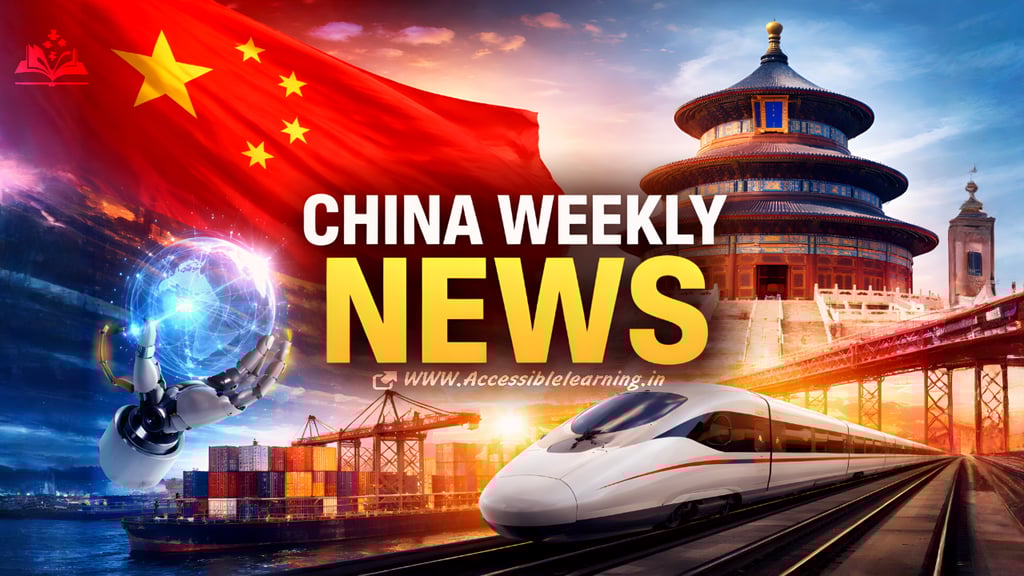
China experienced a decisive and complex week as policymakers, regulators, and local authorities responded to economic pressure, technological change, and geopolitical realities. From tighter artificial intelligence oversight and financial stress at the local level to infrastructure expansion and export controls, last week’s developments highlight how China is recalibrating its priorities. These events reflect not isolated actions, but a broader effort to stabilize growth, manage risk, and protect strategic interests at home and abroad.
China Moves to Tighten Rules on Human-Like Artificial Intelligence
Chinese regulators released draft rules aimed at controlling artificial intelligence systems designed to interact with humans in emotional or highly realistic ways. The proposed regulations focus on preventing psychological dependency, protecting personal data, and limiting content that could influence public opinion or threaten national security.
AI platforms may soon be required to clearly label artificial intelligence interactions, restrict manipulative design features, and ensure stronger oversight of training data. This move reflects Beijing’s broader strategy of encouraging technological growth while maintaining strict regulatory control over emerging digital tools.
Local Governments Increase Asset-Backed Borrowing to Manage Debt
China’s local governments significantly increased the issuance of asset-backed securities last week as fiscal pressure continued to rise. These financial products are backed by infrastructure assets such as toll roads, utilities, and public facilities, allowing governments to raise funds without direct borrowing.
While the strategy helps ease short-term cash shortages, economists warn that many prime assets have already been used, pushing authorities toward riskier securitization. This highlights ongoing challenges linked to falling land sales revenue and weak property markets, especially in smaller cities.
World’s Longest Expressway Tunnel Opens in Xinjiang
China officially opened a 22-kilometer expressway tunnel through the Tianshan Mountains in the Xinjiang region, making it the longest of its kind in the world. The tunnel dramatically reduces travel time across difficult terrain and improves year-round transportation reliability.
Beyond engineering achievement, the project strengthens economic integration, logistics efficiency, and regional connectivity in western China. It also underscores Beijing’s continued focus on infrastructure investment as a long-term economic stabilizer.
Industrial Profits Decline as Deflation Pressures Persist
New economic data released last week showed a sharp decline in industrial profits, reflecting weak domestic demand and persistent deflationary pressure. Heavy industries such as steel, chemicals, and construction materials were particularly affected.
Although sectors like electric vehicles and advanced manufacturing showed some resilience, overall factory profitability remains under strain. The figures increase pressure on policymakers to introduce stronger consumption-focused stimulus rather than relying solely on infrastructure and exports.
China Sanctions U.S. Defense Companies Over Taiwan Arms Sales
Beijing announced sanctions on multiple U.S. defense firms and senior executives in response to recent American weapons sales to Taiwan. The measures include freezing assets linked to China and banning future business cooperation with Chinese entities.
The move signals rising tensions across the Taiwan Strait and reinforces China’s position that foreign military support for Taiwan crosses its political red lines. It also highlights growing friction in China-U.S. relations as strategic rivalry deepens.


Employment and Industrial Safety Take Center Stage
Last week also saw renewed focus on employment stability and industrial safety. Large-scale job fairs in major cities aimed to absorb graduates and displaced workers amid slower economic growth. At the same time, authorities released findings from a deadly mining accident investigation, holding multiple parties accountable for safety failures.
These actions reflect a broader effort to maintain social stability by protecting jobs and strengthening oversight in high-risk industries.
China Expands Support for Small and Medium-Sized Enterprises
Last week, Chinese authorities announced new policy measures aimed at supporting small and medium-sized enterprises as economic pressure continues. These measures include easier access to bank credit, reduced financing costs, and extended tax relief for qualifying businesses. SMEs employ a large portion of China’s workforce, and policymakers see their stability as essential for maintaining employment and domestic consumption during the slowdown.
Property Sector Stabilization Efforts Intensify
China introduced fresh steps to stabilize its struggling property sector, including guidance encouraging banks to accelerate mortgage approvals and extend loan repayment periods for developers with viable projects. Local governments were also urged to prioritize the completion of unfinished housing projects to restore buyer confidence. While the property market remains weak, officials signaled a shift toward preventing further deterioration rather than rapid expansion.
China Advances Digital Yuan Cross-Border Pilots
China expanded pilot programs for cross-border use of its digital currency, the e-CNY, involving select trade settlements and financial institutions. The move aims to reduce transaction costs, improve payment efficiency, and strengthen financial oversight. It also reflects Beijing’s long-term ambition to modernize its payment systems and reduce reliance on traditional international settlement networks.
Agricultural Output Targets Adjusted Amid Climate Challenges
Chinese agricultural authorities revised grain production targets after reviewing weather-related risks, including drought conditions in some northern regions and flooding concerns in the south. New guidance focused on improving irrigation efficiency, expanding disaster insurance coverage for farmers, and accelerating the adoption of high-yield crop varieties. Food security remains a top policy priority as climate volatility increases.
China Strengthens Export Controls on Strategic Materials
Last week, China announced tighter oversight on the export of certain strategic materials used in high-tech manufacturing and energy industries. The measures require exporters to meet stricter licensing and reporting requirements. Officials described the move as necessary to safeguard national security and ensure responsible global supply chains amid rising geopolitical competition.
Public Transportation Investment Boosted in Major Cities
Several major Chinese cities approved new funding for urban rail and electric bus networks, aiming to reduce congestion and emissions. The projects focus on expanding metro lines, upgrading aging transit infrastructure, and increasing the use of clean-energy vehicles. Urban transportation upgrades are seen as both an economic stimulus tool and a step toward long-term environmental goals.
Last week’s developments show China navigating a careful balancing act. Economic data and property market challenges continue to test policymakers, while infrastructure investment, SME support, and digital currency pilots signal long-term planning. At the same time, tighter AI regulation and export controls reflect Beijing’s focus on governance and security, while firm responses to foreign military actions underline its geopolitical stance. Together, these moves suggest a country focused on stability, control, and strategic resilience as it moves into the next phase of global and domestic change.
Subscribe to Frontier Intelligence
All © Copyright reserved by Accessible-Learning Hub
| Terms & Conditions
Accessible Learning Hub — Actionable clarity for high-agency minds.
Weekly breakdowns on AI breakthroughs, capital flow, and human performance systems. Zero fluff.