

Chichibu Night Festival (秩父夜祭): Japan’s Most Spectacular Winter Float Festival
Experience the Chichibu Night Festival (秩父夜祭), Japan’s iconic winter celebration featuring giant festival floats, traditional performances, and a spectacular December fireworks show. Explore its history, rituals, travel tips, and what makes this UNESCO-recognized event one of Japan’s most powerful cultural festivals.
EVENT/SPECIALJAPANCELEBRATION/FESTIVALS
Kim Shin
11/26/20254 min read
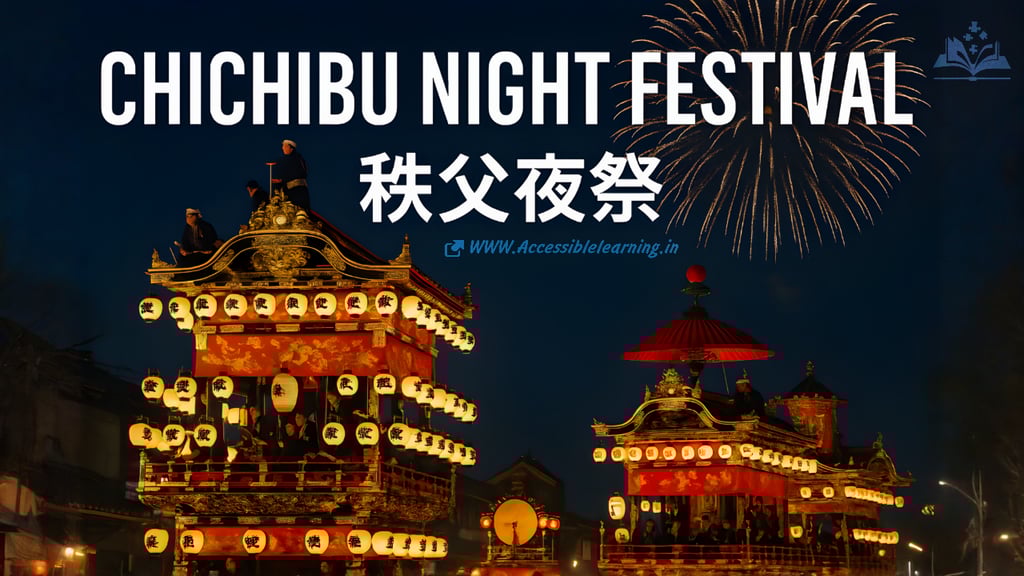
The Chichibu Night Festival (秩父夜祭 / Chichibu Yomatsuri) is one of Japan’s most iconic winter celebrations. Held every year on December 2 and 3 in Chichibu City, Saitama Prefecture, it is known for its enormous festival floats, powerful drum and flute performances, poetic lantern-lit streets, and a winter fireworks show that fills the sky with color.
It is considered one of Japan’s Top Three Float Festivals, standing alongside Kyoto’s Gion Matsuri and Takayama’s Takayama Matsuri. In 2016, it became part of UNESCO’s Intangible Cultural Heritage under the designation “Yama, Hoko, and Yatai Float Festivals in Japan.”
This festival blends spiritual devotion, artistic craftsmanship, and raw energy, creating a winter atmosphere unlike any other in Japan.
Historical Background and Cultural Roots
The festival is dedicated to the deity Myōken (妙見), associated with the North Star. This deity has been worshiped in Chichibu for more than 1,000 years. The Chichibu Night Festival is the most important ritual event of Chichibu Shrine, which itself is over 2,000 years old.
Why the Festival Exists
To honor Myōken, who protects the region
To give thanks for the year’s harvest
To pray for safety, prosperity, and good fortune
To strengthen community unity
The strong tradition of float festivals in Japan comes from the Edo period, when townspeople competed in creating elaborate, grand designs. Chichibu kept its tradition intact, which is why the festival today still feels deeply authentic.
The Giant Festival Floats (Yatai & Kasaboko)
The heart of the festival is the parade of six giant floats:
Four Yatai Floats
These are traditional festival “carriage stages” featuring:
Hand-carved wooden sculptures
Gold leaf decorations
Heavy lantern arrangements
Live kabuki-style performances
Musicians playing flutes, drums, and shamisen
Each float weighs between 10 and 20 tons.
Two Kasaboko Floats
These are taller, umbrella-shaped sacred floats with:
Towering poles reaching up to 10–15 meters
Circular frames decorated with symbolic motifs
Large umbrellas representing celestial protection
The Pulling Process
Pulling the floats requires over 100 people for each structure. You’ll hear:
Chants
Taiko drums
Festival bells
Flute melodies
The most dramatic moment is when these heavy floats climb the steep Dangozaka slope, illuminated under the night sky. This is where the festival reaches its emotional peak.

The Winter Fireworks: A Rare Seasonal Spectacle
Firework events in Japan usually happen in summer. Chichibu is an exception.
On the night of December 3, the sky erupts with a nearly two-hour fireworks show, synchronized with:
Music
Float movements
Ceremonial rituals
Why it feels more powerful:
Winter air is dry and clear, enhancing visibility
Smoke disperses faster
Colors are sharper
The contrast between cold air and warm lanterns is visually stunning
This gives the Chichibu fireworks their signature crisp and brilliant look.
Festival Schedule and Key Rituals
December 2: Yoimiya (Preparatory Day)
Ceremonial rituals at Chichibu Shrine
Early performances by musicians
Floats positioned for public viewing
Food stalls open throughout the city
December 3: Honmiya (Main Day)
Full-scale float procession from afternoon till late night
Traditional kabuki theatre on the Yatai stages
Climax: Floats pulled up the Dangozaka slope
Grand winter fireworks show (7:30 PM–9:30 PM)
Ritual offerings at Chichibu Shrine
The entire city becomes a glowing stage of lanterns, sounds, and movement.
Local Food, Culture, and Street Atmosphere
During both days, the streets are filled with more than 400 food stalls. Local Chichibu specialties include:
Miso Potatoes: Fried potatoes coated in rich miso
Waraji Katsudon: Large cutlet rice bowl
Chichibu soba and udon
Sweet sake (amazake) for warming up
Local sake from Chichibu breweries
Craft booths offer wooden toys, good-luck charms, and traditional textiles made with Chichibu’s own weaving style.
The sound of festival music echoes across the city, creating an old-world charm.
UNESCO Recognition and Preservation Efforts
In 2016, the festival was registered as part of Japan’s float festival heritage. This helps ensure:
Protection of traditional craftsmanship
Preservation of musical styles
Training of younger generations
Maintenance of floats, costumes, and rituals
Local residents play a major role through volunteer groups who manage float pulling, maintenance, and musical training throughout the year.
Visitor Experience: What You Should Know
Attending the Chichibu Night Festival is unforgettable but requires some planning.
Crowds and Access
Around 300,000 visitors arrive during the two days
Streets get extremely crowded on December 3
Arrive early if you want a viewing spot near the slope or fireworks area
Essential Tips
Dress warm; temperatures often drop below 5°C
Bring gloves and heat packs
Expect long walking distances
Photography gear: telephoto lens helpful for fireworks
Public transport is reliable but packed after the festival
Best Spots to Watch
Around Dangozaka slope
Yao Department Store area
Near Hitsujiyama Park for fireworks
Along the main festival route (for close float shots)
How to Get There
From Tokyo:
Seibu Railway: Ikebukuro → Seibu-Chichibu Station (approx. 80–90 minutes)
Chichibu Railway: Kumagaya → Chichibu Station
The city is small enough to walk between stations and festival areas.
The Chichibu Night Festival (秩父夜祭) is more than a winter event. It’s a living cultural treasure that blends ancient spirituality, breathtaking craftsmanship, and high-energy celebration. From the massive floats to the crisp winter fireworks, every moment of the festival carries centuries of symbolism and artistry.
It’s a must-see for anyone who wants to experience Japan’s cultural depth beyond the usual tourist paths.

FAQ's
Q: When is the Chichibu Night Festival held?
The festival takes place every year on December 2 and 3, with the main events and fireworks happening on December 3.
Q: Where does the festival happen?
It is held in Chichibu City, Saitama Prefecture, centered around Chichibu Shrine and the surrounding streets.
Q: Why is the festival famous?
It is known for its massive wooden floats, traditional performances, and a long winter fireworks show, which is rare in Japan.
Q: How many floats participate in the festival?
A total of six floats join the procession: four Yatai floats and two Kasaboko floats.
Q: Is the festival recognized by UNESCO?
Yes. The Chichibu Night Festival is part of the UNESCO-recognized group of “Float Festivals in Japan.”
Q: How crowded does it get?
Very crowded, especially on December 3. Nearly 300,000 visitors gather during the festival.
Q: Can I take photos during the event?
Yes. Photography is allowed everywhere, and it’s one of the best festivals for night photography, especially during the float climb and fireworks.
Q: What should I wear?
Warm clothing is essential because the festival takes place at night in early winter, and temperatures can drop below 5°C.
Q: How do I reach Chichibu from Tokyo?
The easiest way is the Seibu Railway from Ikebukuro to Seibu-Chichibu Station. The trip takes about 80–90 minutes.
Q: Is the festival suitable for families?
Yes. It’s family-friendly, though parents should be prepared for heavy crowds and cold weather.
Subscribe to Frontier Intelligence
All © Copyright reserved by Accessible-Learning Hub
| Terms & Conditions
Accessible Learning Hub — Actionable clarity for high-agency minds.
Weekly breakdowns on AI breakthroughs, capital flow, and human performance systems. Zero fluff.