

Cheorwon Hantangang River Ice Trekking Festival: Walking on a Frozen River in Korea
Explore the Cheorwon Hantangang River Ice Trekking Festival, a rare winter experience where frozen rivers, volcanic cliffs, and dramatic ice formations create one of South Korea’s most unforgettable seasonal journeys.
TRAVEL LIFEEVENT/SPECIALSTORY/ENTERTAINMENTSOUTH KOREA
Kim Shin
1/11/20264 min read
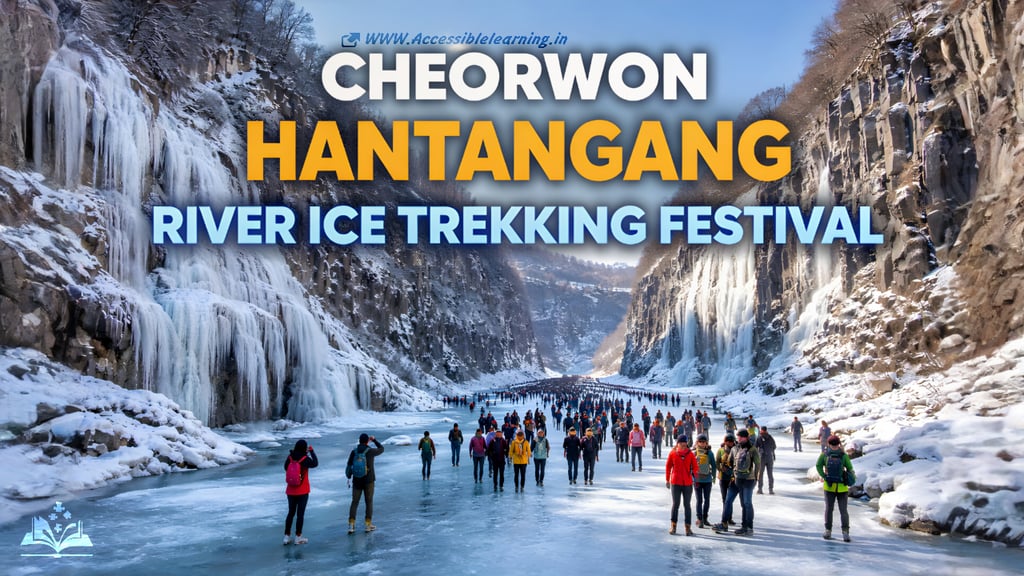
The Cheorwon Hantangang River Ice Trekking Festival is a seasonal winter event that turns one of South Korea’s most dramatic river landscapes into a walkable natural trail. For a limited time each year, the Hantangang River freezes enough to allow safe access to sections of the riverbed that are normally submerged. The result is a rare chance to walk through a volcanic canyon, surrounded by ice-covered cliffs and silent winter scenery that feels untouched and powerful.
Located in Cheorwon, Gangwon Province, the festival has become a standout winter attraction for travelers who want something more immersive than city-based celebrations.
Geological Significance of the Hantangang River
The Hantangang River valley is famous for its volcanic origins. Millions of years ago, lava flows spread across this region, later cooling into thick layers of basalt. Over time, the river cut through these layers, exposing columnar basalt formations, sharp rock faces, and unusual cliff patterns.
These features earned the area recognition as part of the Hantangang River UNESCO Global Geopark. The winter freeze highlights these geological details even more clearly. Ice forms along cracks in the rock, and mineral-stained surfaces become more visible against the snow and frost. For visitors interested in natural history, the trek feels like walking through an open-air geological museum.
What Ice Trekking Really Feels Like
Ice trekking at the festival is not extreme adventure trekking. It is a controlled winter walk designed for the general public. The route follows a frozen section of the river, with staff monitoring conditions and guiding the flow of visitors.
As you walk, the surface changes subtly beneath your feet. Some sections are smooth and glassy, while others are dusted with snow or textured with frozen ripples from moving water. In narrower parts of the canyon, frozen waterfalls cling to the cliff sides, creating natural ice sculptures. In wider areas, the frozen river stretches out, giving a sense of openness and scale that contrasts with the tight rock walls.
Festival Structure and Visitor Flow
Entry to the festival area is organized to maintain safety and protect the ice. Visitor numbers may be managed during peak times, especially on weekends. The trekking course is usually one-directional, helping prevent crowding in narrow sections.
Rest points are placed along or near the route, allowing visitors to pause, warm up, and take in the surroundings. These breaks are important, not just for comfort but also for appreciating the quiet beauty of the landscape.
Cultural and Local Context
Cheorwon sits near the border region of the Korean Peninsula and has a strong connection to nature, agriculture, and conservation. The ice trekking festival reflects this identity. Rather than heavy commercial elements, the event emphasizes local participation and respect for the environment.
Seasonal food stalls often feature regional snacks and hot dishes, giving visitors a taste of local flavors during the coldest part of the year. This connection between landscape, season, and local culture adds depth to the experience.
Weather, Ice Conditions, and Safety
The festival’s schedule is closely tied to weather conditions. If temperatures rise or ice thickness becomes unstable, routes can be shortened or temporarily closed. This flexibility ensures visitor safety but also means plans should remain adaptable.
Clear guidance is provided on where visitors can walk and which areas are off-limits. Following these rules is essential, as the frozen river is a natural surface that can change quickly with temperature and sunlight.
Photography and Visual Appeal
The Hantangang Ice Trekking Festival is especially popular with photographers. The contrast between dark basalt rock and pale ice creates strong natural compositions. Morning light tends to highlight textures in the cliffs, while overcast days produce softer, more even tones that emphasize the scale of the canyon.
Because the scenery changes slightly each day depending on ice formation, no two visits look exactly the same. This unpredictability adds to the sense of discovery.

Who Should Experience This Festival
This festival is ideal for travelers who enjoy nature-focused experiences, winter scenery, and slow exploration. It appeals to hikers, photographers, families looking for a unique seasonal outing, and anyone curious about Korea’s lesser-known landscapes.
Rather than offering constant stimulation, the Cheorwon Hantangang River Ice Trekking Festival invites visitors to observe, walk, and feel the environment around them. It is a reminder that some of the most memorable travel moments come from places that exist only briefly, shaped by weather, time, and nature itself.
FAQ's
Q: What is the Cheorwon Hantangang River Ice Trekking Festival?
It is a winter festival where visitors can walk along a frozen section of the Hantangang River, experiencing dramatic volcanic cliffs, ice formations, and a river route that is normally underwater for most of the year.
Q: When is the festival usually held?
The festival typically takes place in mid- to late January. Exact dates vary each year depending on weather and ice conditions.
Q: Where does the festival take place?
It is held in Cheorwon, Gangwon Province, along designated sections of the Hantangang River ice trekking course.
Q: Is the ice trekking safe for first-time visitors?
Yes, the route is managed and monitored for safety. However, visitors must follow staff instructions and wear proper winter clothing and footwear.
Q: Do I need special equipment to participate?
Technical equipment is not required, but warm layered clothing and winter shoes with good grip are strongly recommended. Ice grips may be helpful depending on conditions.
Q: How long does the ice trekking route take to complete?
The walking time varies by year and route length, but most visitors spend one to two hours on the ice, including stops for rest and photos.
Q: Is the festival suitable for children and families?
Yes, families often attend. Parents should supervise children closely, especially in narrower or more slippery sections of the route.
Q: Is there an entry fee?
The festival usually has a paid entry, though prices and inclusions can change each year. Some activities inside the festival area may be free or require an additional fee.
Q: What happens if the weather changes suddenly?
Routes may be shortened or temporarily closed if ice conditions become unsafe. Safety decisions are made in real time based on weather and temperature.
Q: Can I take photos and videos during the trek?
Yes, photography is one of the highlights of the festival. Visitors are encouraged to capture the scenery, as long as they remain aware of their surroundings.
Q: Is food available at the festival site?
Seasonal food stalls are often set up near the entrance or rest areas, offering warm snacks and drinks during the event.
Q: Why is this festival considered unique in South Korea?
Because it allows people to walk directly on a frozen river through a volcanic canyon, an experience that is only possible for a short period each winter and cannot be replicated in other seasons.
Subscribe to Frontier Intelligence
All © Copyright reserved by Accessible-Learning Hub
| Terms & Conditions
Accessible Learning Hub — Actionable clarity for high-agency minds.
Weekly breakdowns on AI breakthroughs, capital flow, and human performance systems. Zero fluff.