

Chaand Raat: Meaning, Traditions, Mehndi, and Eid Night Celebrations
Chaand Raat is the magical moon-sighting night before Eid-ul-Fitr, filled with late-night shopping, mehndi traditions, bangles, sweets, and joyful family moments. Explore the meaning, history, cultural rituals, and modern celebrations of Chaand Raat across different regions.
CULTURE/TRADITIONEVENT/SPECIALCELEBRATION/FESTIVALS
Jagdish Nishad
2/7/20266 min read
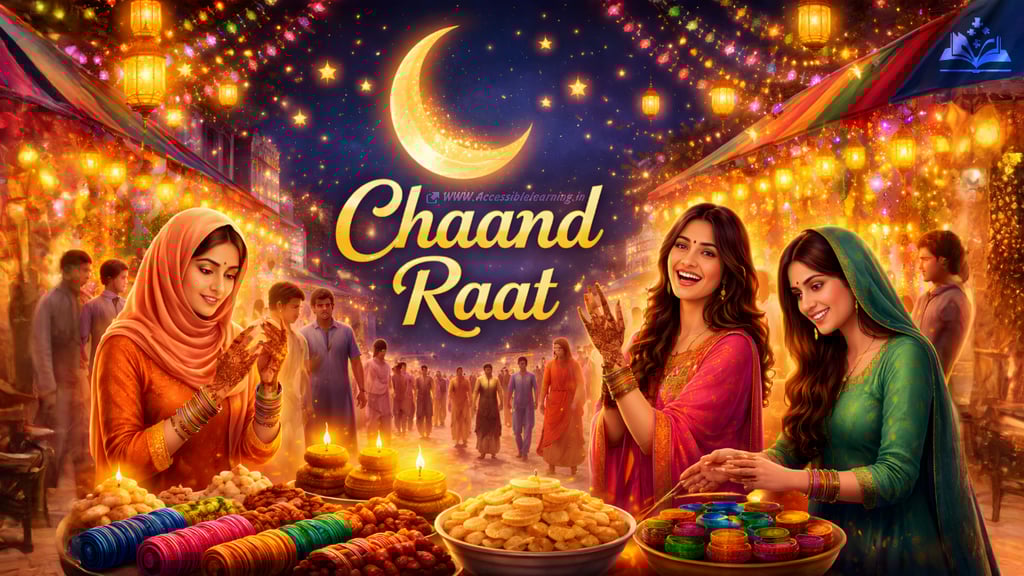
Chaand Raat is not just a night on the calendar. It’s a feeling. A soft, sparkling pause between the holy month of Ramadan and the celebration of Eid. Streets become brighter, markets stay open late, hands are decorated with fresh mehndi, bangles clink with every movement, and families everywhere share one excited sentence: “Eid is tomorrow!”
In South Asia and many Muslim communities worldwide, Chaand Raat is one of the most loved cultural nights of the year. Even people who don’t usually go out late often step outside on this night, because Chaand Raat brings a beautiful mix of faith, tradition, community, and celebration.
This article covers everything you need to know about Chaand Raat: its meaning, origin, rituals, shopping culture, foods, regional styles, and how modern celebrations are evolving.
What is Chaand Raat?
Chaand Raat literally means “Night of the Moon” in Urdu/Hindi. It refers to the evening when the new crescent moon (Eid ka chaand) is sighted, marking the end of Ramadan and confirming that Eid-ul-Fitr will be celebrated the next day.
So technically, Chaand Raat happens on:
29th night of Ramadan, if the moon is sighted that night
or30th night of Ramadan, if the moon isn’t sighted earlier
Chaand Raat is most commonly associated with Eid-ul-Fitr, but in some regions, people also use this term before Eid-ul-Adha.
Why Chaand Raat is So Important
Chaand Raat has two important meanings:
1) Religious Importance
The Islamic calendar is lunar, so the beginning and end of months depend on moon sighting. The sighting of the moon:
confirms the completion of Ramadan
confirms the date of Eid
signals a shift from fasting to celebration and gratitude
2) Emotional and Cultural Importance
Chaand Raat emotionally feels like the “final chapter” of Ramadan. People carry a sense of:
relief (fasting ends)
achievement (spiritual discipline completed)
excitement (Eid preparation begins)
gratitude (for blessings and family)
The Origin and History of Chaand Raat
Chaand Raat is not a single-day ritual mentioned as a formal “festival” in early Islamic sources. Instead, it grew as a cultural celebration around a religious moment: moon sighting.
Over centuries, especially in South Asia (India, Pakistan, and Bangladesh), the moon-sighting evening slowly became a full community experience:
elders waiting for the official announcement
children rushing to tell neighbors
markets staying open late
women gathering for mehndi
people preparing sweets at night
Today, Chaand Raat has become one of the most iconic pre-Eid traditions, especially in:
India
Pakistan
Bangladesh
Afghanistan
parts of the Middle East
diaspora communities in the UK, USA, Canada, etc.
Moon Sighting: The Heart of Chaand Raat
Chaand Raat begins with a moment: seeing the Eid moon.
How the Moon is Sighted
In many countries, moon sighting is:
confirmed by religious committees
announced on TV, radio, mosque loudspeakers
shared instantly through WhatsApp groups and social media
What People Traditionally Say
The announcement creates instant energy. People often greet each other with:
“Chaand Mubarak!”
“Eid Mubarak in advance!”
“Kal Eid hai!” (Eid is tomorrow!)
This one sighting transforms the whole atmosphere in minutes.


Traditional Activities on Chaand Raat
Chaand Raat is famous for its rituals and joyful chaos. Every home may celebrate it differently, but these activities are common across many communities:
Late-Night Shopping: The Famous Chaand Raat Bazaar Culture
Chaand Raat shopping is not ordinary shopping. It’s an event. Markets remain open until:
midnight
2 AM
sometimes even till Fajr in big cities
People buy:
new Eid clothes
bangles, earrings, rings
perfumes and attars
shoes and sandals
scarves, dupattas, hijabs
kids’ outfits and accessories
Why shopping on Chaand Raat feels special
Because it’s filled with:
crowd excitement
last-minute bargaining
streetlights and decorations
laughter, food stalls, and small joys
Some markets become iconic on Chaand Raat, like:
bazaars near Jama Masjid (Delhi)
Laad Bazaar (Hyderabad)
markets in Lucknow, Bhopal, Kolkata, Mumbai
Anarkali Bazaar, Tariq Road, etc. (in Pakistan)
Mehndi Night: The Most Loved Tradition
For many women and girls, Chaand Raat is incomplete without mehndi. They apply mehndi on:
hands
wrists
feet (sometimes)
Mehndi designs range from:
simple floral patterns
Arabic-style patterns
full bridal-style Eid mehndi
In many households:
mehndi is applied in groups
sisters, cousins, friends sit together
music plays in the background
snacks are served
It becomes a bonding night, not just a beauty routine.
Bangles and Beauty Accessories
Chaand Raat is also famous for:
colorful glass bangles
jhumkas
nose pins
kajal
nail paint
Bangle shops get packed on this night. The sound of bangles being worn is literally part of the Chaand Raat vibe.
Sweets and Special Foods
Food is a huge part of Chaand Raat. In many homes, this is when families prepare:
sheer khurma (vermicelli milk dessert)
seviyan
kheer
dates and dry-fruit mixtures
samosas, pakoras
fruit chaat
sweets from local shops
Even when people are tired after fasting, they still stay up because the energy is different.
Home Decoration and Eid Preparation
Chaand Raat is also the time for:
ironing and setting out Eid clothes
arranging gifts and Eidi envelopes
cleaning and decorating rooms
preparing prayer outfits
It’s like the final preparation before a big joyful morning.
Chaand Raat and Family: The Emotional Side
Beyond the shopping and mehndi, Chaand Raat is deeply emotional. For many families, this night feels like:
“we made it through Ramadan.”
“tomorrow we celebrate together.”
It is also a night when:
relatives call each other
people forgive old misunderstandings
families feel closer
In diaspora communities, Chaand Raat can be even more meaningful because it brings culture back home, even in a foreign land.
Chaand Raat in Different Regions: Same Soul, Different Colors
Chaand Raat changes slightly depending on the place:
India
strong bazaar culture
heavy focus on bangles and street mehndi
food stalls and late-night crowds
strong local traditions depending on city
Pakistan
Chaand Raat bazaars are extremely popular
beauty parlors remain open late
dedicated “Chaand Raat events” on TV and markets
Bangladesh
markets and family gatherings
traditional sweets and outfits like salwar kameez
cultural Eid songs and festive vibe
Middle East
In places like Saudi Arabia/UAE/Qatar:
Chaand Raat is celebrated more through:
family gatherings
shopping malls
prayer preparation
Though bazaar culture exists, it’s more modernized.
Western Countries (UK/USA/Canada)
Chaand Raat is often celebrated in:
community centers
Islamic events
night markets in Muslim neighborhoods
families create the atmosphere indoors with food, mehndi, and calls back home
Modern Chaand Raat: How the Celebration is Changing
Chaand Raat today includes traditions plus modern lifestyle trends:
Social Media Culture
People post:
moon pictures
“Chaand Mubarak” stories
mehndi reels
Eid outfit previews
family moments
Online Shopping
Many now buy:
Eid clothes online
bangles and makeup online
gifts delivered in advance
This has changed the market crowds slightly, but the emotional value remains the same.
Chaand Raat Events
Some communities now organize:
pre-Eid carnivals
Chaand Raat night festivals
mehndi competitions
food stalls and cultural stage programs
Chaand Raat Etiquette: What People Commonly Do
If you want to celebrate Chaand Raat respectfully and joyfully, here are common practices:
say “Chaand Mubarak” when moon is sighted
call elders and relatives
give charity (if possible)
avoid wasteful shopping
keep the focus on gratitude and family
prepare for Eid prayer and early morning routine


The Spiritual Connection: More Than a Celebration
Chaand Raat is festive, but it still carries the spiritual fragrance of Ramadan. It reminds people:
Ramadan is ending, but faith continues
Eid is not only about clothes and food but also about:
gratitude
unity
charity
forgiveness
It’s like a bridge between worship and celebration.
Chaand Raat Messages and Greetings
Common greetings include:
Chaand Mubarak
Eid Mubarak in advance
May Allah accept your fasts and prayers
Wishing you happiness and blessings
Simple greetings carry deep meaning on this night.
Why Chaand Raat Will Always Be Special
Chaand Raat is proof that happiness is often found in small moments:
a crescent moon in the sky
henna drying on hands
the last missing earring finally found
a child wearing bangles for the first time
late-night laughter in a crowded bazaar
family members calling each other with love
It is culture, community, and faith all in one beautiful evening.
No matter how modern life becomes, Chaand Raat will always remain a night where hearts feel lighter and the world looks a little more beautiful under the moon.
FAQ's
Q: What is Chaand Raat, and why is it celebrated?
Chaand Raat means “Night of the Moon,” and it is celebrated on the evening when the Eid moon is sighted, marking the end of Ramadan and confirming Eid-ul-Fitr for the next day.
Q: Is Chaand Raat an Islamic religious festival?
Chaand Raat is not a separate religious festival, but it is a cultural tradition linked to an important religious moment: moon sighting and the start of Eid celebrations.
Q: What do people do on Chaand Raat?
People usually:
go for late-night Eid shopping
apply mehndi
wear bangles and accessories
prepare Eid sweets like seviyan/sheerkhurma
greet others with “Chaand Mubarak.”
Q: Why do markets stay open late on Chaand Raat?
Because it becomes a special last-minute shopping night before Eid. Many people wait until moon sighting confirmation, then rush to buy:
clothes
bangles
perfumes
footwear
gifts and Eidi items
Q: What is the meaning of “Chaand Mubarak”?
“Chaand Mubarak” means “Blessed Moon” or “Congratulations on the moon,” said to celebrate the sighting of the Eid crescent moon.
Q: Is Chaand Raat celebrated only in India and Pakistan?
No. While it is most popular in South Asia, Chaand Raat is also celebrated in Muslim communities across:
Bangladesh
Afghanistan
the Middle East
UK, USA, Canada (especially in diaspora communities)
Q: What if the moon is not seen? Does Chaand Raat still happen?
Yes, Chaand Raat still happens, but it shifts to the next night. If the moon is not sighted on the 29th night of Ramadan, Ramadan completes 30 days, and Chaand Raat becomes the 30th night.
Q: Why is mehndi applied on Chaand Raat?
Because mehndi is part of the Eid beauty tradition. Applying it on Chaand Raat gives time for:
color to develop deeply
hands to be ready for Eid morning celebrations
Q: Is Chaand Raat only for women?
Not at all. While mehndi and bangles are more common among women, Chaand Raat is for everyone. Men and children also participate through:
shopping
family gatherings
mosque announcements
festive food and preparations
Q: What makes Chaand Raat emotionally special?
Because it represents:
the completion of Ramadan
the excitement of Eid
family unity and gratitude
joyful traditions like shopping, food, and celebrations
Subscribe To Our Newsletter
All © Copyright reserved by Accessible-Learning Hub
| Terms & Conditions
Knowledge is power. Learn with Us. 📚

