

Buyeo Seodong Lotus Festival 2026: History, Travel Guide & Hidden Impact
Discover the real story behind South Korea's Buyeo Seodong Lotus Festival. Explore Baekje history, travel tips, economic impact, and why this famous lotus festival is far more than a summer flower display.
EVENT/SPECIALTRAVEL LIFESOUTH KOREA
Kim Shin
6/25/20264 min read
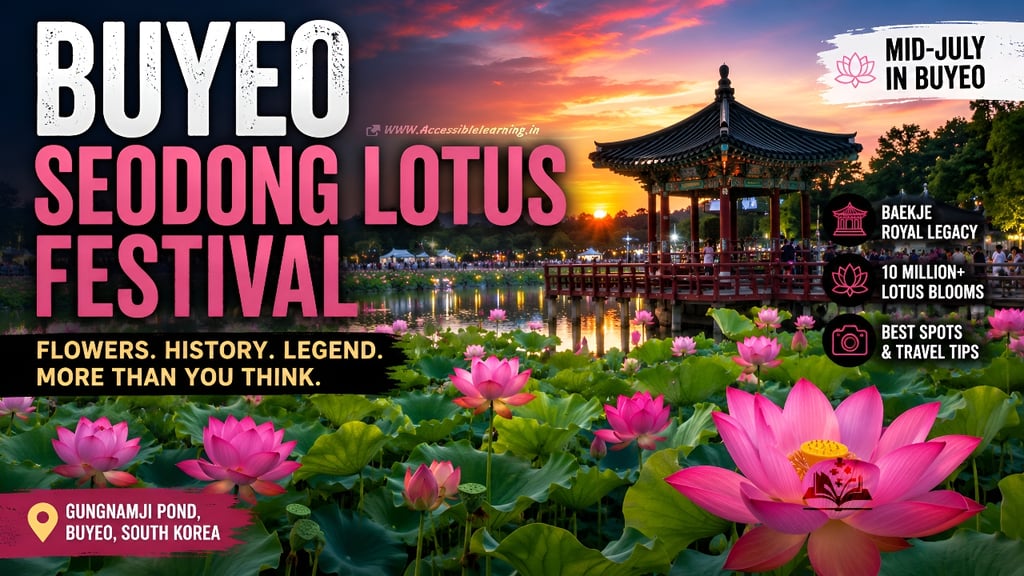
Ten million lotus blossoms are the headline. The real story is power, history, tourism money, and a centuries-old royal love legend repackaged for a modern audience.
Every July, the Buyeo Seodong Lotus Festival transforms Gungnamji Pond in Buyeo, South Korea, into one of the country's most photographed summer destinations. But anyone who thinks this event revolves only around flowers misses the point entirely.
THE FESTIVAL SELLS A LOVE STORY AS MUCH AS IT SELLS LOTUS FLOWERS
The festival takes its name from Seodong, the legendary Baekje prince who later became King Mu. Organizers build much of the event around the famous romance between Seodong and Princess Seonhwa, turning an ancient tale into a modern tourism engine.
This strategy works because stories travel farther than flowers.
Visitors arrive for the spectacle of blooming lotus fields, but they stay for the performances, multimedia shows, and historical storytelling built around Baekje heritage. The festival effectively merges cultural branding with entertainment.
GUNGNAMJI IS THE REAL STAR OF THE SHOW
Forget the marketing slogans.
The true attraction is Gungnamji, Korea's oldest known artificial pond, created during the Baekje Kingdom. The site carries genuine historical weight, something many modern festivals can only pretend to possess.
When thousands upon thousands of lotus flowers bloom across the pond in July, the visual impact becomes impossible to ignore. The landscape combines ancient engineering, royal history, and natural beauty in a way that few festival venues can match.
That historical foundation explains why Buyeo consistently attracts visitors despite competing against larger and louder summer events elsewhere in South Korea.
THE HIDDEN LOGISTICS NOBODY TALKS ABOUT
Large flower festivals look effortless in photographs. Reality tells a different story.
The Buyeo Seodong Lotus Festival depends on precise timing. Lotus blooms peak during a narrow seasonal window, which means organizers gamble every year on weather conditions, visitor demand, transportation capacity, and maintenance of the pond ecosystem.
Crowd management also matters.
Buyeo sits roughly two hours south of Seoul, making it accessible but not convenient enough for casual drop-ins. Visitors often arrive through organized tours or dedicated festival transportation routes. That logistical machine rarely appears in promotional images, yet it determines whether the event succeeds or struggles.
WHY THE FESTIVAL MATTERS TO BU YEO'S ECONOMY
Buyeo lacks the global recognition of Seoul or Busan.
The lotus festival changes that equation every summer.
For a few weeks, local hotels, restaurants, transportation services, and tourism operators benefit from a surge of visitors. The festival functions as an economic catalyst disguised as a cultural celebration.
Local governments understand this perfectly.
That explains why the event has received repeated recognition from South Korea's Ministry of Culture, Sports and Tourism. The festival does more than entertain visitors. It helps keep regional tourism alive in a country where attention and investment often concentrate around major metropolitan areas.
NIGHTTIME TRANSFORMED THE FESTIVAL FROM PRETTY TO PROFITABLE
A field of flowers attracts visitors.
A field of flowers illuminated by multimedia projections, lighting installations, and nighttime performances attracts visitors who stay longer and spend more money.
Recent editions of the festival have aggressively expanded evening programming. Organizers now market Gungnamji as a destination that becomes even more dramatic after sunset. Landscape lighting, storytelling displays, and multimedia productions create a second experience layered on top of the daytime flower viewing.
This shift reflects a broader trend in modern festival design. Organizers no longer compete for attention during daylight hours alone. They compete for entire evenings.
THE CULTURAL IMPACT GOES FAR BEYOND FLOWERS
The festival preserves something increasingly rare: regional identity.
South Korea's rapid modernization often pushes local histories into the background. Buyeo uses the Seodong Lotus Festival to pull Baekje history back into public view. Visitors leave with photographs of lotus flowers, but they also encounter stories tied to one of Korea's most influential ancient kingdoms.
That cultural function matters more than any fireworks show or social media campaign.
Without events like this, many younger visitors would never engage with Baekje history at all.

The Buyeo Seodong Lotus Festival succeeds because it refuses to be just a flower festival.
It combines historical storytelling, regional economic strategy, cultural preservation, and visual spectacle into a single event. The lotus flowers provide the attraction. The Baekje legacy provides the substance.
Every July, millions of blossoms create the perfect photo opportunity. The smarter visitors look beyond the petals and recognize what the festival really represents: a determined effort to keep Buyeo relevant in a nation moving relentlessly toward the future.
DON'T SHOW UP UNPREPARED
The festival's marketing photos create a dangerous illusion: that visitors can simply arrive whenever they want and enjoy perfect lotus views.
Reality works differently.
The best lotus blooms appear during the early morning hours when temperatures remain manageable and crowds have not yet taken over the pathways around Gungnamji. Arriving after midday often means harsher sunlight, larger crowds, and a noticeably less comfortable experience.
Visitors coming from Seoul should expect a journey of roughly two hours or more depending on traffic and transportation choices. Many travelers underestimate this and attempt a rushed day trip. That approach usually turns the experience into a race against time.
A smarter strategy involves spending at least one night in Buyeo. Doing so allows visitors to experience both the morning lotus scenery and the increasingly popular evening light displays that transform Gungnamji after sunset.
July temperatures in South Korea can be brutal. Bring water, sun protection, lightweight clothing, and comfortable walking shoes. The festival grounds may look serene in photographs, but exploring the area properly requires significant walking in humid summer conditions.
While most visitors focus entirely on the lotus pond, that is a mistake. Buyeo contains some of the most important Baekje historical sites in the country. Combining the festival with nearby cultural landmarks creates a far richer experience than treating the event as a quick photo stop.
THE SMART VISITOR'S BU YEO ITINERARY
The tourists chasing social media photos spend an hour at the pond and leave.
The smarter visitors build an entire day around Buyeo's Baekje heritage.
Start at Gungnamji during sunrise when the lotus blossoms look their best. Explore nearby Baekje historical attractions during the hotter afternoon hours. Return to the festival grounds after sunset when lighting installations and performances create a completely different atmosphere.
This simple strategy delivers three experiences for the price of one: natural beauty, ancient Korean history, and modern festival entertainment.
Subscribe To Our Newsletter
All © Copyright reserved by Accessible-Learning Hub
| Terms & Conditions
Knowledge is power. Learn with Us. 📚

