

Boston Marathon & Patriots’ Day
Experience the powerful blend of history and endurance on April 20 with the Boston Marathon and Patriots' Day. Explore their origins, traditions, cultural significance, and why this iconic day in Boston captures global attention every year.
EVENT/SPECIALTRAVEL LIFECELEBRATION/FESTIVALS
Jagdish Nishad
4/10/20264 min read
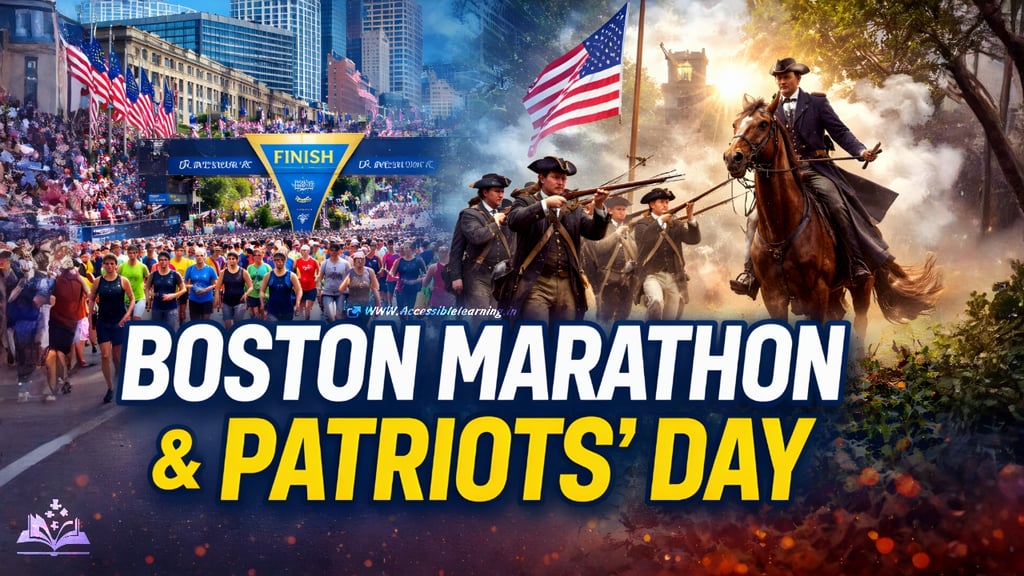
Every April, the state of Massachusetts hosts one of the most meaningful days in American culture. The legendary Boston Marathon coincides with Patriots' Day, blending athletic excellence with historical remembrance.
This is not just a local celebration. It’s a powerful intersection of heritage, resilience, and global unity, drawing millions of spectators and participants from around the world.
Boston Marathon: History, Prestige, and Evolution
Origins and Growth
The Boston Marathon was first held in 1897, making it the oldest continuously run marathon in the world. Inspired by the Olympic marathon, it started with just 15 runners and has now grown into a global event with over 30,000 participants annually.
Course Breakdown
Start: Hopkinton
Route: Passes through Ashland, Framingham, Natick, Wellesley, Newton
Finish: Copley Square in Boston
The race is famous for:
Wellesley Scream Tunnel: a high-energy college cheering zone
Newton Hills: a series of tough inclines
Heartbreak Hill: the ultimate physical and mental test
Qualification System
Unlike many marathons, Boston requires runners to meet strict qualifying times based on age and gender. This makes participation a badge of honor in the running community.
Iconic Winners and Records
Eliud Kipchoge (2023 winner)
Catherine Ndereba (multiple-time champion)
Winning Boston is often considered as prestigious as winning Olympic gold in distance running.
Patriots’ Day: Deep Historical Context
What Happened on April 19, 1775?
Patriots' Day commemorates the first battles of the American Revolutionary War. Key events unfolded in:
Lexington – “The shot heard round the world”
Concord – North Bridge confrontation
These battles marked the beginning of the American fight for independence from Britain.
Paul Revere’s Midnight Ride
Paul Revere rode overnight to warn colonial militias of British troop movements. His ride became a legendary symbol of vigilance and courage.
Why It Matters Today
Patriots’ Day represents:
The origins of democratic ideals
Citizen participation in shaping a nation
Courage against overwhelming odds


Traditions Beyond the Marathon
Early Morning Reenactments
Lexington battle reenactment happens at dawn
Concord events follow later in the morning
Actors in full colonial attire recreate historic scenes
Red Sox Morning Game
A unique tradition includes a morning baseball game by the Boston Red Sox at Fenway Park. The game ends just as marathon runners approach the final miles.
Community Celebrations
Parades
School activities
Local fairs and exhibitions
The Boston Marathon Bombing: A Turning Point
In 2013, the Boston Marathon bombing shook the world. Two explosions near the finish line caused casualties and widespread fear.
Aftermath and Resilience
The phrase “Boston Strong” emerged
The event became a symbol of unity and resistance
Security measures were significantly strengthened
Today, the marathon stands as a tribute to resilience and community strength.
Economic, Cultural, and Global Impact
Economic Influence
Generates millions in tourism revenue
Boosts hospitality, retail, and transport sectors
Creates seasonal employment opportunities
Global Reach
Broadcast in over 100 countries
Participation from elite and amateur runners worldwide
Raises millions for charity through fundraising runners
Cultural Identity
For residents of Boston, this day reflects:
Pride in history
Passion for sports
Strong community spirit
Lesser-Known Facts
The Boston Marathon was initially 24.5 miles, later standardized to 26.2 miles
Women were officially allowed to compete in 1972
Kathrine Switzer became iconic after running unofficially in 1967
It’s one of the six World Marathon Majors
Patriots’ Day vs. Other U.S. Holidays
Unlike national holidays such as Independence Day, Patriots’ Day is region-specific. However, its historical importance rivals any nationwide observance.
Travel & Experience Guide
Best Viewing Spots for the Marathon
Hopkinton (start line energy)
Wellesley (high crowd interaction)
Heartbreak Hill (most dramatic stretch)
Copley Square (finish line excitement)
Must-Visit Historical Sites
Lexington Battle Green
Old North Bridge
Freedom Trail

Media, Coverage, and Digital Presence
Live TV broadcasts and streaming
Real-time runner tracking apps
Social media engagement using hashtags like #BostonMarathon
Environmental and Logistical Aspects
Road closures across multiple towns
Public transport adjustments
Sustainability efforts, including waste management and eco-friendly initiatives
Why This Day Still Matters
April 20 (or the third Monday in April) is more than a date. It represents:
Endurance: Through the Boston Marathon
Freedom: Through Patriots’ Day
Unity: Through shared experience
It’s one of the rare occasions where history, sport, and community all align in a meaningful way.
The Boston Marathon and Patriots' Day together create a day that is deeply symbolic and widely celebrated. From the echoes of gunfire in Lexington and Concord to the pounding footsteps on the streets of Boston, this day connects past struggles with present triumphs.
It’s not just remembered. It’s experienced.
FAQ's
Q: What is the Boston Marathon, and why is it famous?
The Boston Marathon is the world’s oldest annual marathon, first held in 1897. It’s famous for its strict qualification standards, historic course, and global prestige among elite and amateur runners.
Q: When is the Boston Marathon held each year?
The Boston Marathon takes place on Patriots' Day, which is observed on the third Monday of April (often around April 20).
Q: What is Patriots’ Day, and what does it commemorate?
Patriots' Day honors the first battles of the American Revolutionary War fought in Lexington and Concord on April 19, 1775.
Q: Why is the Boston Marathon linked to Patriots’ Day?
The marathon was intentionally scheduled on Patriots’ Day to symbolize endurance, courage, and freedom, aligning the spirit of athletic achievement with historical resilience.
Q: How long is the Boston Marathon route?
The race distance is 26.2 miles (42.195 km), running from Hopkinton to Copley Square in Boston.
Q: What is Heartbreak Hill in the Boston Marathon?
Heartbreak Hill is a challenging uphill stretch near the end of the race in Newton. It’s known for testing runners’ stamina and often निर्णes race outcomes.
Q: Can anyone run the Boston Marathon?
No, most participants must meet strict qualifying times based on age and gender. However, some runners can enter through charity programs.
Q: What happened during the Boston Marathon bombing?
The Boston Marathon bombing occurred near the finish line, causing casualties and injuries. It led to increased security and the global “Boston Strong” movement.
Q: What are the main Patriots’ Day traditions?
Common traditions include:
Battle reenactments in Lexington and Concord
Parades and ceremonies
A morning baseball game by the Boston Red Sox
Q: Is Patriots’ Day a national holiday in the United States?
No, Patriots’ Day is mainly observed in Massachusetts and Maine, but its historical importance is recognized nationwide.
Q: Where are the best places to watch the Boston Marathon?
Top viewing spots include:
Hopkinton (start line)
Wellesley College (crowd energy)
Heartbreak Hill
Finish line at Copley Square
Q: How many runners participate in the Boston Marathon?
Typically, more than 30,000 runners from over 100 countries participate each year.
Q: Why is the Boston Marathon considered prestigious?
It’s one of the World Marathon Majors, with a long history, elite competition, and strict entry standards, making it a dream race for runners worldwide.
Q: What is the significance of Paul Revere on Patriots’ Day?
Paul Revere is remembered for his midnight ride warning colonists about British troop movements, symbolizing alertness and bravery.
Q: How does the Boston Marathon impact the local economy?
The event brings thousands of visitors to Boston, boosting tourism, hospitality, retail, and local businesses significantly.
Subscribe to Frontier Intelligence
All © Copyright reserved by Accessible-Learning Hub
| Terms & Conditions
Accessible Learning Hub — Actionable clarity for high-agency minds.
Weekly breakdowns on AI breakthroughs, capital flow, and human performance systems. Zero fluff.