

Black History Month: History, Meaning, and Why It Still Matters Today
Black History Month is a time to understand the history, struggles, and achievements of Black communities across the world. This article explores its origins, global impact, cultural contributions, and why it continues to matter in modern society.
EVENT/SPECIALUSACANADACELEBRATION/FESTIVALS
Kim Shin
1/24/20265 min read
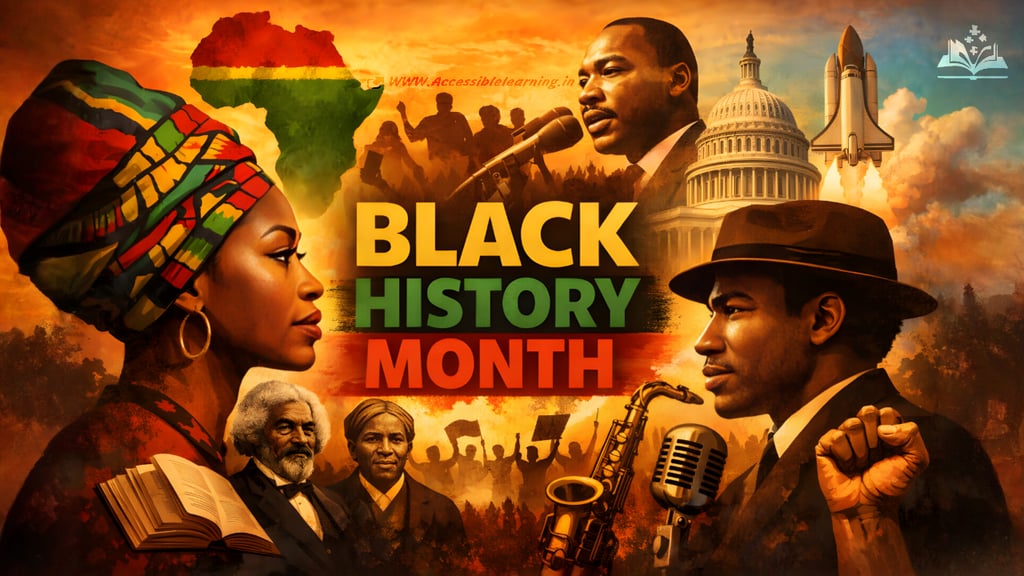
Black History Month is an annual observance dedicated to recognizing the history, achievements, struggles, and cultural contributions of Black people across the world. While it is formally observed in February in the United States and Canada and in October in the United Kingdom, its message extends far beyond a single month.
At its core, Black History Month exists to restore balance to historical narratives, honor resilience, and encourage honest conversations about the past and present.
How Black History Month Began
The foundation of Black History Month was laid in 1926 by historian Carter G. Woodson, who introduced Negro History Week. Woodson observed that Black Americans were largely absent from history books, not because of a lack of contribution, but because of deliberate exclusion.
February was chosen to align with the birthdays of Abraham Lincoln and Frederick Douglass, figures closely tied to emancipation and abolition. Over decades, the observance expanded through schools, churches, and community groups. In 1976, it officially became Black History Month in the United States.
The Deeper Purpose Behind Black History Month
Black History Month is not only about celebrating achievements. It also exists to confront uncomfortable truths.
For centuries, systems of slavery, colonialism, segregation, and discrimination shaped global societies. These systems were supported by narratives that diminished or erased Black humanity and intellect. Black History Month challenges those narratives by centering truth, context, and lived experience.
Its purpose includes:
Restoring historical accuracy
Recognizing overlooked innovators and leaders
Encouraging cultural pride and self-understanding
Educating future generations more honestly
Without this context, history remains incomplete.
Black History Before Slavery
A crucial but often overlooked point is that Black history did not begin with slavery.
Long before colonization, Africa was home to advanced civilizations, universities, trade networks, and governance systems. Kingdoms such as Mali, Kush, and Great Zimbabwe contributed to mathematics, astronomy, architecture, and philosophy.
Understanding this pre-colonial history helps dismantle the false idea that Black identity is rooted only in oppression. Black History Month increasingly emphasizes this broader timeline.
The Black Diaspora and Forced Migration
The transatlantic slave trade displaced millions of Africans, creating the Black diaspora across the Americas, Europe, and the Caribbean. This forced migration shaped global economies and cultures while causing generational trauma that still impacts communities today.
Black History Month addresses:
The legacy of slavery
Cultural survival through language, music, and faith
Resistance movements and revolts
The long road to abolition and freedom
This context explains modern inequalities and resilience.
Civil Rights Movements and Political Change
From abolitionist movements to modern protests, Black communities have consistently fought for dignity and equal rights. Leaders such as Martin Luther King Jr., Rosa Parks, and Malcolm X shaped new forms of activism, lawmaking, and political consciousness.
Black History Month highlights not only famous figures but also grassroots organizers, students, workers, and everyday people who drove change.
Contributions to Science, Technology, and Medicine
Black innovation has influenced nearly every field, often without recognition.
George Washington Carver revolutionized sustainable agriculture
Katherine Johnson played a key role in space exploration
Black medical professionals advanced surgical techniques, vaccines, and public health strategies
These achievements demonstrate how systemic barriers limited recognition, not capability.
Influence on Global Culture and Creativity
Black culture has shaped the world’s creative landscape. Music genres like jazz, blues, reggae, and hip-hop originated from Black experiences and became global languages of expression. Fashion, slang, visual art, and dance also carry deep Black roots.
Writers such as Toni Morrison and James Baldwin explored identity, race, power, and humanity with honesty that continues to resonate worldwide.
Economic Contributions and Entrepreneurship
Another often-missed point is Black economic impact. From early Black-owned businesses to modern entrepreneurs, Black communities have built wealth, created jobs, and driven innovation despite limited access to capital.
Black History Month increasingly recognizes:
Black Wall Street and other historic business districts
Labor movements led by Black workers
Modern leaders in tech, finance, and creative industries
Economic history is a vital part of social history.

Mental Health, Identity, and Healing
Black History Month also creates space for healing. Generations of discrimination have affected mental health, identity formation, and self-worth. Acknowledging this reality helps normalize conversations around wellness, therapy, and community care.
Modern observances include discussions on:
Intergenerational trauma
Representation and self-image
Cultural pride as a tool for resilience
This human-centered approach makes the month relevant today.
Why Black History Month Still Matters Now
Some argue that dedicating a month is unnecessary. However, inequalities in education, justice, healthcare, and representation remain visible worldwide. Misinformation and historical denial also continue to spread.
Black History Month remains important because it:
Counters historical erasure
Encourages informed dialogue
Promotes empathy and accountability
Supports inclusive education
It is not about division. It is about truth.
Moving Beyond Symbolism
A growing conversation around Black History Month focuses on what happens after it ends.
Real impact means:
Teaching inclusive history year-round
Supporting Black creators and educators
Listening to Black voices in policy and media
Applying historical lessons to present decisions
Black history is living history. It continues to unfold.
Black History Month is not a replacement for full inclusion. It is a starting point. A reminder that history must be told honestly, even when it is uncomfortable.
By learning Black history, societies gain clarity about the present and responsibility for the future. It deepens understanding, strengthens empathy, and reinforces the idea that progress is collective.
Black history is human history. Understanding it benefits everyone.
FAQ's
Q: What is Black History Month, and why is it celebrated?
Black History Month is an annual observance that recognizes the history, culture, struggles, and contributions of Black people around the world. It is celebrated to address the historical exclusion of Black achievements from mainstream education and to promote a more complete and accurate understanding of history.
Q: When is Black History Month celebrated?
Black History Month is observed in February in the United States and Canada. In the United Kingdom and Ireland, it is celebrated in October. The timing varies by country, but the purpose remains the same: education, recognition, and reflection.
Q: Who started Black History Month?
Black History Month originated from Negro History Week, created in 1926 by historian Carter G. Woodson. He believed that Black history was essential to understanding world history and should be formally taught and recognized.
Q: Why is Black History Month important today?
Black History Month remains important because racial inequality, historical misinformation, and underrepresentation still exist in many societies. The observance helps promote historical accuracy, cultural understanding, and informed conversations about race, identity, and social justice in the modern world.
Q: Is Black History Month only about slavery and civil rights?
No. While slavery and civil rights are important parts of Black history, Black History Month also highlights achievements in science, art, literature, business, politics, education, and global culture. It includes African civilizations, the Black diaspora, and modern innovation.
Q: How is Black History Month celebrated?
Black History Month is celebrated through educational programs, school lessons, public talks, cultural events, exhibitions, media features, and community discussions. Many organizations also spotlight Black leaders, creators, and historical figures throughout the month.
Q: Why is Black History Month in February?
February was chosen because it includes the birthdays of Abraham Lincoln and Frederick Douglass, both of whom played significant roles in the fight against slavery and the advancement of freedom for Black Americans.
Q: Is Black History Month celebrated outside the United States?
Yes. Black History Month is recognized in multiple countries, including Canada, the United Kingdom, and Ireland. It also inspires similar observances worldwide that honor African heritage and the contributions of Black communities in different regions.
Q: How can individuals support Black History Month beyond one month?
People can support Black history year-round by reading books by Black authors, supporting Black-owned businesses, learning inclusive history, listening to Black voices, and promoting equal opportunities in education, work, and media.
Q: What is the main goal of Black History Month?
The main goal of Black History Month is to ensure that Black history is acknowledged, respected, and integrated into the broader historical narrative. It aims to educate, inspire, and create a more truthful understanding of the past and present.
Subscribe to Frontier Intelligence
All © Copyright reserved by Accessible-Learning Hub
| Terms & Conditions
Accessible Learning Hub — Actionable clarity for high-agency minds.
Weekly breakdowns on AI breakthroughs, capital flow, and human performance systems. Zero fluff.