

Bio-Hacking Your Attention Span: How to Reclaim Focus in the Age of Dopamine Loops
Discover how dopamine loops created by modern technology are affecting attention spans and learn practical bio-hacking strategies to rebuild focus. This guide explores the neuroscience of distraction, the impact of digital stimulation on the brain, and proven techniques to reclaim deep concentration in the modern attention economy.
MODERN DISEASESPSYCHOLOGYA LEARNINGNEW YOUTH ISSUES
Shiv Singh Rajput
3/12/20267 min read
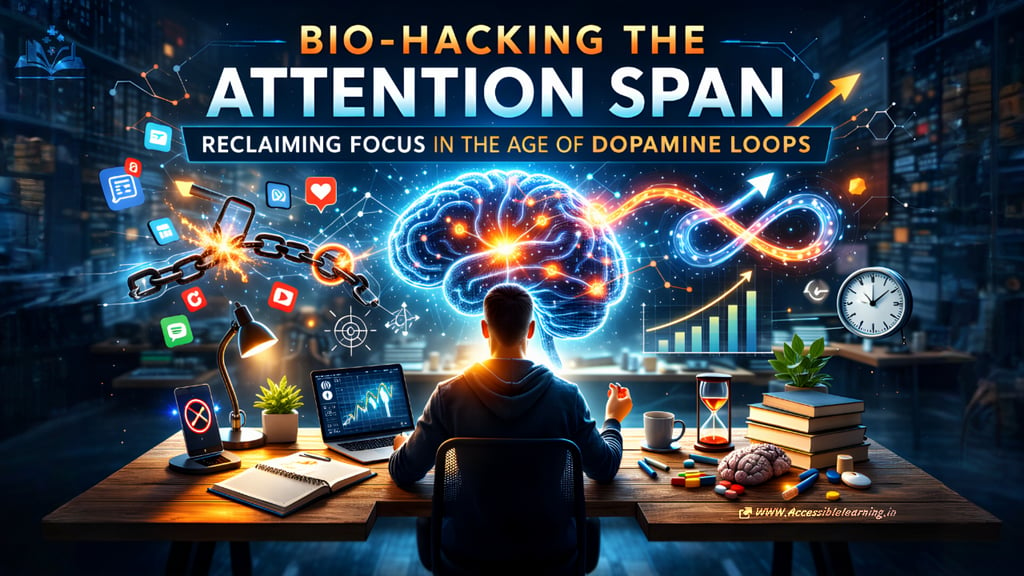
In the modern digital environment, attention has quietly become one of the most valuable human resources. Every notification, scroll, like, and video recommendation competes for a small slice of our mental bandwidth. Platforms are engineered to keep users engaged for as long as possible, often using psychological triggers that tap into the brain’s reward system.
This environment has created what many researchers and psychologists describe as dopamine loops—cycles of quick rewards that train the brain to seek constant stimulation. Over time, these loops can weaken the ability to concentrate on long tasks, read deeply, or engage in meaningful creative work.
The good news is that attention is not fixed. The brain is highly adaptable. By understanding how attention works and applying intentional lifestyle changes, it is possible to bio-hack your focus and rebuild a stronger attention span.
Understanding the Brain’s Reward System
At the center of the attention economy is dopamine, a neurotransmitter responsible for motivation, learning, and reward. Dopamine is not simply about pleasure. Instead, it drives anticipation and encourages the brain to repeat behaviors that feel rewarding.
When a person receives a message notification, watches a short video, or discovers new content, the brain releases dopamine. This creates a small sense of satisfaction that reinforces the action.
In the past, dopamine helped humans pursue survival goals like finding food, exploring new environments, and building social relationships. Today, however, digital platforms stimulate this system constantly.
Because the brain is wired to seek novelty, endless feeds and algorithm-generated recommendations keep triggering dopamine responses. This leads to habitual checking behavior, where people instinctively reach for their phones even without a clear reason.
Over time, the brain becomes accustomed to fast rewards and begins to resist slower activities like reading, studying, or deep problem solving.
How Dopamine Loops Are Engineered
Digital platforms rarely rely on chance. Many are carefully designed using behavioral psychology to keep users engaged.
Variable Rewards
One of the strongest behavioral triggers is the variable reward system, the same mechanism used in casinos. Sometimes a scroll reveals something exciting; sometimes it does not. This unpredictability keeps users searching for the next reward.
Infinite Content Streams
Endless scrolling removes natural stopping points. Without a clear end to the content, users can continue consuming information indefinitely.
Personalized Algorithms
Modern algorithms analyze user behavior and deliver highly personalized content that matches individual interests. This makes each piece of content more likely to trigger engagement.
Social Validation Loops
Likes, shares, and comments activate the brain’s social reward circuits. Humans are naturally wired to seek approval and belonging, which makes social platforms especially addictive.
The Cognitive Cost of Constant Stimulation
While digital technology provides convenience and entertainment, constant stimulation can reshape cognitive habits. Some common effects include:
Fragmented Attention: Frequent switching between apps, messages, and tasks prevents the brain from maintaining sustained concentration.
Reduced Working Memory: Information overload makes it harder to retain and process complex ideas.
Mental Fatigue: Continuous stimulation can exhaust cognitive resources, leaving people feeling drained despite doing little physical work.
Lower Tolerance for Boredom: Moments of silence or stillness may feel uncomfortable, leading to an urge to seek stimulation.
Decline in Deep Thinking: Complex reasoning, creativity, and strategic thinking require uninterrupted focus, which becomes harder to achieve in a distraction-heavy environment.
The Concept of Attention Bio-Hacking
Bio-hacking attention means optimizing mental performance through behavioral, environmental, and biological adjustments. Instead of relying solely on discipline, it involves reshaping habits and surroundings to make focus easier. The goal is not to eliminate technology but to use it intentionally rather than compulsively.

Practical Strategies to Reclaim Focus
Dopamine Reset Practices
A dopamine reset involves reducing high-stimulation activities that overwhelm the brain’s reward system. Common approaches include:
Avoiding social media early in the morning
Limiting short-form video consumption
Scheduling specific times for entertainment apps
Taking occasional digital detox days
These practices help restore sensitivity to slower, more meaningful rewards.
Build Deep Work Sessions
Deep work refers to focused periods of uninterrupted concentration on cognitively demanding tasks. To practice deep work:
Work in blocks of 60–90 minutes
Silence notifications
Close unnecessary browser tabs
Set clear objectives before starting
Over time, these sessions strengthen the brain’s ability to stay focused.
Use the Two-Minute Distraction Rule
When distractions appear, apply a simple rule:
If the urge to check something lasts less than two minutes, ignore it and continue working.
Most distractions fade quickly when they are not rewarded with attention.
Train Your Brain to Tolerate Boredom
Many people reach for their phones during small moments of inactivity, such as waiting in line or riding public transport. Instead of filling every moment with stimulation, allow your brain to experience boredom. This creates space for reflection and improves cognitive endurance.
Activities that support this include:
Walking without headphones
Sitting quietly for a few minutes each day
Practicing mindfulness or breathing exercises
Create Friction for Digital Distractions
Small barriers can dramatically reduce impulsive phone use. Examples include:
Logging out of social media apps
Removing addictive apps from the home screen
Using website blockers during work hours
Charging phones outside the bedroom
By making distractions less convenient, the brain gradually shifts toward healthier habits.
Improve Your Sleep Quality
Sleep is one of the most powerful tools for improving attention. Poor sleep disrupts dopamine regulation and weakens executive function, which controls decision-making and focus.
To improve sleep quality:
Maintain consistent sleep and wake times
Reduce screen exposure before bed
Keep the bedroom dark and quiet
Avoid heavy meals or caffeine late at night
Better sleep leads to sharper attention during the day.
Optimize Nutrition for Brain Performance
The brain consumes a large amount of the body’s energy. Nutritional balance plays a significant role in maintaining focus. Helpful dietary habits include:
Consuming foods rich in omega-3 fatty acids
Maintaining stable blood sugar levels
Staying hydrated throughout the day
Eating balanced meals with protein, healthy fats, and complex carbohydrates
Nutritional stability supports mental clarity and sustained concentration.
Exercise for Cognitive Strength
Physical activity boosts brain function by improving blood flow and stimulating the release of beneficial neurochemicals. Regular exercise can:
Improve memory and learning ability
Increase mental stamina
Reduce stress and anxiety
Enhance mood and motivation
Even light activities such as walking can significantly improve mental focus.
Practice Mindfulness and Meditation
Mindfulness training strengthens the brain’s attention networks. It helps individuals become more aware of distractions and regain control over their focus.
Short daily meditation sessions can:
Improve concentration
Reduce impulsive behavior
Enhance emotional regulation
Increase mental clarity
Over time, mindfulness helps people respond to distractions more consciously.
The Role of Neuroplasticity in Attention Recovery
One of the most encouraging aspects of brain science is neuroplasticity, the brain’s ability to change and adapt. When people repeatedly engage in shallow activities such as constant scrolling, the brain strengthens neural pathways related to rapid attention switching.
However, when individuals practice deep focus, reading, and problem solving, the brain gradually rewires itself to support those behaviors. This means that attention is not permanently damaged by digital habits. With consistent effort, it can be restored and even strengthened.

The Emerging Attention Economy
In the coming years, competition for human attention will likely intensify. Artificial intelligence systems will become better at predicting what captures interest and keeps users engaged. Companies already treat attention as a valuable commodity because it drives advertising revenue and user growth.
As a result, managing attention may become one of the most important personal skills of the future. People who learn to control their focus will gain advantages in learning, creativity, and productivity.
The modern world offers more information and entertainment than any previous generation could imagine. While these technologies bring incredible opportunities, they also challenge the brain’s ability to focus.
Dopamine loops and constant stimulation can gradually weaken attention, but the brain is adaptable. Through intentional habits, environmental design, and healthier reward patterns, it is possible to rebuild deep focus.
Bio-hacking attention is not about rejecting technology. It is about taking back control of your mental environment and using technology in a way that supports your goals instead of distracting from them.
In a world where attention is constantly under attack, the ability to focus may become one of the most valuable cognitive skills a person can develop.
FAQ's
Q: What does “bio-hacking attention” actually mean?
Bio-hacking attention refers to using science-backed habits, lifestyle adjustments, and environmental changes to improve focus and cognitive performance. Instead of relying only on willpower, it focuses on optimizing sleep, diet, technology use, and mental training so the brain naturally maintains deeper concentration.
Q: What are dopamine loops, and why are they harmful to focus?
Dopamine loops occur when the brain repeatedly seeks quick rewards from activities such as scrolling social media, watching short videos, or checking notifications. These loops train the brain to expect constant stimulation, which can make slower tasks like reading, studying, or deep thinking feel difficult or boring.
Q: Can attention span actually be improved?
Yes. The brain has a property called neuroplasticity, which means it can adapt and change with repeated behavior. By practicing deep work, reducing digital distractions, and strengthening focus habits, people can gradually rebuild their attention span over time.
Q: How long does it take to rebuild focus?
The timeline varies depending on habits and lifestyle. Some people notice improvements in a few weeks after reducing distractions and practicing focused work sessions. Long-term improvements usually develop over several months of consistent behavior changes.
Q: What is dopamine fasting, and does it work?
Dopamine fasting is a behavioral strategy where people temporarily reduce high-stimulation activities like social media, gaming, or excessive entertainment. The goal is not to eliminate dopamine but to reduce overstimulation so the brain becomes more responsive to slower and more meaningful rewards.
Q: Does social media reduce attention span?
Heavy and frequent use of social media can contribute to shorter attention spans because it trains the brain to process rapid, fragmented information. However, social media itself is not inherently harmful. The key factor is how intentionally it is used.
Q: What are the best daily habits for improving focus?
Several daily habits can strengthen attention, including:
Practicing deep work sessions without interruptions
Maintaining consistent sleep schedules
Exercising regularly
Limiting unnecessary notifications
Taking short breaks during long work sessions
Practicing mindfulness or meditation
These habits help the brain sustain concentration for longer periods.
Q: Can meditation really improve concentration?
Yes. Research shows that mindfulness meditation strengthens brain networks responsible for attention and self-control. Even 10–15 minutes of daily meditation can help people become more aware of distractions and improve their ability to refocus on tasks.
Q: Why do short-form videos feel so addictive?
Short-form videos deliver rapid bursts of novelty and entertainment. Each swipe introduces new content, which triggers small dopamine releases. This unpredictability encourages continuous scrolling and keeps the brain searching for the next rewarding piece of content.
Q: What is the best way to reduce digital distractions while working?
Some effective methods include:
Turning off non-essential notifications
Using website blockers during work hours
Keeping phones out of reach
Scheduling specific times for checking messages
Working in distraction-free environments
These strategies help protect attention and allow deeper focus on important tasks.
Q: Is boredom actually beneficial for the brain?
Yes. Boredom allows the brain to rest from constant stimulation and encourages creativity, reflection, and problem-solving. When people stop filling every quiet moment with digital content, the brain often generates new ideas and insights.
Q: Why is attention considered the most valuable skill today?
In the modern information economy, countless platforms compete for human attention. The ability to control focus determines how effectively someone can learn, think deeply, and produce meaningful work. People who protect their attention are better positioned to thrive in an increasingly distracting digital world.
Subscribe to Frontier Intelligence
All © Copyright reserved by Accessible-Learning Hub
| Terms & Conditions
Accessible Learning Hub — Actionable clarity for high-agency minds.
Weekly breakdowns on AI breakthroughs, capital flow, and human performance systems. Zero fluff.