

Bio-Electronic Medicine: “Hacking” the Vagus Nerve
Explore bio-electronic medicine and how vagus nerve stimulation is transforming treatment for inflammation, mental health, and chronic disease. Learn how it works, current uses, risks, and future breakthroughs in neural therapy.
HEALTH/DISEASEAI/FUTURE
Shiv Singh Rajput | Kim Shin
2/24/20267 min read
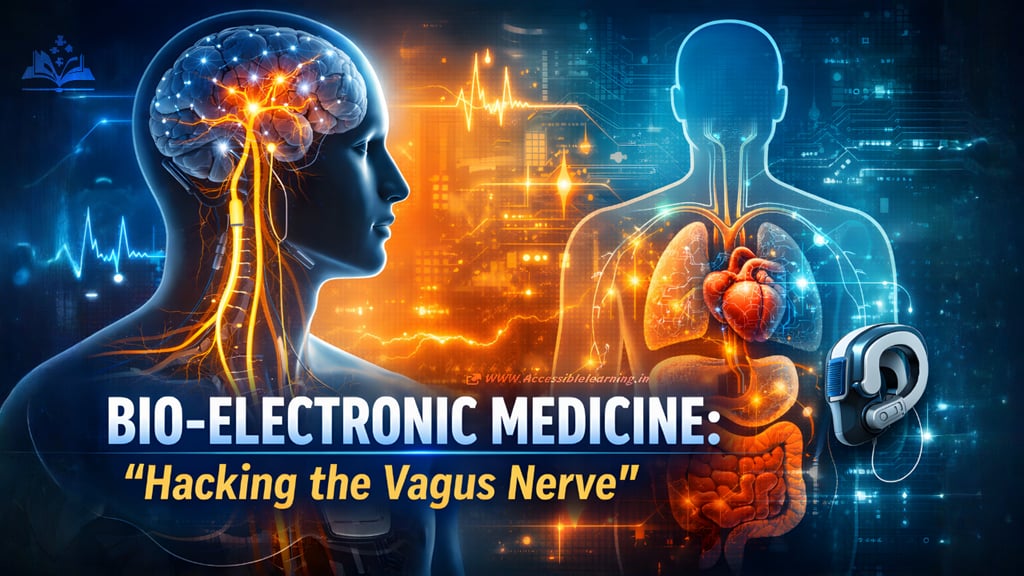
Medicine is entering a new phase where treatment is not only about pills or surgery. Scientists are learning how to control disease using tiny electrical signals that communicate directly with nerves. This field is called bio-electronic medicine, and one nerve is at the center of it all: the vagus nerve.
When people say we can “hack” the vagus nerve, they are talking about adjusting its signals to influence inflammation, mood, heart rhythm, digestion, and more. It is not science fiction. It is an emerging medical reality.
This article explores how vagus nerve stimulation works, what it treats today, new research directions, risks, business impact, and what the future may look like.
What Is Bio-Electronic Medicine?
Bio-electronic medicine uses electrical impulses to influence the nervous system and restore balance in the body. Instead of drugs that spread through the bloodstream, this approach targets specific nerve pathways. The nervous system already controls most body functions, so adjusting its signals can treat disease in a precise way. This field combines:
Neuroscience
Biomedical engineering
Immunology
AI and data science
Medical device innovation
It is sometimes called electroceuticals, neural therapeutics, or digital nerve therapy.
Understanding the Vagus Nerve
The vagus nerve is the longest cranial nerve in the body. It runs from the brainstem down through the neck to the heart, lungs, stomach, liver, pancreas, and intestines. Because of this reach, it controls key processes:
Heart rate and blood pressure
Digestion and gut movement
Breathing patterns
Immune response
Mood and emotional regulation
Inflammation control
It is part of the parasympathetic nervous system, which calms the body after stress. When vagus nerve signals are weak or irregular, it can lead to problems such as anxiety, inflammation, digestive issues, and heart rhythm disorders.
The Science Behind the “Inflammatory Reflex”
One major discovery in bio-electronic medicine is the inflammatory reflex. The vagus nerve senses inflammation in the body and sends signals to reduce immune response. When stimulated correctly, it can reduce the release of inflammatory chemicals like cytokines.
This is important because chronic inflammation is linked to:
Arthritis
Diabetes
Depression
Heart disease
Alzheimer’s
Autoimmune disorders
Instead of suppressing the immune system with drugs, bioelectronic therapy can fine-tune it.
What Is Vagus Nerve Stimulation (VNS)?
Vagus nerve stimulation sends controlled electrical pulses to the nerve.
Implanted Devices
A small generator is placed under the skin in the chest. A wire connects to the vagus nerve in the neck. This method is approved for:
Epilepsy
Treatment-resistant depression
Non-Invasive Devices
Devices stimulate the vagus nerve through the skin of the ear or neck. These are being tested for:
Anxiety
Migraine
PTSD
Long COVID
Chronic pain
Inflammatory diseases
Non-invasive VNS is growing fast because it avoids surgery.

How Vagus Nerve “Hacking” Works
Electrical stimulation affects neural circuits in a chain reaction:
Signals travel to the brainstem.
The brain adjusts autonomic responses.
Stress hormones drop.
Immune response becomes balanced.
Organ systems stabilize.
This explains why one nerve can influence multiple conditions. Researchers are now mapping nerve pathways like software engineers map networks.
Current Medical Applications
Bioelectronic medicine is already helping patients in real hospitals.
Epilepsy
VNS reduces seizure frequency when medication fails.
Depression
Used for severe, treatment-resistant depression.
Rheumatoid Arthritis
Clinical trials show reduced inflammation and joint pain.
Migraine and Cluster Headaches
Some patients experience fewer attacks with non-invasive VNS.
Heart Failure
Research shows improved heart rate variability and cardiac stability.
Stroke Recovery
Vagus stimulation paired with therapy improves motor recovery in some patients.
Digestive Disorders
Trials are exploring VNS for irritable bowel syndrome and gastroparesis.
Emerging Research Areas
Scientists are testing bio-electronic medicine across many diseases.
Autoimmune Disorders
Conditions like lupus, Crohn’s disease, and psoriasis may benefit from inflammation control.
Mental Health Treatment
VNS may help regulate mood and stress circuits in:
Anxiety disorders
PTSD
Bipolar depression
ADHD
Obesity and Metabolic Syndrome
The vagus nerve controls hunger signals and insulin release.
Alzheimer’s and Parkinson’s Disease
Reducing inflammation and improving neural signaling may slow neurodegeneration.
Chronic Pain
Bio-electronic therapy can interrupt pain signals without opioids.
Long COVID and Chronic Fatigue
Some researchers suspect vagus nerve dysfunction plays a role in lingering symptoms.
Benefits Over Traditional Medicine
Bio-electronic medicine offers several advantages.
Precision Therapy
Targets specific nerve circuits.
Reduced Drug Dependence
May replace long-term medication in some cases.
Adjustable Treatment
Doctors can fine-tune stimulation levels.
Faster Recovery
Some patients improve quickly compared to drug therapy.
Lower Systemic Side Effects
No chemical burden on the liver or kidneys.
Risks and Limitations
No treatment is perfect.
Surgical Complications
Implanted devices carry surgical risks.
Side Effects
Possible issues include hoarseness, cough, neck discomfort, or headaches.
Cost and Accessibility
Devices are expensive and not available everywhere.
Limited Long-Term Data
Many applications are still experimental.
Ethical Concerns
Questions remain about device control, data privacy, and unequal access.
Natural Ways to Improve Vagal Tone
While medical VNS requires a device, some lifestyle habits support vagus nerve function.
Deep breathing exercises
Meditation
Yoga
Singing or humming
Cold face immersion
Regular exercise
Good sleep patterns
Social connection
These methods improve vagal tone but cannot treat serious disease alone.
Technology Behind Bio-Electronic Medicine
This field depends on advanced engineering.
Micro-Electrode Design
Tiny electrodes deliver precise stimulation.
Battery and Power Innovation
Implants must last years without replacement.
Closed-Loop Systems
Devices monitor signals and adjust automatically.
AI Integration
Machine learning finds optimal stimulation patterns.
Wireless Communication
Doctors can adjust settings remotely.
Neural Mapping Tools
Advanced imaging helps target exact nerve fibers.

Business and Industry Impact
Bio-electronic medicine is attracting major investment. Pharmaceutical companies are partnering with device makers to create alternatives to drugs.
Healthcare systems see potential benefits:
Lower long-term treatment costs
Reduced hospital visits
Personalized therapy
Remote patient monitoring
Insurance coverage is slowly expanding as evidence grows. This field may become a trillion-dollar healthcare sector.
Regulatory Challenges
Medical devices must pass strict approval processes. Regulators require proof of:
Safety
Long-term effectiveness
Reliable manufacturing
Data protection
Because bio-electronic medicine is new, approval timelines can be long.
Ethical Questions
As nerve-control technology grows, society must consider:
Who owns neural data?
Can stimulation affect personality?
Could employers or governments misuse implants?
Will treatment be affordable?
Clear laws and patient consent systems will be important.
Future of Vagus Nerve Therapy
The next decade could bring major breakthroughs.
Smart Wearable Neuro-Devices
Small patches that deliver therapy without surgery.
Personalized Neural Medicine
Stimulation patterns tailored to each patient’s biology.
Combined Drug-Device Therapy
Lower drug doses with electrical support.
Brain-Gut Therapy
Treating digestive and mental health together.
Remote AI Monitoring
Continuous tracking of nerve health.
Preventive Bio-Electronic Care
Devices that stop disease before symptoms appear.
Bio-electronic medicine could shift healthcare from reaction to prevention.
Patient Selection and Personalization
Not every patient benefits from vagus nerve stimulation. Doctors evaluate several factors before recommending treatment:
Severity and duration of the condition
Response to previous therapies
Medical history and nerve health
Mental health stability
Risk tolerance for surgery
In the future, genetic testing and neural imaging may help predict who will respond best. This will make bioelectronic medicine more personalized and efficient.
Data and Neuro-Monitoring
Modern VNS devices can collect useful health data. They can track:
Heart rate variability
Sleep quality
Stress response
Seizure patterns
Autonomic balance
Doctors use this information to adjust therapy in real time. With patient permission, AI tools can analyze trends and improve treatment plans. This turns implants into continuous health monitors.
Integration With Lifestyle Therapy
Bio-electronic medicine works better when combined with healthy habits. Examples include:
Nutrition plans that reduce inflammation
Cognitive behavioral therapy for depression
Physical therapy for stroke recovery
Gut-friendly diets for IBS
Stress management routines
Instead of replacing lifestyle care, VNS can amplify its effects.


Pediatric and Elderly Applications
Researchers are studying VNS use in different age groups. In children, it may help severe epilepsy and developmental disorders. Careful dose control is important to avoid affecting growth.
In older adults, VNS may help memory decline, chronic pain, and heart rhythm disorders. Non-invasive devices are safer for this group. Age-specific research is still ongoing.
Global Access and Cost Reduction
One challenge is making bio-electronic medicine affordable worldwide. Possible solutions include:
Low-cost wearable stimulators
Subscription-based therapy programs
Open medical device platforms
Public-private healthcare partnerships
Local manufacturing in developing countries
As technology becomes cheaper, access will expand beyond major hospitals.
Research Frontiers to Watch
Several areas could bring breakthroughs soon:
Gut-brain communication therapy
Immune system tuning for cancer support
Neural treatments for addiction
Sleep disorder regulation
Hormone balance through nerve control
These directions could redefine how chronic illness is managed.
Key Insights
Bioelectronic medicine shows that the nervous system is not just a messenger. It is a treatment pathway. The vagus nerve connects the brain, organs, and immune system. Stimulating it can improve conditions that once required heavy medication.
While still developing, this approach has the potential to reshape modern medicine. Instead of flooding the body with chemicals, doctors may soon treat disease with precise electrical signals that restore natural balance.
That is what people mean when they talk about “hacking” the vagus nerve. It is not about control. It is about healing through the body’s own communication system.
Bio-electronic medicine is one of the most important medical innovations of this century. As research expands, therapies will become safer, cheaper, and more personalized.
Understanding the vagus nerve may unlock treatments for chronic disease, mental health conditions, and inflammatory disorders that were once difficult to manage. Healthcare is moving toward smarter, targeted solutions. Bio-electronic medicine is a big step in that direction.


FAQ's
Q: What exactly is bio-electronic medicine?
Bio-electronic medicine uses controlled electrical signals to influence nerves and treat disease. Instead of drugs affecting the whole body, it targets specific nerve pathways to improve organ function, reduce inflammation, or regulate mood.
Q: Why is the vagus nerve such a major focus?
The vagus nerve connects the brain to the heart, lungs, digestive system, and immune system. Because it controls many vital processes, stimulating it can influence multiple conditions at once, from epilepsy to inflammatory disorders.
Q: Is vagus nerve stimulation approved by doctors?
Yes. Implanted vagus nerve stimulators are approved in many countries for epilepsy and treatment-resistant depression. Non-invasive devices are approved in some regions for migraine and are being studied for other conditions.
Q: How long does vagus nerve stimulation take to show results?
It depends on the condition. Some patients notice improvement in weeks, while others may need several months of adjusted stimulation settings. Doctors usually monitor progress and fine-tune therapy over time.
Q: Is vagus nerve stimulation painful?
Most patients feel mild tingling or vibration during stimulation. Implanted devices may cause temporary throat discomfort or voice changes. Serious pain is uncommon when therapy is properly managed.
Q: Can bio-electronic medicine replace medications?
In some cases it reduces drug dosage or replaces certain treatments, but not always. Many patients still use medication along with nerve stimulation. Doctors decide the best combination based on each case.
Q: Who should not try vagus nerve stimulation?
People with certain heart conditions, infections near implant sites, or specific neurological issues may not be good candidates. A medical specialist must evaluate risks before treatment.
Q: Are non-invasive VNS devices safe to use at home?
Only approved devices prescribed by a doctor should be used. Online DIY electrical stimulation methods can be dangerous and should be avoided.
Q: Does vagus nerve stimulation help mental health?
It is approved for treatment-resistant depression and is being studied for anxiety, PTSD, and mood regulation. Results vary, but some patients experience significant improvement.
Q: Is bio-electronic medicine permanent?
Implanted devices can be adjusted or removed if needed. Non-invasive therapy can be stopped anytime. The goal is long-term improvement, not permanent nerve change.
Q: How expensive is vagus nerve therapy?
Costs vary widely depending on the device, country, and insurance coverage. Implant procedures are expensive, but non-invasive options are becoming more affordable as technology improves.
Q: What is the future of vagus nerve therapy?
Researchers are working on wearable neuro-devices, AI-controlled stimulation, and personalized neural treatment plans. These advances could expand treatment to more diseases with fewer side effects.
Subscribe to Frontier Intelligence
All © Copyright reserved by Accessible-Learning Hub
| Terms & Conditions
Accessible Learning Hub — Actionable clarity for high-agency minds.
Weekly breakdowns on AI breakthroughs, capital flow, and human performance systems. Zero fluff.