

Beyond the Chatbot: Why 2026 is the Year of AI Agents
Artificial intelligence is moving beyond simple chatbots. In 2026, AI agents are becoming the next major shift in technology. Unlike traditional chat tools that only generate responses, AI agents can perform real tasks such as research, booking services, writing code, and automating workflows. This article explores what AI agents are, how they differ from chatbots, and why they are transforming productivity, business operations, and digital work in the modern AI era.
AI ASSISTANTAI/FUTURECOMPANY/INDUSTRY
Sachin K Chaurasiya
3/14/20267 min read
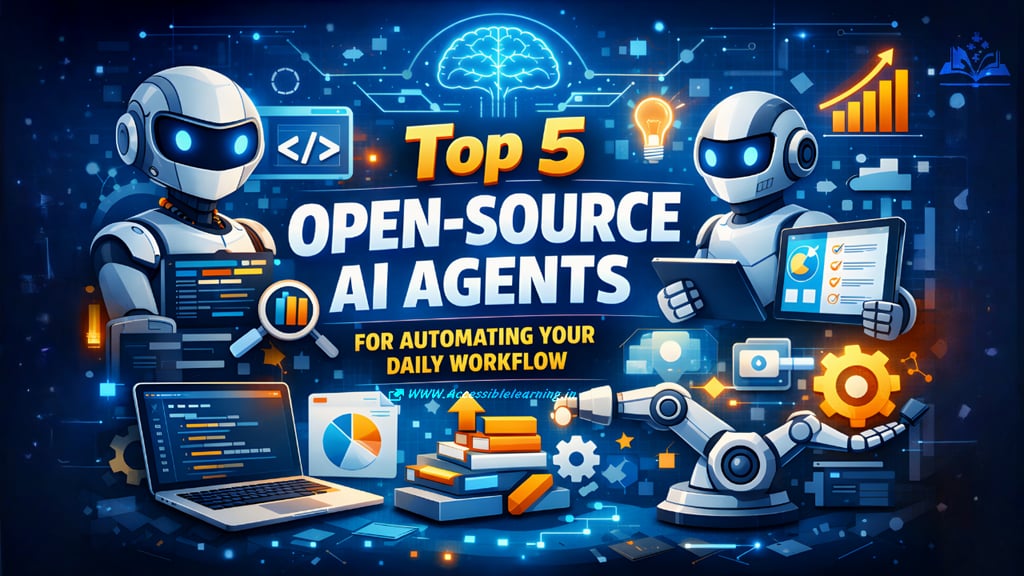
Artificial intelligence has changed rapidly over the past few years. Not long ago, most people experienced AI through simple chatbots that could answer questions, write text, or help with basic tasks. These tools were impressive, but they were still limited.
In 2026, the focus of AI is shifting toward something much more powerful: AI agents.
Unlike traditional chatbots that only respond to prompts, AI agents can actually take action and complete tasks for you. They can research information, book services, manage workflows, write code, and interact with other software systems.
This shift marks a major step in the evolution of AI. We are moving from systems that simply talk with us to systems that can actually work for us.
The Chatbot Era: Helpful but Limited
Chatbots were the first major step in making AI accessible to everyone. Tools powered by large language models allowed users to interact with AI in a natural conversation. People quickly began using chatbots for things like:
Writing articles and social media posts
Getting help with coding
Brainstorming ideas
Learning new topics
Generating images or scripts
These tools are incredibly useful, but they operate in a reactive way. A chatbot waits for a prompt, generates a response, and stops there.
For example, if you ask a chatbot to help plan a vacation, it can suggest destinations, give hotel recommendations, and create a travel plan. But it cannot:
Actually book the flight
Reserve the hotel
Compare prices in real time
Add the trip to your calendar
You still have to do all those tasks yourself. This is where AI agents change the game.
What Are AI Agents?
AI agents are systems designed to complete goals rather than just answer questions.
Instead of responding to one prompt at a time, an AI agent can take a goal and break it down into smaller steps. It can decide what tools to use, gather information, perform actions, and adjust its approach if something doesn’t work. Think of an AI agent as a digital assistant that can actually execute tasks, not just give suggestions.
For example, if you say:
“Find the best laptop under $1,500 and summarize the top three options.”
A chatbot would give you suggestions. An AI agent could:
Search multiple websites
Compare specifications and prices
Read reviews
Create a comparison table
Deliver a final recommendation
The difference is simple but powerful.
Chatbots provide answers.
AI agents deliver results.
Chatbots vs AI Agents: The Real Difference
Understanding the difference between chatbots and AI agents helps explain why this shift is so important. Traditional chatbots focus on conversation. They generate text, ideas, and responses based on prompts. AI agents focus on execution. Here is a simple way to compare them.
Chatbots
Respond to prompts
Generate text or suggestions
Limited ability to take action
Require constant user input
AI Agents
Work toward a goal
Break tasks into steps
Use tools and software
Perform real actions automatically
This means AI agents can operate more like digital workers rather than conversational tools.


Why 2026 Is the Breakthrough Year
Several key developments are coming together to make AI agents practical and widely adopted in 2026.
Smarter AI Models
Modern AI models are far better at reasoning and planning than earlier versions. They can understand complex instructions and break large problems into manageable steps.
This ability makes it possible for AI agents to handle real workflows instead of simple conversations.
Integration with Tools and Software
AI agents are not limited to text. They can connect with external tools and systems such as:
Web browsers
Email platforms
Project management software
Databases
Online services and APIs
By interacting with these systems, agents can gather data and perform actions automatically. For example, an AI agent could monitor your inbox, summarize important messages, and schedule meetings based on your availability.
Multi-Step Task Automation
Many real-world tasks involve multiple steps. AI agents are designed to handle these types of workflows. For instance, a research agent might:
Search the web for reliable information
Filter out irrelevant sources
Summarize the key insights
Organize them into a report
Send the results to your email
Instead of giving you raw information, the agent delivers a finished result.
Collaboration Between Multiple Agents
Another interesting trend is the rise of multi-agent systems. Instead of one AI doing everything, different agents can specialize in different tasks. One agent may gather data, another may analyze it, and another may generate the final output. This structure works a lot like a team, where each member has a specific role.
Real Examples of AI Agents in Action
AI agents are already starting to appear in different industries. Their potential uses are expanding quickly.
Research and Analysis
AI agents can scan hundreds of sources online, extract useful information, and produce structured reports in minutes.
This can save researchers and analysts hours of manual work.
Software Development
Coding agents are becoming powerful tools for developers. Instead of just suggesting snippets of code, they can help with full development tasks like:
Creating project structures
Writing and testing code
Debugging issues
Generating documentation
In many cases, they act like junior developers assisting a team.
Personal Productivity
AI agents can function as personal assistants by handling tasks such as:
Managing emails
Scheduling meetings
Booking travel
Organizing to-do lists
Monitoring reminders
Instead of manually managing everything, users can simply assign tasks to their AI assistant.
Business Automation
Companies are beginning to use AI agents for business operations such as:
Customer support automation
Data analysis and reporting
Marketing campaign management
Inventory monitoring
These agents can continuously monitor systems and respond to changes in real time.

The Rise of Goal-Driven AI
One of the biggest changes happening right now is the shift toward goal-driven AI systems. In the past, AI responded to commands. Now it can work toward outcomes.
For example:
Traditional AI request:
“Write a blog post about electric cars.”Agent-based request:
“Research electric cars and create a full blog post with statistics, comparisons, and SEO structure.”
The agent would handle the research, writing, and formatting process. This approach turns AI into something closer to a digital collaborator rather than just a tool.
Benefits of AI Agents
The rise of AI agents brings several major advantages.
Huge Productivity Boost
AI agents can automate tasks that normally take hours. This allows individuals and teams to focus on creative thinking and strategic work.
Always Available
AI agents can operate 24 hours a day. They can monitor systems, collect data, and complete tasks even while users are offline.
Scalable Workflows
A single user can manage multiple AI agents working on different projects at the same time. This creates a new level of efficiency in digital work.
Personalized Assistance
Over time, AI agents can learn user preferences and habits. This allows them to perform tasks in a way that matches how the user works.
Challenges to Consider
Despite their potential, AI agents also introduce some challenges.
Security and Permissions
Because agents can interact with systems and perform actions, it is important to control what they are allowed to access.
Accuracy and Reliability
AI agents can sometimes misunderstand instructions or make incorrect decisions. Human supervision is still necessary for important tasks.
Responsible Use
As AI agents become more powerful, organizations will need clear guidelines for how they should be used safely and responsibly.
The Future: From Assistants to Digital Teammates
The shift from chatbots to AI agents represents a deeper change in how people work with technology. Chatbots made AI conversational. AI agents make AI action-oriented. Instead of constantly giving instructions, people will begin assigning goals to their AI systems.
You might say things like:
“Research my competitors and prepare a report.”
“Build a landing page for my new product.”
“Analyze this data and recommend improvements.”
And an AI agent will take care of the entire process.
2026 is shaping up to be a turning point in the evolution of artificial intelligence. The focus is moving beyond simple chat interfaces toward systems that can plan, decide, and execute tasks. Chatbots showed us how AI could communicate. AI agents will show us how AI can collaborate and work alongside us. As these systems continue to improve, AI agents may soon become a normal part of everyday digital life, helping individuals and businesses accomplish more with less effort.


FAQ's
Q: What is an AI agent in simple terms?
An AI agent is a system that can perform tasks and complete goals on your behalf instead of just answering questions. It can plan steps, gather information, use tools, and take actions to finish a task. In simple terms, it works more like a digital assistant that can do the work, not just talk about it.
Q: How is an AI agent different from a chatbot?
A chatbot mainly responds to prompts with text or suggestions. It waits for the user to ask the next question.
An AI agent, on the other hand, can take a goal and execute multiple steps to achieve it. For example, a chatbot can suggest travel plans, but an AI agent could research flights, compare prices, and help complete the booking process.
Q: Can AI agents perform real tasks online?
Yes. AI agents can connect with tools, software, and online services. This allows them to perform tasks such as:
Researching information on the web
Managing emails and schedules
Writing and testing code
Automating workflows
Organizing reports and data
Their ability to interact with other systems is what makes them powerful.
Q: Are AI agents fully autonomous?
Not completely. While AI agents can handle many tasks automatically, human oversight is still important. Most systems work best when users review results, set goals clearly, and guide the process when needed.
Q: What are some real-world uses of AI agents?
AI agents are already being used for several practical purposes, including:
Business automation and data analysis
Software development assistance
Personal productivity and task management
Research and report generation
Customer support systems
As the technology improves, their role in everyday work will continue to grow.
Q: Why are AI agents becoming popular in 2026?
AI agents are gaining attention because AI models have become more capable of reasoning, planning, and using tools. Combined with better software integrations and automation frameworks, this allows AI systems to move beyond simple conversations and start completing real tasks.
Q: Will AI agents replace human workers?
AI agents are more likely to assist humans rather than replace them. They can automate repetitive tasks and speed up workflows, allowing people to focus on creative thinking, strategy, and decision-making.
Subscribe to Frontier Intelligence
All © Copyright reserved by Accessible-Learning Hub
| Terms & Conditions
Accessible Learning Hub — Actionable clarity for high-agency minds.
Weekly breakdowns on AI breakthroughs, capital flow, and human performance systems. Zero fluff.