

Battle of the Oranges (Ivrea, Italy): History, Meaning, Event Details & Travel Tips
Discover the Battle of the Oranges in Ivrea, Italy. Learn its history, meaning, dates, traditions, how the orange fight works, and traveler tips to safely experience this unique carnival festival.
CULTURE/TRADITIONEVENT/SPECIALTRAVEL LIFECELEBRATION/FESTIVALSEUROPEAN UNION
Kim Shin
2/1/20267 min read
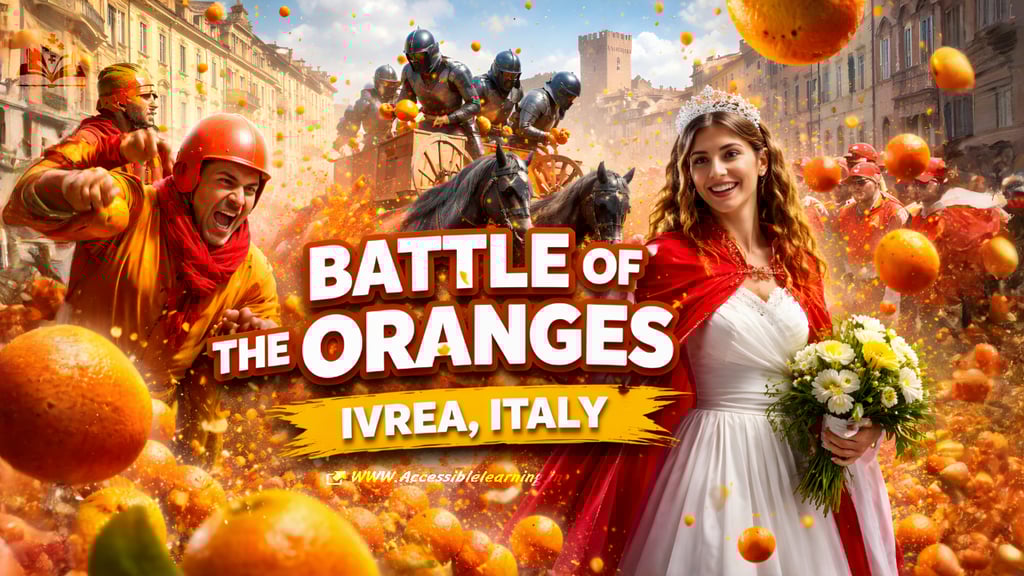
If you’ve ever imagined what it would feel like to step into a real-life medieval battlefield but in a modern town with thousands of flying oranges instead of weapons, then you’re already close to understanding the Battle of the Oranges.
Held every year in Ivrea, Italy, this iconic event is one of the most unique cultural festivals in Europe. It blends legend, rebellion, tradition, theater, and pure chaos into a few unforgettable days. But beneath the madness is a surprisingly deep story of resistance and identity.
In this in-depth guide, you’ll learn what the Battle of the Oranges is, why it happens, how it works, what it symbolizes, and how to attend it like a smart traveler (without getting injured or missing the best moments).
What Is the Battle of the Oranges?
The Battle of the Oranges (Battaglia delle Arance) is an annual festival in Ivrea, a historic town in northern Italy (Piedmont region), where teams of people throw oranges at each other in massive public squares. It is the signature event of the Ivrea Carnival (Carnevale di Ivrea).
This is not a small street performance. It’s a full-scale, organized, high-energy battle involving:
Thousands of participants
Hundreds of tons of oranges
Multiple squares turned into “combat zones.”
Uniformed teams, vehicles, and ceremonial traditions
It usually takes place over three days, ending on Shrove Tuesday (Martedì Grasso), just before Lent begins.
Why Is It Called the Battle of the Oranges?
The festival is literally a battle. Oranges fly like projectiles, and teams treat it like a serious contest, with strategy, team pride, and territory. But the reason oranges are used is not because they are grown there. Ivrea is not an orange-producing region.
Oranges became central to the event because they are:
a safe substitute for weapons in a historical reenactment
visually dramatic and easy to “read” in a crowd
heavy enough to feel real, but still non-lethal
symbolic “ammunition” for a rebellion story
This is why the event is globally famous. It is one of the rare festivals where history is acted out physically, not just remembered.
The Origin Story: Legend and Rebellion
To understand the Battle of the Oranges, you need to understand the legend it preserves.
The Miller’s Daughter (Violetta)
According to Ivrea’s tradition, the town was once ruled by a cruel feudal lord (often referred to as the Marquis or tyrant). In the popular story, he imposed humiliating oppression on locals, including claiming the right to spend the first night with newly married women. A young woman, traditionally known as Violetta, refused to accept this abuse.
In the most famous version of the legend, she:
resisted the tyrant
killed him
triggered the town’s rebellion
inspired citizens to overthrow feudal power
This story became a permanent symbol in Ivrea’s cultural memory, and every year the carnival brings it back to life.
What the Battle Symbolizes (Meaning Beyond the Festival)
The Battle of the Oranges isn’t only entertainment. It’s a living symbol. It represents:
freedom vs oppression
community courage
rebellion against unjust rule
the power of ordinary citizens to fight back
In the reenactment:
orange throwers on foot represent the townspeople and rebels
participants in carts represent the tyrant’s forces
So when oranges fly, it’s not random chaos. It is the town repeating its own story of resistance.
When and Where Does It Happen?
Location
Ivrea, Piedmont, northern Italy
close to Turin (Torino), making it easy for travelers
accessible by train and road
Time
The event takes place during the Carnival season. The exact dates change each year because they follow the religious calendar leading up to Lent. The Orange Battle itself happens across:
Sunday
Monday
Tuesday (Shrove Tuesday)
Ivrea Carnival lasts longer than the battle alone, and several rituals happen before and after the fighting days.
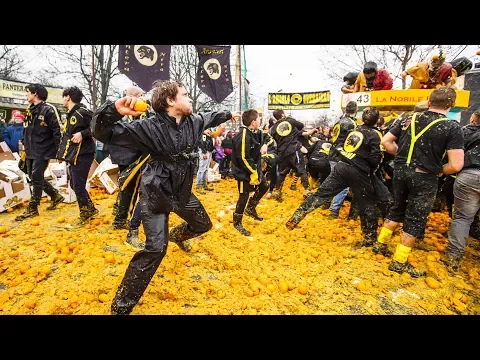
How the Battle Works (Event Details You Should Know)
Even though it looks wild, the event has structure.
The teams: “Aranceri”
Participants belong to official groups called aranceri, meaning orange throwers. Each team:
wears a specific uniform (colors, symbols, helmets)
has strong identity and tradition
is connected to neighborhoods (local pride is huge)
Some teams are famous and highly respected in Ivrea.
Two sides of the battle
The battle is divided into two main forces:
1) The Foot Teams (rebels)
They fight:
on streets
in squares
in tight tactical groups
Their job is to stop the carts and “defeat” the tyrant’s forces.
2) The Carts (the tyrant’s troops)
Participants stand on horse-drawn carts (or themed vehicles), wearing protective armor. They represent:
feudal soldiers
oppressors
organized force
The carts move through the town and become moving targets.
The combat zones (squares)
The main fighting takes place in a few major squares. These zones are heavily crowded and energetic. It is common for oranges to fly nonstop for long periods.
Rules, safety, and organization
This is not a lawless fight:
battle zones are regulated
teams wear protective gear
routes are coordinated
security and medical services remain active throughout
Despite this, bruises are normal, which is why tourists must be cautious.
The Mugnaia: The Symbolic Heroine of Ivrea
One of the most important elements of Ivrea Carnival is the Mugnaia, the chosen female figure representing the miller’s daughter (Violetta). She is not just a “character.” She is treated with deep respect.
The Mugnaia:
appears in ceremonial parades
wears symbolic clothing (often white with red accents)
is honored as a representation of freedom and resistance
For locals, she is the emotional heart of the carnival.
Why Oranges? (The Real Reason It Became a Citrus Battle)
A common question is, why oranges specifically?
Here’s the deeper answer:
1) Oranges replaced older “weapons.”
Historically, European carnivals often included symbolic street fights using:
beans
apples
stones (dangerous)
sticks (very dangerous)
As carnivals evolved, safer items were introduced. Oranges became ideal because they are:
throwable
visually clear
messy (adds dramatic effect)
non-lethal but still impactful
2) Oranges were accessible through trade
Ivrea had access to trade routes that could bring citrus fruit from southern regions. Over time, oranges became the standardized “ammunition.”
3) The symbolic value
Oranges represent:
abundance
a communal sacrifice for tradition
energy and spectacle
The town literally spends tons of fruit for the sake of cultural identity, which is part of what makes it powerful.
The Atmosphere: What It Feels Like to Be There
If you’ve never attended, it’s hard to imagine. During the Battle of the Oranges:
the air smells strongly of citrus
streets turn orange from crushed fruit
drummers and chants fill the town
every alley feels alive
energy switches between carnival joy and battle intensity
You’re not just watching something. You feel like you’re inside it.
Is the Battle of the Oranges Ethical or Wasteful?
This topic is often debated by travelers. Yes, it involves a huge quantity of oranges, and it can appear wasteful. But locals see it differently:
the fruit is imported and not taken from local farming needs
it’s treated as part of a historic ritual
it keeps the town’s identity alive
it supports tourism and the local economy
For many residents, the cultural value outweighs the criticism. Still, it remains a conversation point, especially for environmentally conscious visitors.
Traveler Tips: How to Attend Without Regret
If you’re planning to experience this event, these tips matter a lot.
1) Wear the Red Hat (Berretto Rosso)
This is the most important tradition for tourists. Spectators wear a red hat to signal:
“I’m not participating.”
“Don’t target me.”
It doesn’t guarantee safety, but it greatly reduces the chance of intentional hits.
2) Dress like you’re entering a battlefield
Wear:
thick padded jacket
gloves
scarf for neck protection
waterproof pants if possible
shoes with strong grip (streets get slippery)
optional: sports goggles (recommended)
Never wear your best clothes. Orange juice stains.
3) Protect your phone and camera
Bring:
waterproof phone cover
ziplock bag
microfiber cloth
minimal gear
This is not an event for expensive, exposed equipment.
4) Pick your viewing style
You have three choices:
Safe viewing
behind nets/barriers
from side streets
Balanced viewing
edge of squares
moving between locations
Full intensity
inside crowded zones (high risk, high adrenaline)
Choose based on your comfort level.
5) Stay longer than one day
If possible, attend more than one day because each day has a different vibe:
first day feels like building energy
middle day feels intense and competitive
final day feels emotional and dramatic

How to Get to Ivrea (Travel Planning)
Ivrea is one of the best “day trip festival towns” in Italy.
Nearest major city
Turin (Torino)
From Turin to Ivrea
Trains are common and convenient
Road travel is also easy
Best accommodation strategy
If you want comfort:
stay in Turin (more hotel options)
take early transport to Ivrea
If you want deep experience:
stay in Ivrea itself (limited, but immersive)
Book early. Carnival season fills rooms fast.
What Else Happens During the Ivrea Carnival?
The Orange Battle is the main highlight, but the carnival includes several traditions, such as:
historical parades with medieval-style costumes
marching bands and drumming groups
ceremonial routes through the town
public gatherings and community celebrations
rituals honoring freedom and rebellion
This is why the event feels like a complete cultural world, not just a fight.
Why the Battle of the Oranges Is More Than a Festival
The Battle of the Oranges in Ivrea is not just a travel activity or a viral event. It is a rare festival where:
history becomes physical
citizens become actors
rebellion becomes tradition
a town keeps its legend alive through ritual
You’ll witness something very few festivals can offer: a crowd participating not for show, but for identity. If you love cultural travel, dramatic events, and once-in-a-lifetime experiences, Ivrea’s Battle of the Oranges belongs on your list.
FAQ's
Q: Where does the Battle of the Oranges take place?
It takes place in Ivrea, a town in the Piedmont region of Northern Italy, near Turin (Torino). The main battles happen in the central town squares.
Q: When is the Battle of the Oranges held?
It is held during Ivrea Carnival, usually on Sunday, Monday, and Tuesday (Shrove Tuesday) before Lent. The exact dates change every year.
Q: Can tourists join the orange fight?
Yes, but not casually. To participate officially, you usually need to join a team (aranceri), follow rules, and wear proper protective gear. Most tourists prefer to watch as spectators.
Q: Is it safe to watch the Battle of the Oranges?
Mostly yes, if you stay in the spectator areas. However, oranges are heavy and fast, so injuries like bruises can happen. Avoid entering battle zones without protection.
Q: What should I wear as a visitor?
Wear:
thick jacket / padded coat
gloves
shoes with grip (roads become slippery)
scarf/neck protection
eye protection (recommended)
And avoid wearing expensive clothes.
Q: What is the red hat rule in Ivrea?
Wearing the red hat (Berretto Rosso) means you’re a non-participant spectator, and throwers should not intentionally target you. It reduces risk, but accidents can still happen.
Q: Why do they use oranges (not lemons or something else)?
Oranges became the festival’s traditional “ammunition” because they are:
easy to throw
dramatic and visible in crowds
symbolic for the historic rebellion reenactment
Ivrea doesn’t grow oranges locally; they are imported for the event.
Q: How long does the orange battle last each day?
The battles run for several hours, mostly in the afternoon, depending on the official schedule of that year.
Q: Do they clean up all the oranges after the event?
Yes. The town runs a major cleanup operation after each day. Streets become covered in orange pulp, so cleaning is part of the official festival management.
Q: What else can visitors see besides the orange battle?
Ivrea Carnival includes:
historic parades and costumes
drumming and marching groups
ceremonies honoring the Mugnaia
cultural traditions tied to freedom and rebellion
So it’s worth attending even outside the battle hours.
Subscribe To Our Newsletter
All © Copyright reserved by Accessible-Learning Hub
| Terms & Conditions
Knowledge is power. Learn with Us. 📚

