

Bali Kite Festival: The Giant Flying Machines That Turn Bali's Sky Into a Battlefield
Discover the real story behind Bali Kite Festival, where giant traditional kites, fierce village rivalries, and centuries-old culture dominate Bali's skies.
CULTURE/TRADITIONTRAVEL LIFEBRAZILCELEBRATION/FESTIVALS
Helena | Kim Shin
7/7/20263 min read
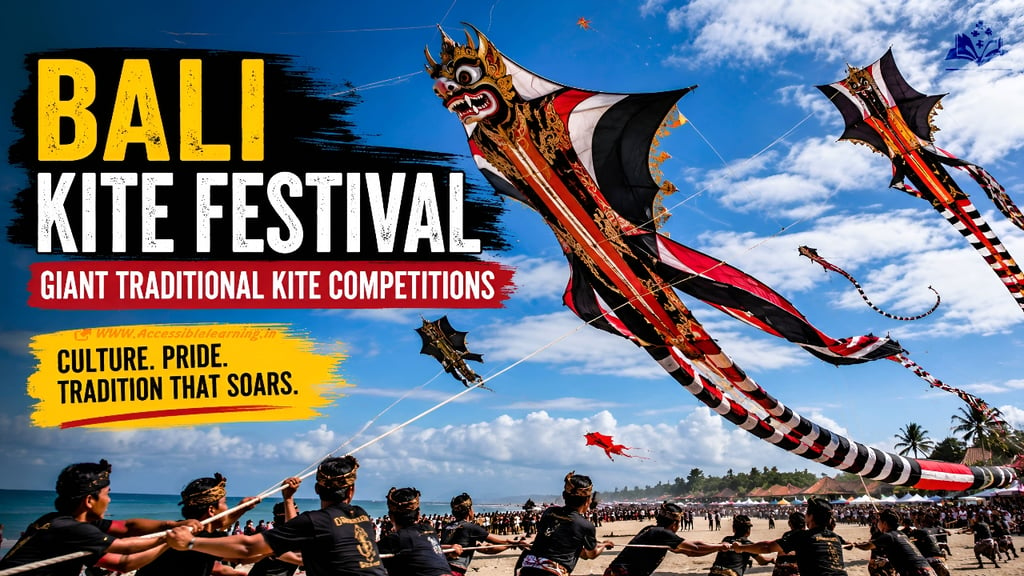
Every year, teams in Bali spend weeks building traditional kites that stretch over 10 meters (33 feet) across, then gamble everything on a single day of wind. One mistake snaps bamboo frames, tears handmade fabric, and destroys months of work. This is not a beachside photo opportunity. It is organized cultural warfare fought in the sky.
This Festival Is About Pride, Not Tourism
Forget the polished travel brochures. The Bali Kite Festival exists because of religion, agriculture, and community rivalry, not because visitors wanted another Instagram event.
The tradition began as a way to thank the Hindu gods for successful harvests while asking for favorable weather in the coming season. Villages still treat the competition as an extension of religious life rather than commercial entertainment.
Every team carries enormous responsibility. Building a giant kite demands money, craftsmanship, engineering, and hundreds of volunteer hours. Losing does not simply bruise egos. It hurts village pride.
Tourists witness the spectacle. Local communities carry its weight.
Giant Kites Are Engineering Projects Disguised as Art
Calling these creations "kites" barely describes them.
The largest traditional Balinese kites measure well over 10 meters in length and require multiple people just to launch them. Builders combine bamboo frames, cotton fabric, intricate hand-painted decorations, and tails that stretch for hundreds of meters.
Wind becomes both ally and enemy.
A sudden gust can lift the kite perfectly or rip it apart before it reaches full altitude.
Unlike factory-made recreational kites, every traditional competition kite reflects local craftsmanship. Teams rebuild them almost entirely by hand each year.
That tradition keeps ancient construction techniques alive while forcing younger generations to learn skills modern life rarely teaches.
Three Traditional Kite Types Dominate the Sky
The festival revolves around three iconic designs.
Bebean
This fish-shaped kite symbolizes balance and remains one of the oldest traditional designs. Its curved body produces remarkable stability even in changing coastal winds.
Janggan
The dragon-inspired Janggan steals every camera lens.
Its tail often stretches more than 100 meters, creating a snake-like movement across the sky. It demands exceptional teamwork because even slight launch errors can send the entire structure crashing down.
Pecukan
The leaf-shaped Pecukan sacrifices visual drama for speed and agility.
Experienced teams often choose it when wind conditions become unpredictable.
Each design reflects centuries of experimentation rather than artistic coincidence.
Competition Looks Beautiful Until You See the Logistics
Spectators usually notice the colorful sky. They rarely notice the controlled chaos underneath.
Launching a giant kite requires dozens of people pulling ropes, stabilizing bamboo frames, reading wind direction, and coordinating movement across crowded fields.
One poorly timed command ruins everything.
Officials judge more than appearance. They evaluate flight stability, craftsmanship, launching technique, traditional authenticity, and overall performance.
Winning depends just as much on teamwork as construction quality.
Tourism Loves the Festival. Bali Tries to Protect It.
International attention transformed the festival into one of Bali's biggest seasonal attractions.
Hotels advertise it.
Travel influencers chase drone footage.
Tour companies build entire itineraries around it.
That popularity creates an uncomfortable tension.
Large crowds generate income for local businesses, yet commercialization threatens the community spirit that made the festival meaningful in the first place.
Many organizers continue emphasizing traditional rules and village participation precisely because they refuse to let entertainment replace cultural identity.
The festival survives because locals still control it. If that changes, the event risks becoming another staged performance for visitors instead of a living tradition.


The Best Viewing Experience Requires More Than Showing Up
Most major competitions take place during Bali's dry season, generally between July and October, when reliable coastal winds create ideal flying conditions.
Sanur, Padang Galak Beach, and nearby open coastal fields often host the largest events.
Arrive early.
Parking fills quickly.
Midday heat becomes intense.
The strongest flying usually happens when steady afternoon winds develop.
Bring water, sun protection, comfortable footwear, and patience.
Do not walk beneath launching zones.
Stay outside marked competition areas.
Those enormous bamboo frames carry real weight, and sudden wind shifts leave little room for error.
Respect barriers instead of chasing better photographs.
Why This Festival Still Matters
Many cultural festivals slowly surrender to commercial sponsors, staged performances, and sanitized storytelling. The Bali Kite Festival resists that trend more successfully than most.
Young builders still inherit techniques from older craftsmen.
Entire villages still volunteer together.
Traditional music still accompanies launches.
Religious meaning still shapes the event.
Modern tourism may amplify its visibility, but local communities continue protecting its foundation.
That makes the festival more than entertainment. It remains living evidence that tradition survives when communities value participation more than profit.
The Bali Kite Festival deserves global attention, but not for the reasons most travel websites advertise.
Yes, the giant kites create unforgettable photographs.
Yes, the coastal scenery looks spectacular.
Neither explains why the festival has endured for generations. Its real power lies in collective effort, inherited craftsmanship, religious tradition, and fierce village pride.
Visitors who only watch the colorful sky miss the real story.
The real spectacle happens on the ground, where hundreds of people work together to keep an ancient tradition flying against the winds of modernization.
Subscribe To Our Newsletter
All © Copyright reserved by Accessible-Learning Hub
| Terms & Conditions
Knowledge is power. Learn with Us. 📚

