

Autumn Equinox Explained: Science, Traditions, and Meaning Behind the Equal Day and Night
Discover the meaning of the Autumn Equinox, its scientific explanation, cultural traditions, spiritual symbolism, and modern importance. Learn how this seasonal event shapes nature, agriculture, and daily life around the world.
CULTURE/TRADITIONEVENT/SPECIALCELEBRATION/FESTIVALS
Kim Shin
3/10/20265 min read
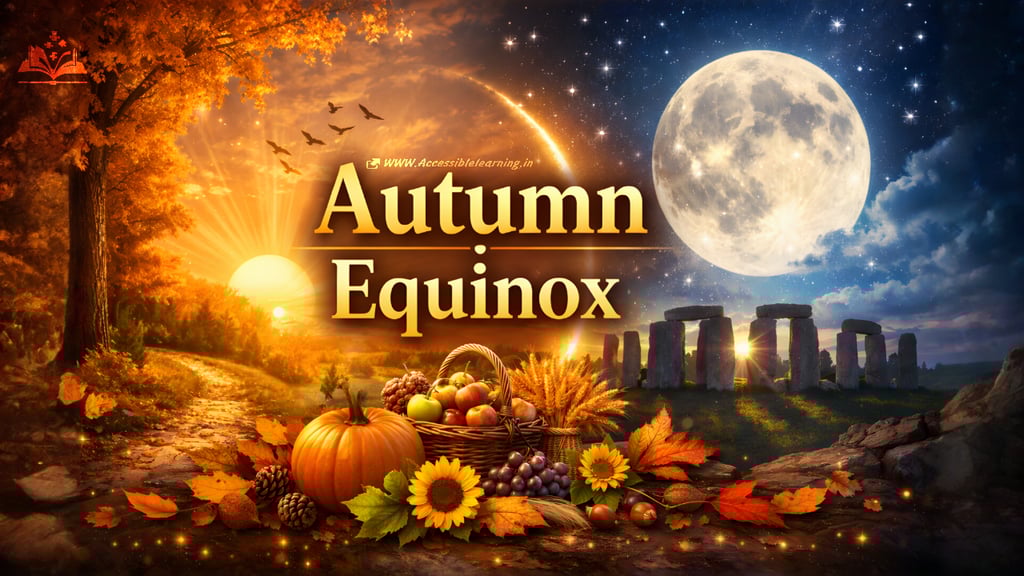
The Autumn Equinox is one of the most fascinating astronomical events of the year. It marks a precise moment when day and night are nearly equal across the Earth. Beyond science, it connects agriculture, ancient calendars, cultural festivals, and even modern wellness practices. Understanding the Autumn Equinox helps us appreciate seasonal change, natural cycles, and our place in the universe.
What Is the Autumn Equinox?
The Autumn Equinox happens when the Sun crosses the celestial equator, moving from north to south. On this day, both hemispheres receive almost equal sunlight. The word "equinox" comes from Latin words meaning "equal night."
In the Northern Hemisphere, the Autumn Equinox usually occurs around September 22 or 23. In the Southern Hemisphere, it happens around March 20 or 21 and marks the beginning of autumn there.
After the Autumn Equinox:
Nights become longer than days in the Northern Hemisphere.
The Sun rises later and sets earlier each day.
Temperatures gradually begin to drop in most regions.
The Science Behind the Autumn Equinox
Earth is tilted about 23.5 degrees on its axis. This tilt causes seasons. During the Autumn Equinox, Earth’s tilt is positioned so that neither hemisphere leans toward or away from the Sun.
Important scientific facts:
Day and night are almost equal worldwide.
The Sun rises due east and sets due west.
Both hemispheres receive equal solar energy.
It marks the transition from summer to autumn in the Northern Hemisphere.
The equinox is not exactly equal day and night everywhere because of atmospheric refraction and the size of the Sun’s disk. Still, the difference is small.
Autumn Equinox vs. Solstice: What’s the Difference?
Many people confuse equinoxes with solstices.
Equinox: Day and night are nearly equal. Happens twice a year.
Solstice: The Longest or shortest day of the year. Happens twice a year.
The Autumn Equinox sits halfway between the Summer Solstice and Winter Solstice.
Cultural and Historical Significance
Ancient civilizations carefully observed equinoxes to guide farming, rituals, and calendars.
Harvest Festivals
Many cultures celebrate harvest around the Autumn Equinox because crops are ready. Examples include:
Harvest Festival in Europe
Thanksgiving traditions in North America
Mid-Autumn Festival in East Asia
These celebrations honor nature, gratitude, and abundance.
Ancient Monuments Aligned With Equinoxes
Several historical sites were designed to align with the equinox sunrise or sunset. Examples include Stonehenge in England and ancient temples in Mexico and Egypt. These alignments show how advanced ancient astronomy was.
Spiritual Meaning
In many traditions, the Autumn Equinox represents balance, reflection, and preparation for winter. It is often associated with gratitude, letting go, and inner growth.

Autumn Equinox Around the World
Different cultures observe this event in unique ways.
Japan
In Japan, people celebrate Shūbun no Hi, a national holiday. Families visit graves, clean them, and honor ancestors.
China
The Mid-Autumn Festival celebrates the full moon near the equinox. Families eat mooncakes and gather together.
India
While not directly tied to the equinox, many harvest festivals, such as Navratri season celebrations, occur around this seasonal shift.
Why the Autumn Equinox Matters Today
Even in a digital world, the Autumn Equinox still has importance.
Agriculture
Farmers use seasonal patterns to plan harvests and planting cycles.
Mental and Physical Health
Shorter days can affect mood and sleep. Understanding seasonal change helps people prepare for lifestyle adjustments.
Climate Awareness
Tracking seasonal shifts helps scientists study climate change. Sooner or later, equinox-related patterns can signal environmental changes.
Personal Reflection
Many people use the Autumn Equinox to set goals, reset routines, and slow down before winter.
Fun Facts About the Autumn Equinox
You can balance an egg on its end any day of the year, not just the equinox.
On the equinox, shadows are shorter at noon near the equator.
The Northern Lights become more visible after the equinox due to geomagnetic activity.
Some animals begin migration around this time.
How to Celebrate the Autumn Equinox
Simple ideas you can try:
Watch sunrise or sunset.
Start a gratitude journal.
Cook seasonal foods like pumpkin, apples, or grains.
Declutter your workspace.
Spend time in nature.
These small activities help connect with seasonal rhythm.
Autumn Equinox and Modern Lifestyle
Many creators, designers, and planners use seasonal themes for content calendars, branding, and storytelling. Autumn visuals bring warm colors, calm moods, and reflective themes that audiences connect with. For writers, marketers, and digital creators, the Autumn Equinox is a great topic for:
Educational articles
Spiritual or mindfulness content
Seasonal marketing campaigns
Social media storytelling


Frequently Asked Questions
Q: Is the Autumn Equinox the first day of autumn?
Yes, in astronomical terms. Meteorological autumn may start earlier depending on climate systems.
Q: Does the equinox happen on the same date every year?
No. It usually falls on September 22 or 23 in the Northern Hemisphere.
Q: Are day and night exactly equal?
Not perfectly equal due to atmospheric refraction and the size of the Sun's disk, but they are very close.
Q: Why is it called harvest season?
Because crops ripen around this time in many regions, making it a natural time for harvesting food.
Q: What is the difference between astronomical and meteorological autumn?
Astronomical autumn begins with the equinox. Meteorological autumn is based on temperature cycles and begins on September 1 in the Northern Hemisphere.
Q: Does the equinox affect weather immediately?
Not instantly. Seasonal temperature changes happen gradually because oceans and land retain heat.
Q: Can the equinox impact mood or sleep?
Yes. Shorter daylight hours can affect circadian rhythm, which may influence sleep quality and mood.
Q: Why do ancient monuments align with the equinox?
Many ancient cultures tracked equinoxes to plan farming seasons and religious ceremonies.
Q: Is the Autumn Equinox important in astrology?
Yes. It marks the start of Libra season, which is associated with balance and harmony in astrological traditions.
Q: Does the equinox occur at the same moment worldwide?
Yes. It happens at a precise universal time, though local clocks may show different dates.
Additional Points About the Autumn Equinox
Effect on Wildlife
Many animals begin migration, hibernation preparation, or mating cycles around the equinox due to daylight changes.
Navigation and Astronomy
Historically, sailors used equinoxes to understand seasonal star positions and navigation patterns.
Impact on Energy Use
Shorter days increase electricity use for lighting and heating in many countries, influencing energy planning.
Agricultural Calendars
Traditional farming calendars in many cultures are built around equinox and solstice cycles.
Symbol of Balance in Philosophy
The equal day and night represent harmony between light and darkness, often used in literature and spiritual practices.
Influence on Architecture
Some buildings and temples are designed to capture equinox sunlight through windows or corridors.
Tourism and Travel
Many historical sites attract visitors during equinox sunrise or sunset events.
Educational Importance
Schools and science programs use equinoxes to teach astronomy, geography, and climate science.
The Autumn Equinox is more than a scientific event. It represents balance, change, gratitude, and preparation. From ancient monuments to modern calendars, it has guided humanity for thousands of years. By noticing seasonal shifts like the Autumn Equinox, we stay connected to nature, history, and ourselves.
Whether you are a student, creator, farmer, or just curious about the sky, the Autumn Equinox is a reminder that change is natural and balance is essential.
Subscribe to Frontier Intelligence
All © Copyright reserved by Accessible-Learning Hub
| Terms & Conditions
Accessible Learning Hub — Actionable clarity for high-agency minds.
Weekly breakdowns on AI breakthroughs, capital flow, and human performance systems. Zero fluff.