

Australian Festival of Chamber Music, Cairns-Gimuy: Australia Just Moved Its Biggest Chamber Music Gamble North
Discover why the Australian Festival of Chamber Music moved to Cairns-Gimuy, its cultural impact, hidden logistics, must-know facts, and visitor insights.
EVENT/SPECIALTRAVEL LIFEAUSTRALIACELEBRATION/FESTIVALS
Kim Shin
7/14/20263 min read
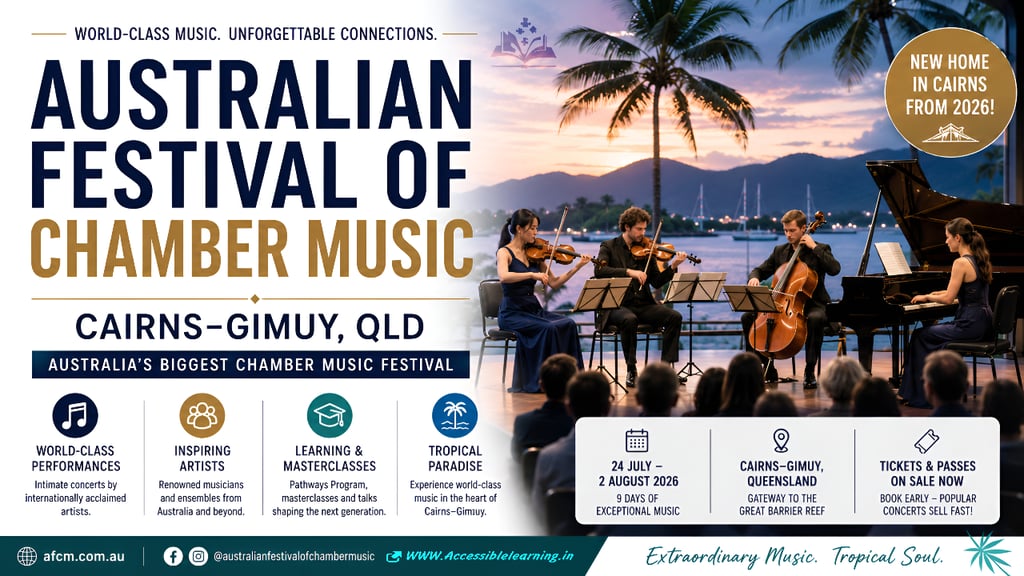
The Australian Festival of Chamber Music (AFCM) did something few major arts festivals dare to do. After more than three decades in Townsville, it packed up and shifted to Cairns-Gimuy, Queensland, beginning in 2026. That decision did not simply change a venue. It reshaped Australia's classical music landscape and forced an uncomfortable question: can elite culture survive without reinventing itself?
A Festival That Refused to Stay Comfortable
Most chamber music festivals cling to tradition. AFCM chose disruption.
Founded in 1991, the festival built an international reputation by bringing world-class soloists, chamber ensembles, and emerging musicians to tropical North Queensland. It grew into the Southern Hemisphere's largest chamber music festival while developing a fiercely loyal audience.
Yet success created another problem.
Townsville delivered history, but organisers argued that future growth demanded better arts infrastructure, closer venues, stronger tourism links, and easier visitor movement. Cairns offered exactly that. Critics saw betrayal. Organisers saw survival.
Why Cairns-Gimuy Won the Battle
Cairns already attracts millions of visitors chasing the Great Barrier Reef and the Wet Tropics rainforest.
The festival now plugs directly into that tourism machine instead of asking travelers to make a separate regional journey. Concert halls, hotels, restaurants, and attractions sit within a more compact urban layout, making it easier for audiences to attend multiple performances each day.
That sounds like a logistical upgrade.
It also represents a commercial strategy.
Arts festivals survive on ticket sales, sponsorships, accommodation partnerships, and destination marketing. Moving to Cairns expands every one of those revenue streams. Anyone pretending the decision focused only on music ignores how cultural economics actually work.
Don't Expect Quiet Background Music
Chamber music carries an unfair stereotype.
People imagine polite audiences politely applauding polite string quartets.
Reality looks different.
The AFCM program mixes internationally recognised soloists, experimental collaborations, new Australian compositions, wind ensembles, piano trios, string quartets, artist talks, masterclasses, community concerts, and educational programs. The festival deliberately places established stars beside emerging performers, creating performances that rarely happen elsewhere.
That unpredictability explains why musicians keep returning.
Every concert becomes a fresh collaboration rather than another stop on a touring schedule.
The Hidden Engine Nobody Talks About
Most visitors buy tickets.
The real cultural value sits backstage.
The AFCM Pathways Program and public masterclasses allow young Australian musicians to learn directly from internationally respected performers. Students rehearse, receive coaching, perform publicly, and build professional networks that would normally require overseas conservatories or expensive private study.
Without these education programs, Australia's classical music pipeline would become noticeably weaker.
The concerts generate headlines.
The mentoring builds the future.

Tourism Benefits, But Don't Romanticise Them
Every destination promises "culture meets paradise."
Most deliver predictable marketing slogans.
Cairns actually possesses an unusual advantage.
Visitors can attend a morning recital, spend an afternoon exploring the reef or rainforest, and return for an evening chamber performance without complicated travel planning. Tropical winter weather also makes late July one of the region's strongest tourism periods.
That combination gives AFCM a competitive edge over many European and North American chamber festivals.
Still, don't expect cheap holidays.
Festival periods drive accommodation demand, popular concerts sell quickly, and premium experiences command premium prices.
The Cultural Politics Behind the Move
The relocation exposed an uncomfortable truth.
Regional cities compete aggressively for flagship cultural events because festivals generate far more than applause.
They attract interstate visitors.
They fill hotels.
They support restaurants.
They strengthen city branding.
Townsville built AFCM into an international success over 35 years. Cairns now inherits that reputation while promising greater long-term expansion. Whether history judges the move as visionary or controversial depends entirely on what happens over the next decade.
What Visitors Should Actually Know
Forget treating AFCM like a single concert.
The experience works best across several days.
Build time for artist talks, smaller recitals, community performances, and educational events instead of chasing only headline concerts. Many of the festival's most memorable performances happen in intimate venues where audiences sit just metres from internationally acclaimed musicians.
Book accommodation early.
Purchase tickets before popular performances disappear.
Plan transport between venues before arriving instead of improvising during festival week.
Those practical details matter more than packing another camera lens.
The Australian Festival of Chamber Music refuses to behave like a museum piece.
Its move to Cairns-Gimuy signals that Australia's leading classical festivals cannot rely on nostalgia forever. They must evolve, attract new audiences, embrace stronger tourism partnerships, and invest heavily in education without sacrificing artistic standards.
That balancing act carries enormous risk. If Cairns delivers on its promise, AFCM will strengthen Australia's international cultural reputation for another generation.
If it fails, critics will point to the relocation as proof that growth can come at the expense of identity. Either way, this remains far more than another classical music festival.
It has become Australia's boldest experiment in proving that regional arts can compete on a genuinely global stage.
Subscribe To Our Newsletter
All © Copyright reserved by Accessible-Learning Hub
| Terms & Conditions
Knowledge is power. Learn with Us. 📚

