

Ashoka's Hell: The Mauryan Torture Palace Disguised as Paradise
Discover the shocking legend of Ashoka's Hell, the Mauryan torture palace disguised as paradise. Explore the history, evidence, myths, and Ashoka's transformation.
INDIAN HISTORYEMPIRES/HISTORYHISTORYHARSH REALITY
Jagdish Nishad | Riya Verma
7/31/20269 min read


Imagine Walking Into a Luxury Palace... Only to Be Boiled Alive
History remembers Emperor Ashoka as the gentle Buddhist ruler who rejected violence after the devastating Kalinga War. Yet some of the oldest Buddhist texts preserve a deeply disturbing story about his earlier life. They claim that before becoming one of history's most celebrated advocates of peace, Ashoka ordered the construction of a prison so horrifying that it became known as "Ashoka's Hell."
According to these accounts, it wasn't an ordinary prison. It looked like a breathtaking royal pleasure palace from the outside, complete with gardens, decorative pools, and elegant architecture. But the moment someone crossed its gates, the illusion ended. Escape was impossible. The law reportedly declared that anyone who entered, whether intentionally or by accident, could never leave alive.
If the story sounds like something from a psychological horror film, that's because it was meant to. Buddhist writers used the prison as the darkest possible contrast to Ashoka's later spiritual transformation.
Quick Facts
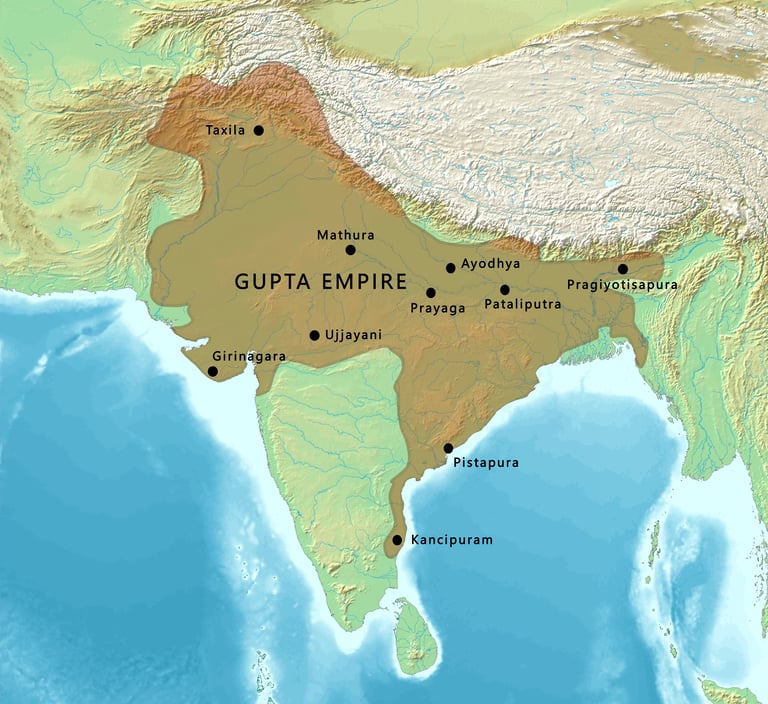
Location: Ancient Pataliputra (modern Patna, Bihar, India)
Known As: Ashoka's Hell or Ashoka's Infernal Prison
Primary Source: Ashokavadana, a Buddhist Sanskrit text compiled centuries after Ashoka's reign
Appearance: Designed to resemble a luxurious royal palace
Purpose: Torture and execution of prisoners
Prison Rule: Anyone entering the prison was supposedly forbidden from leaving alive
Most Famous Torture: Victims reportedly boiled inside large metal vessels
Historical Status: The prison itself has never been archaeologically confirmed; historians view it as a legendary narrative rooted in Buddhist tradition rather than an established historical fact
Legacy: Serves as the dramatic turning point before Ashoka embraced Buddhism and nonviolence
What Was "Ashoka's Hell"?
According to Buddhist tradition, Ashoka's Hell was a prison deliberately built to imitate paradise.
The story appears most famously in the Ashokavadana, part of the larger Divyavadana collection of Buddhist literature. These texts portray Ashoka's early reign as exceptionally brutal. Before earning the title "Dharmashoka" ("Ashoka the Righteous"), he was allegedly called "Chandashoka" or "Ashoka the Fierce."
The prison reflected that reputation.
Visitors approaching the structure would supposedly see:
Beautiful gardens
Decorative fountains
Elegant halls
Luxurious bathing areas
Rich architectural ornamentation
Nothing suggested it was a prison. That deception was intentional. Paradise existed only outside the walls.
Why Did the Prison Look Like a Royal Resort?
Because appearances were part of the punishment.
The Ashokavadana describes the prison as a place where beauty concealed unimaginable suffering. Ancient Buddhist storytellers were making a moral point: worldly luxury can hide terrible evil. Once the gates closed behind a visitor, everything changed.
Instead of relaxation, prisoners found:
Torture chambers
Execution rooms
Sadistic guards
Elaborate killing devices
The dramatic contrast between the beautiful exterior and horrific interior made the prison unforgettable in Buddhist literature.
Was It Really Illegal to Leave Alive?
According to the legend, yes. One of the prison's most chilling rules stated that every person who entered had to die. Intent didn't matter.
Whether someone was
Arrested,
Invited,
Curious,
Lost,
Or simply admiring the building,
the outcome remained the same.
The prison functioned under an absolute principle.
Entry meant death.
This detail is one reason the story continues to fascinate historians and writers today.
Who Ran Ashoka's Hell?
A man named Chandagirika. Buddhist texts describe Chandagirika as exceptionally cruel and perfectly suited to oversee such a prison. Ironically, the sources claim he had once been a Buddhist monk before becoming one of history's most feared executioners.
His role was simple:
Make sure nobody escaped.
More importantly, make sure prisoners experienced maximum suffering before death.
Whether Chandagirika was a historical individual remains uncertain. Like many characters in religious literature, he may represent a symbolic figure rather than a documented official.
What Tortures Were Supposedly Used Inside?
According to the Ashokavadana, the punishments were deliberately extreme. Among the most famous descriptions is the execution of prisoners in enormous metal cauldrons.
Some modern retellings claim these vessels contained molten lead, but the surviving textual tradition more commonly describes large boiling metal cauldrons or copper vessels heated for execution. The exact material varies across later retellings, and historians caution against treating the more sensational versions as literal fact.
Other gruesome punishments described include:
Burning victims alive
Dismemberment
Crushing
Skinning
Various forms of prolonged torture intended to imitate the torments of Buddhist hell realms
The descriptions were intentionally horrifying. Their purpose was religious storytelling rather than courtroom documentation.
Did Ashoka Ever Experience His Own Prison?
According to Buddhist legend, yes. The turning point arrives when a wandering Buddhist monk enters the prison. By the prison's own law, he should die. Instead, something extraordinary happens.
The monk remains perfectly calm despite every torture inflicted upon him. His spiritual discipline makes him immune to fear and suffering.
Ashoka witnesses this miracle firsthand. The experience reportedly shocks him so deeply that everything changes.
He orders:
The prison was destroyed.
The executioner killed.
Himself to embrace Buddhist teachings.
Whether this episode happened historically is impossible to verify, but within Buddhist tradition it marks the symbolic death of "Ashoka the Cruel" and the birth of "Ashoka the Righteous."
Did Archaeologists Ever Find Ashoka's Hell?
No confirmed archaeological evidence has identified the prison. Ancient Pataliputra, located near modern Patna, has produced remarkable Mauryan remains, including palace structures, wooden fortifications, and monumental architecture.
However, no excavation has uncovered a prison matching the descriptions found in Buddhist literature.
For that reason, most historians classify Ashoka's Hell as:
A legendary narrative,
A religious teaching device,
Or a story inspired by the harsh realities of ancient royal prisons but greatly expanded for moral effect.
Was Ashoka Really That Cruel Before Buddhism?
Possibly, but probably not to the legendary extent. Independent historical evidence confirms several facts:
Ashoka inherited a powerful empire.
Ancient rulers often used violence to secure authority.
The Kalinga War caused massive casualties.
Ashoka later expressed profound remorse in his own inscriptions.
He promoted religious tolerance, welfare programs, and nonviolence after his conversion.
What remains uncertain is how accurately Buddhist legends describe his earlier personality.
His own rock edicts never mention building an infernal prison.
Instead, they emphasize the following:
Compassion
Justice
Humane treatment
Moral governance
Respect for all religious traditions
That contrast strongly suggests the prison story served as a dramatic literary device highlighting the scale of Ashoka's transformation.
Why Did Buddhist Writers Create Such a Dark Story?
Because extraordinary redemption requires an extraordinary beginning. If Ashoka had merely been an average king who became slightly kinder, the lesson would have carried less emotional weight.
Instead, Buddhist authors presented the most extreme possible transformation:
From builder of hell...
...to builder of hospitals.
From mass execution...
...to moral governance.
From fear...
...to compassion.
Whether every detail happened exactly as described mattered less than the central message:
No one is beyond change.

What Do Ashoka's Own Inscriptions Say About This Prison?
One of the biggest questions readers may have is whether Ashoka himself ever mentioned this infamous prison.
The answer is no.
Ashoka left behind more than thirty surviving inscriptions carved on rocks and pillars across the Indian subcontinent. These inscriptions, known collectively as the Edicts of Ashoka, discuss topics such as the following:
Religious tolerance
Humane treatment of prisoners
Animal welfare
Medical care
Administrative reforms
His regret after the Kalinga War
None of these official inscriptions mention a torture palace or a prison resembling "Ashoka's Hell."
This silence is one of the main reasons historians treat the story cautiously. If such a spectacular institution had been central to his reign, many scholars believe some trace of it might have appeared in contemporary records.
Which Ancient Source Actually Describes Ashoka's Hell?
The best-known account comes from the Ashokavadana, a Buddhist narrative written several centuries after Ashoka's lifetime, probably between the 2nd century CE and 3rd century CE.
That means the story was recorded roughly 400 to 500 years after Ashoka ruled.
This time gap matters because legends often grow richer over generations. The Ashokavadana mixes historical figures with miracles, symbolic events, and religious teachings, making it valuable for understanding Buddhist tradition but not always as direct historical evidence.
Why Is It Called "Hell" in Buddhist Literature?
The prison wasn't simply named "Hell" because it was brutal.
In Buddhist belief, numerous hell realms (Narakas) exist where beings experience suffering as a result of negative karma. The prison deliberately mirrors these supernatural punishments.
The message was symbolic:
Ashoka created a man-made version of hell.
His cruelty reflected ignorance and attachment.
His later conversion represented liberation from that spiritual darkness.
This religious symbolism explains why the punishments described in the text often resemble those found in Buddhist descriptions of the afterlife.
Could Any Part of the Story Be Based on Reality?
Many historians think that possibility cannot be completely dismissed. Ancient empires across Asia, Europe, and the Middle East all maintained prisons, interrogation chambers, and execution sites. Harsh punishments were common in the ancient world.
Some scholars suggest the legend may have started with the following:
A real royal prison in Pataliputra.
A notoriously cruel prison governor.
Stories circulating among the local population.
Later Buddhist authors expanded these accounts into a dramatic moral narrative.
Without archaeological evidence, however, this remains speculation rather than established history.
Ashoka's Transformation Was Unusual in World History
Whether or not every detail of the prison story is factual, Ashoka's documented change after the Kalinga War remains one of history's most remarkable political shifts.
Unlike many victorious emperors, Ashoka publicly acknowledged the suffering caused by war in his own inscriptions.
His later policies included:
Planting shade trees along roads.
Digging wells for travelers.
Establishing medical facilities for humans and animals.
Sending diplomatic and religious missions beyond India.
Encouraging ethical behavior instead of conquest.
Very few ancient rulers left official records expressing remorse for military victories, making Ashoka exceptional even without the legend of "Ashoka's Hell."


How Reliable Is the Story?
The story should be read with historical caution. Historians generally separate three different layers:
Well Supported
Ashoka ruled the Maurya Empire during the 3rd century BCE.
The Kalinga War profoundly affected him.
He later promoted Buddhist ethics and nonviolence through his inscriptions.
Plausible
Ashoka's early reign may have involved political violence typical of imperial succession.
Royal prisons in ancient India were likely harsh.
Legendary
The luxurious palace disguising a torture prison.
The absolute "enter but never leave" rule.
The miraculous monk surviving every torture.
Many of the elaborate execution methods described in later texts.
This distinction is important because the Ashokavadana was composed centuries after Ashoka lived and reflects religious storytelling as much as historical memory.
Why This Matters Today
Ashoka's Hell remains compelling because it explores an idea that still resonates today: appearances can hide disturbing realities.
The legendary prison presented visitors with fountains, gardens, and luxury while concealing unimaginable violence behind closed doors. In the modern world, deception often takes different forms. A polished online image can mask exploitation, misinformation, financial fraud, or abusive systems that are invisible at first glance.
The story also reminds us to read dramatic historical accounts with care. Ancient writers, like modern filmmakers and journalists, shaped narratives to persuade, teach, and inspire. The most unforgettable stories are not always literal records of events, but they can reveal what people believed, feared, and valued.
Whether Ashoka's Hell existed exactly as described or stood as a powerful moral allegory, it remains one of the most haunting legends from the Maurya Empire. It forces us to ask not only what happened in the past but also how stories transform rulers into symbols and how redemption, whether historical or legendary, continues to capture the human imagination.
FAQ's
Q: Was Ashoka's Hell a real place?
There is no archaeological evidence confirming the existence of Ashoka's Hell. The story comes primarily from the Ashokavadana, a Buddhist text written several centuries after Emperor Ashoka's reign. Historians generally regard it as a legendary account with possible historical influences rather than a verified historical site.
Q: Why was Ashoka's Hell designed to look like a luxury palace?
According to Buddhist tradition, the prison's beautiful exterior symbolized how appearances can hide great evil. It featured gardens, fountains, and elegant architecture to resemble a royal pleasure palace, while inside it functioned as a brutal torture chamber.
Q: What happened to people who entered Ashoka's Hell?
The legend states that anyone who entered the prison, whether intentionally or by accident, was forbidden from leaving alive. This absolute rule made Ashoka's Hell one of the most terrifying prisons described in ancient literature.
Q: What is the main historical source for the story of Ashoka's Hell?
The primary source is the Ashokavadana, a Buddhist Sanskrit text that forms part of the Divyavadana collection. Since it was written roughly 400 to 500 years after Ashoka's lifetime, historians treat it as a religious narrative rather than a contemporary historical record.
Q: Did Emperor Ashoka really become peaceful after the Kalinga War?
Yes. Ashoka's own rock and pillar edicts confirm that he deeply regretted the suffering caused by the Kalinga War. He later promoted nonviolence, religious tolerance, public welfare, and ethical governance, making him one of history's most influential rulers.
Q: Where was Ashoka's Hell supposedly located?
Buddhist texts place Ashoka's Hell in Pataliputra, the capital of the Maurya Empire, which is present-day Patna in the Indian state of Bihar.
Q: Who was Chandagirika?
According to the Ashokavadana, Chandagirika was the cruel executioner appointed to manage Ashoka's Hell. His character is central to the legend, though there is no independent historical evidence confirming his existence.
Q: Why do historians question the story of Ashoka's Hell?
Historians remain cautious because the story appears only in later Buddhist literature, not in Ashoka's own inscriptions or contemporary records. The absence of archaeological evidence also suggests that the narrative likely combines historical memory with religious symbolism.
Q: What was the purpose of the Ashoka's Hell legend?
The story highlights the dramatic transformation of Ashoka from the feared "Chandashoka" (Ashoka the Fierce) to "Dharmashoka" (Ashoka the Righteous). It serves as a powerful lesson about redemption, compassion, and the possibility of profound personal change.
Q: Is Ashoka's Hell considered history or mythology?
Most scholars consider it a legend rooted in Buddhist tradition rather than a fully verified historical event. While Ashoka himself was a real emperor, the prison narrative is widely viewed as a moral and religious story that emphasizes his transformation into a compassionate ruler.
Subscribe To Our Newsletter
All © Copyright reserved by Accessible-Learning Hub
| Terms & Conditions
Knowledge is power. Learn with Us. 📚

