

Artificial Intelligence for Kids: Fun Learning Explained
A simple and friendly guide that helps kids understand artificial intelligence through fun examples, hands-on activities, and real-life learning. This article explains AI in an easy way, covers safe tools for children, and shows how parents and teachers can support early tech curiosity. Perfect for beginners who want to make AI learning enjoyable and meaningful.
AI ASSISTANTNEW YOUTH ISSUESAI/FUTUREA LEARNING
Sachin K Chaurasiya
11/30/20255 min read
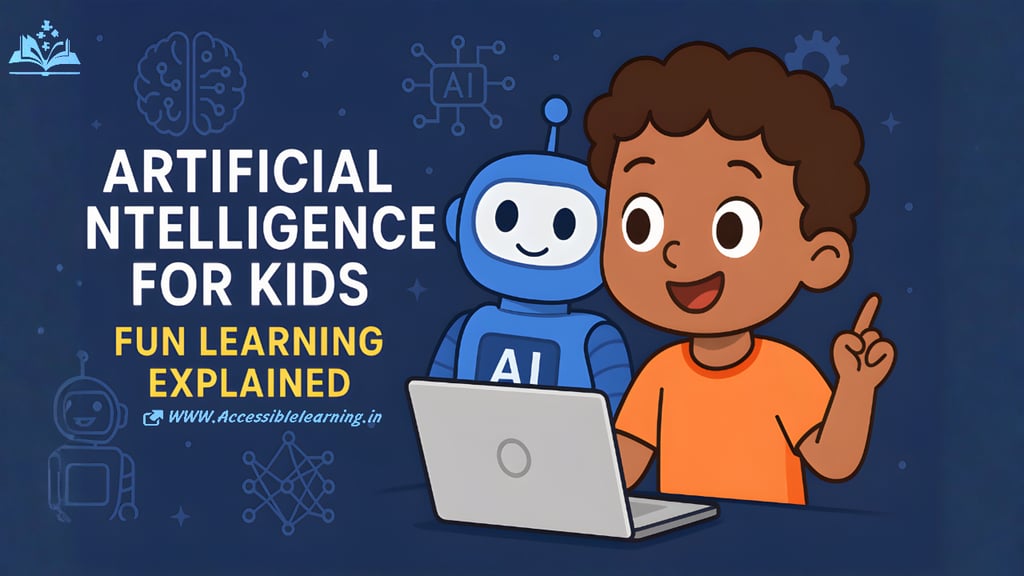
Artificial intelligence is no longer something only adults and engineers deal with. Kids experience AI all the time through apps, games, digital assistants, and even toys. When introduced properly, AI becomes an exciting way to learn problem-solving, creativity, and logical thinking. It helps children understand how technology actually works instead of simply consuming it.
This expanded guide explains AI in kid-friendly terms and offers practical tools, activities, and safety tips to help children explore AI in a fun and meaningful way.
Why AI Matters in a Child’s Learning Journey
It Builds Early Tech Confidence
Children who understand how AI works feel more confident using devices, apps, and digital tools. This foundation makes advanced subjects less intimidating later.
It Encourages Curiosity About How Things Work
Kids often ask why a game knows their next move or how voice assistants understand them. AI learning answers these questions in a simple, engaging way.
It Strengthens Logical Thinking
AI is built on patterns, rules, and decisions. When kids see how these work, they develop stronger reasoning skills.
It Supports Personalized Learning
AI-powered apps adjust lessons based on a child’s pace. Kids benefit from targeted support instead of one-size-fits-all learning.
It Opens Doors to Modern Creative Fields
Fields like animation, robotics, digital art, storytelling, and coding all use AI. Knowing the basics helps kids explore these areas confidently.
Simple Ways to Explain AI to Kids
Use Comparisons They Already Understand
AI is like a student who learns from examples.
It’s a helper that uses data to make good guesses.
It learns through practice just like kids do.
Use Real-Life Examples Around Them
Games that get smarter as they play
Apps that suggest cartoons or songs
Toys that respond to voices
Search engines predicting what they want to type
Use Stories and Characters
Create a simple story, such as “Imagine a robot who learns to recognize animals by looking at many pictures. At first, it guesses wrong but keeps getting better.” Kids understand concepts better when learning feels like a story.
Fun AI Activities and Projects for Kids
Train a Simple Image Model
Using tools like Teachable Machine, kids can:
Take photos of objects
Train a model
See how the computer makes predictions
This helps them understand data, patterns, and training.
Make an AI Story Generator
Kids type an idea, and AI helps them continue the story. This boosts imagination and writing creativity.
Create an AI-Generated Cartoon Character
Kids describe a character, and AI generates artwork they can color or animate.
Explore Robotics Kits
With kits like LEGO Mindstorms or mBots, kids can:
Build small robots
Teach them to follow paths
Program simple actions
This combines physical play with digital learning.
Experiment with Voice Recognition
Use simple apps that let kids train voice commands.
They can create:
A mini voice assistant
A robot that responds to claps
Games controlled by sound
Make Music with AI
Kids can create beats, melodies, and remixes through AI tools that react to their choices.

Core AI Concepts Kids Can Learn Easily
What Data Means
Kids understand data as information the computer uses to learn. It can be:
Pictures
Sounds
Words
Numbers
What a Model Is
A model is like a brain the computer builds from the examples we give it.
What Training Means
Training is like practicing. The more data AI gets, the better it performs.
Predictions
AI predictions are guesses based on what it learned. Explain that it won’t always be perfect, just like kids learning a new skill.
Bias and Fairness
Kids can learn that AI makes mistakes if the examples are unfair or incomplete. You can explain it like this: “If the robot only sees pictures of white cats, it may think all cats are white.” This teaches responsibility and awareness.
Big Benefits of AI Learning for Kids
Boosts Creativity
AI helps kids visualize ideas through art, animation, or music. They see how imagination and technology work together.
Encourages Innovation
Kids start thinking of new ways technology could help people. This nurtures an inventive mindset.
Builds Early STEM Interest
AI overlaps with math, coding, science, and problem-solving. Kids naturally get curious about STEM fields.
Helps with Social and Emotional Learning
AI chatbots designed for kids help with:
Emotional expression
Practicing conversations
Learning social skills
Strengthens Digital Literacy
Kids learn how technology works behind the scenes. This reduces misinformation and builds safer online habits.
Safe AI Tools Designed for Children
Here are age-friendly and parent-approved options:
For Ages 6–9
Scratch (with ML extensions)
LEGO robotics kits
Kid-friendly voice assistants
Interactive AI story apps
For Ages 10–13
Google Teachable Machine
Code.org AI activities
Tynker AI coding modules
Canva AI tools for design
For Teenagers
Python basics for building simple models
TensorFlow playground
AI-powered editing and animation software
These tools keep learning controlled, guided, and safe.
How Parents and Teachers Can Guide Kids
Start with Curiosity, Not Pressure
Let kids explore AI like they explore art or sports.
Set Healthy Boundaries
Teach them not to rely on AI for everything. Balance digital time with hands-on play.
Encourage Real-World Applications
Show kids how AI helps in:
Medicine
Weather forecasting
Maps and navigation
Farming
Transportation
This helps them see AI as a tool rather than a mystery.
Talk About Online Safety
Teach them never to share personal information without guidance.
Let Them Create, Not Just Consume
Encourage kids to build small projects using AI tools. This boosts confidence and learning depth.


Future Possibilities: What AI Can Inspire in Kids
AI can help them discover career paths like
Digital design
Robotics engineering
Animation
Machine learning
Game development
Media production
Science research
Medical technology
AI will also strengthen life skills like
Critical thinking
Decision-making
Teamwork
Communication
Ethical reasoning
Kids who learn AI early will be ready to lead future innovation.
AI doesn’t have to be complicated or technical for kids. When introduced with the right tools and guidance, it becomes a fun and meaningful way to learn about technology. Kids can explore creativity, build confidence, and develop real problem-solving skills through hands-on AI projects. With curiosity and responsible use, AI becomes a powerful companion in a child’s learning journey.
FAQs
Q: What is artificial intelligence for kids?
Artificial intelligence for kids means teaching them how computers learn from examples, make decisions, and solve problems. It’s explained through simple activities, games, and real-life examples so children understand how technology works without complex math or coding.
Q: Why should children learn about AI at a young age?
Early exposure builds confidence with technology, improves problem-solving skills, and encourages creativity. Kids who understand AI early are better prepared for future careers in digital fields like design, robotics, science, and media.
Q: Is AI learning safe for kids?
Yes, as long as kids use age-appropriate tools and parents or teachers guide their learning. Safe platforms like Scratch, Teachable Machine, and Code.org help children explore AI without accessing harmful content or sharing personal information.
Q: Do kids need coding knowledge to learn AI?
No. Many beginner tools use drag-and-drop interfaces. Kids can train simple models, create stories, or design characters without writing code. Coding can be introduced later as they grow more curious.
Q: How can AI help in school learning?
AI-powered apps personalize lessons, adjust difficulty levels, and help with reading, language learning, math, and science. These tools make learning smoother and keep kids engaged at the right pace.
Q: What are some good AI activities for kids?
Children can train image models, create AI stories, design characters, build simple robots, use voice-recognition apps, or explore AI-generated art and music. These activities make learning playful and hands-on.
Q: Will AI replace traditional learning for kids?
No. AI should support learning, not replace teachers or real-world experience. Kids still need human interaction, creativity, communication skills, and emotional development. AI is simply a helpful tool.
Q: What age is right to introduce AI to kids?
Kids as young as six can explore basic AI concepts through simple games and apps. Older children can try more advanced projects like coding or training models. The key is keeping the experience fun and age-appropriate.
Q: How can parents support AI learning at home?
Parents can start by showing how everyday apps use AI, encouraging safe exploration, setting boundaries for screen time, and guiding kids through creative AI projects. They don’t need to be tech experts to help.
Q: What are the benefits of AI for creativity?
AI helps kids turn ideas into visuals, sounds, animations, or stories. It supports imagination by giving children tools they can experiment with, expand, and personalize.
Subscribe to Frontier Intelligence
All © Copyright reserved by Accessible-Learning Hub
| Terms & Conditions
Accessible Learning Hub — Actionable clarity for high-agency minds.
Weekly breakdowns on AI breakthroughs, capital flow, and human performance systems. Zero fluff.