

Arashiyama Hanatouro: Kyoto’s Winter Nights Transformed by Lantern Light
Arashiyama Hanatouro is Kyoto’s iconic winter illumination event that transforms bamboo forests, temples, mountains, and rivers into glowing paths of light. This guide covers its history, highlights, cultural significance, walking routes, and practical tips for experiencing the festival at its best.
JAPANCELEBRATION/FESTIVALSEVENT/SPECIAL
Kim Shin
12/2/20253 min read
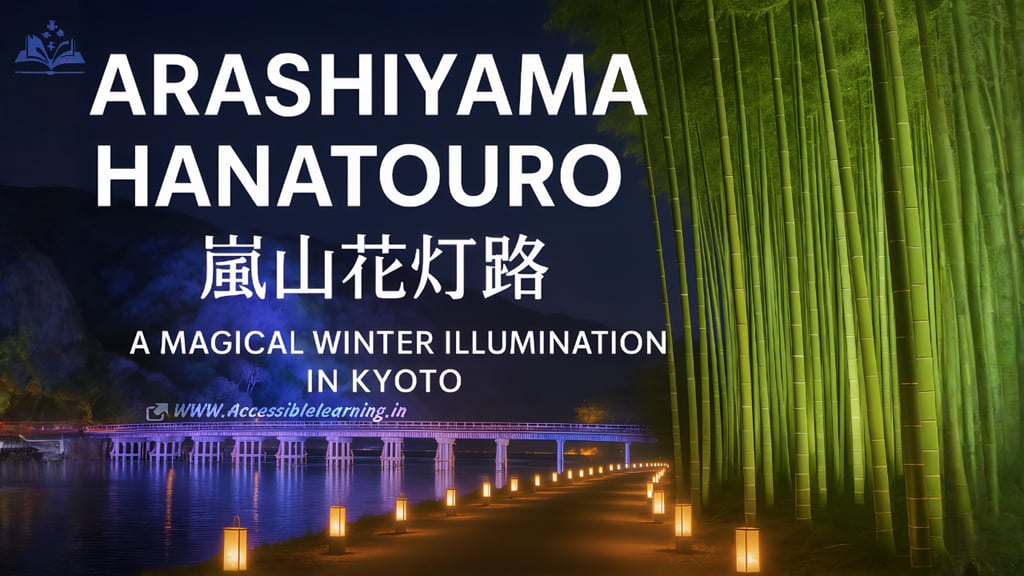
Arashiyama Hanatouro (嵐山花灯路) is a seasonal illumination festival held every December in Kyoto’s Arashiyama district. The event turns the area’s natural and historical landscapes into a glowing nighttime journey. Soft lanterns line the paths, the bamboo grove is illuminated with elegant lighting, and temples open their gates to reveal serene gardens bathed in winter glow.
This illumination festival has become one of Kyoto’s signature winter experiences. Unlike modern LED-heavy light shows, Hanatouro preserves the essence of traditional Japanese aesthetics: minimalism, subtlety, and harmony with nature.
Deeper Look at the Cultural Significance
Arashiyama has been admired since the Heian period, especially by poets, nobles, and monks who valued its seasonal beauty. Winter, in particular, was cherished for its calm atmosphere and the clarity of the cold air. Hanatouro honors this tradition by creating a setting where visitors slow down, observe the environment, and walk mindfully.
The concept of “light guiding the way” has deep meaning in Japanese culture. It symbolizes:
Purification
Protection
Hope during darker seasons
Celebration of seasonal change
The festival also highlights Kyoto’s commitment to preserving classic scenery while welcoming creative interpretations through artistic installations.
Key Highlights and Expanded Details
Bamboo Forest Night Illumination
The Arashiyama Bamboo Grove becomes one of the most photographed night scenes in Japan. The lights are designed to reflect off the bamboo poles at varying angles, creating shifting shadows that move with the wind.
The lighting is intentionally soft to prevent color distortion.
Different sections use subtle temperature changes to create depth.
Winter mist sometimes adds a natural glow that enhances the experience.
Togetsukyo Bridge and Katsura River Glow
Togetsukyo Bridge is the heart of Arashiyama, and during Hanatouro it shines with elegant lighting that highlights its wooden structure.
The surrounding mountains, especially Arashiyama and Kameyama, are illuminated with carefully placed lights that avoid overpowering the natural contours.
The river surface reflects the warm colors, turning the area into a moving watercolor-like scene.
Illuminated Temple Walks
Temples in the area participate by opening their grounds for nighttime viewing.
Tenryuji: The Sogen Garden transforms under ambient lighting.
Nison-in: Stone paths become gentle light trails.
Gio-ji Temple: The moss garden glows softly in the winter air.
Jojakko-ji: Hilltop views become even more striking at night.
Each temple’s lighting is designed by artists who specialize in traditional Japanese illumination, ensuring harmony with centuries-old architecture.
Flower Lantern Installations (Ikebana Integration)
Hanatouro means “Flower Light Path,” and floral arrangements play a central role.
Local ikebana schools create seasonal sculptures using winter materials.
Lantern bases often include wooden frames and handmade paper.
Installations change each year, adding to the festival’s freshness.
Kimono Forest at Randen Arashiyama Station
Although not officially part of Hanatouro, the Kimono Forest complements the event beautifully.
Cylinders filled with illuminated kimono textile designs create a glowing corridor.
The patterns come from Kyo-yuzen, Kyoto’s traditional dyeing art.
It becomes one of the best starting or ending points for the walk.
Artistic Light Installations by Kyoto Creators
Each year features collaborations with:
Japanese light artists
Traditional craft masters
Kyoto University of Art students
These installations range from minimal lantern clusters to intricate wooden structures inspired by Kyoto’s heritage.
Nature Highlights Enhanced by Lighting
Winter brings crisp visibility, making details stand out:
Bare trees create interesting silhouettes
Moss shines under low-moisture light
Stone walls and old wooden gates reveal textures hidden during the day
The surroundings take on a calm and almost meditative feel.
Scenic Walking Routes
The full illumination route connects major spots:
Bamboo Grove
Tenryuji area
Nonomiya Shrine
Okochi Sanso entrance
Togetsukyo Bridge
Arashiyama Park
Katsura River embankment
The average walking time is around two hours, but many people take longer as the atmosphere encourages slow, intentional strolling.

Event Timings and Practical Notes
Arashiyama Hanatouro is usually held for 10 days in mid-December. The lights turn on around 5 PM and switch off around 8:30 PM. Temperatures can be quite low due to proximity to the river and mountains, so warm layers are essential.
Public transport is recommended:
JR Saga-Arashiyama Station
Hankyu Arashiyama Station
Keifuku Randen Line
Crowds are expected, especially on weekends, but weekdays and early evenings offer quieter walks.
Photography Notes
Visitors come from all over the world to capture the magical atmosphere.
Tripods are discouraged due to crowd flow, so handheld low-light photography works best.
The bamboo grove often gives the best long-depth shots.
The bridge reflection photos around 6 PM usually show the warmest colors.
Arashiyama Hanatouro is not just a festival of lights. It is an experience that blends Kyoto’s cultural roots, winter beauty, and artistic expression into one gentle night walk. The quiet charm, glowing pathways, and preserved natural scenery create a memory that stays long after the event ends.
It’s perfect for travelers who prefer calm atmospheres, cultural depth, and visually rich environments.
FAQs
Q: Is the Arashiyama Hanatouro free?
Yes, the illuminated streets and bamboo forest are free to explore. Some temples may charge separate nighttime entry fees.
Q: How long does it take to walk the full illuminated route?
Around 1.5 to 2 hours, depending on how long you stop at viewpoints and temples.
Q: Can I visit the bamboo grove late at night?
The illumination ends around 8:30 PM, and lights are turned off afterward.
Q: Is the event crowded?
Expect crowds, especially on weekends, but the paths are wide enough to move comfortably.
Q: Is photography allowed?
Yes, photography is allowed in most areas. Some temples may have restrictions.
Subscribe To Our Newsletter
All © Copyright reserved by Accessible-Learning Hub
| Terms & Conditions
Knowledge is power. Learn with Us. 📚

