

April 15: Tax Day A Complete Guide with Deeper Insights
April 15, known as Tax Day in the United States, is the deadline for filing federal income tax returns. Learn what Tax Day means, who needs to file, key deadlines, penalties, tax tips, and how to prepare effectively to avoid stress and maximize refunds.
EVENT/SPECIALCELEBRATION/FESTIVALSUSA
Kim Shin
4/5/20265 min read
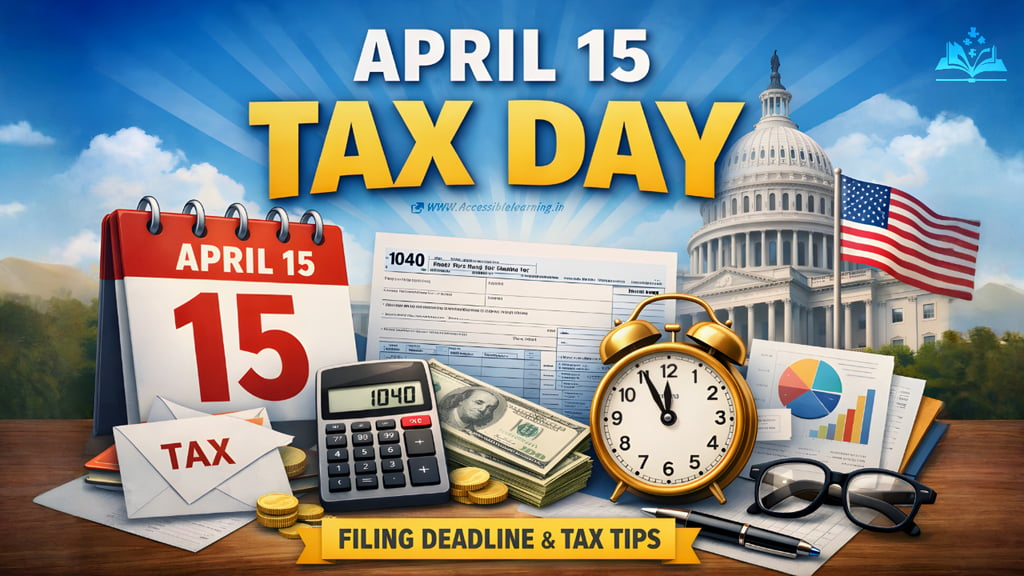

April 15, widely known as Tax Day, is more than just a filing deadline. It’s a financial checkpoint, a legal obligation, and for many, a moment of reflection on income, spending, and future planning. Understanding Tax Day in depth helps you not only stay compliant but also make smarter financial decisions throughout the year.
What Is Tax Day?
Tax Day is the deadline for filing your federal income tax return with the Internal Revenue Service (IRS). It applies to income earned during the previous calendar year.
For example:
Income earned in 2025 → Filed by April 15, 2026
It’s also the deadline to:
Pay any taxes owed
Contribute to certain tax-advantaged accounts (like IRAs)
Request filing extensions
A Brief History of Tax Day
The concept of income tax in the U.S. dates back to the 16th Amendment (1913). Over time, as the economy expanded and record-keeping became more complex, deadlines evolved.
Timeline highlights:
1913: Initial deadline was March 1
1918: Moved to March 15
1955: Shifted to April 15 (current standard)
This extension gave taxpayers and authorities more time to manage increasing financial complexity.
Types of Taxes Filed on or Around April 15
Tax Day mainly applies to federal income taxes, but it also connects to several other obligations:
1. Individual Income Tax
The most common type is filed by salaried employees, freelancers, and business owners.
2. Self-Employment Tax
Applies to freelancers, consultants, and gig workers.
3. Estimated Taxes
Quarterly payments made by individuals with non-salaried income.
4. State Income Taxes
Most states follow a similar deadline, though rules vary.
Who Must File Taxes?
Filing depends on multiple criteria:
Income threshold
Filing status (single, married, head of household)
Age and dependency status
Type of earnings (salary, investments, freelance work)
Even if you earn below the threshold, filing may still benefit you through:
Refunds
Tax credits
Financial documentation
Important Forms and Documents
To file accurately, you typically need:
W-2: Income from employers
1099 Forms: Freelance or other income
1098: Mortgage interest statements
Investment statements
Previous year’s tax return
Keeping these organized reduces errors and speeds up the filing process.
Key Tax Credits and Deductions
Tax Day is not just about paying taxes. It’s also about reducing what you owe legally.
Popular Tax Credits
Child Tax Credit
Education credits
Common Deductions
Standard deduction (used by most taxpayers)
Mortgage interest
Student loan interest
Charitable donations
Understanding these can significantly impact your final tax bill.
Filing Options: How to Submit Your Taxes
1. E-Filing (Recommended)
Fast, secure, and often results in quicker refunds.
2. Paper Filing
Still allowed, but slower and more prone to processing delays.
3. Tax Professionals
Ideal for complex financial situations or business owners.
Extensions: What They Really Mean
You can file for an extension, which typically gives you until October 15. However:
It only extends filing, not payment
You must estimate and pay taxes owed by April 15
Failing to pay on time can lead to penalties.
Penalties and Consequences
Understanding penalties helps avoid unnecessary costs:
Failure-to-file penalty: Higher than late payment penalties
Failure-to-pay penalty: Applied monthly
Interest charges: Continue until full payment is made
If you're unable to pay:
Set up an installment agreement
Explore hardship options


Tax Planning Strategies (Often Overlooked)
Tax Day isn’t just about the past. It’s a gateway to better future planning.
Adjust Your Withholding
Ensure the right amount is deducted from your paycheck.
Contribute to Retirement Accounts
Reduce taxable income while building long-term savings.
Track Business Expenses
Freelancers can significantly lower tax liability with proper records.
Harvest Investment Losses
Offset capital gains with losses strategically.
Tax Day for Freelancers and Creators
With the rise of digital work, more individuals fall under self-employed categories. Key considerations:
Pay quarterly estimated taxes
Track every expense (tools, software, workspace)
Maintain clear income records
Missing these can lead to large, unexpected tax bills.
Digital Trends and Tax Filing
Tax filing has evolved with technology:
AI-assisted tax tools
Automated expense tracking apps
Online IRS portals
Secure digital document storage
These tools reduce human error and improve efficiency.
Common Misconceptions About Tax Day
Let’s clear up a few myths:
“I don’t need to file if I can’t pay.”
→ You still must file to avoid higher penalties“Extensions give me more time to pay.”
→ They do not“Only high earners get audited.”
→ Audits can happen at any income level
Psychological and Financial Impact
Tax Day often creates stress, but it can also be a powerful financial reset point.
It encourages:
Reviewing yearly income
Identifying spending patterns
Setting future financial goals
Handled well, it becomes less of a burden and more of a structured routine.
Global Perspective: Is Tax Day Universal?
While April 15 is specific to the U.S., most countries have similar systems:
Different deadlines
Different tax structures
Varying filing methods
For example:
Some countries use automatic tax assessments
Others require detailed self-reporting, like the U.S.
Tax Day is not just a deadline. It’s a central part of financial life that affects individuals, businesses, and the broader economy.
Approaching it with preparation and understanding can:
Save money
Reduce stress
Improve long-term financial planning
Instead of seeing April 15 as a yearly burden, it helps to treat it as a strategic checkpoint, one that keeps your financial life organized, compliant, and moving forward.

FAQ's
Q: What is Tax Day, and why is it important?
Tax Day (April 15) is the deadline for filing federal income tax returns in the United States. It’s important because it ensures compliance with tax laws and helps fund public services like infrastructure, healthcare, and education.
Q: Is April 15 always the Tax Day deadline?
Not always. If April 15 falls on a weekend or a legal holiday, the deadline is usually moved to the next business day. This adjustment happens occasionally, so it’s important to check each year.
Q: What happens if I miss the April 15 tax deadline?
Missing Tax Day can result in:
Late filing penalties
Late payment penalties
Interest on unpaid taxes
Even if you can’t pay, you should still file your return to minimize penalties.
Q: Can I file taxes after April 15 legally?
Yes. You can request a tax extension, which gives you until October 15 to file. However, you must still pay any estimated taxes owed by April 15 to avoid penalties.
Q: Who is required to file taxes in the U.S.?
You generally need to file taxes if your income exceeds certain thresholds based on:
Filing status
Age
Income type
Even if not required, filing can help you claim refunds or tax credits.
Q: How can I file my taxes before Tax Day?
You can file your taxes through:
Online tax software (e-filing)
A certified tax professional
Paper filing (less common and slower)
E-filing is the fastest and most efficient option.
Q: When will I receive my tax refund after filing?
Most refunds are issued within 21 days if you file electronically and choose direct deposit. Paper filings usually take longer.
Q: What documents do I need to file taxes on April 15?
Common documents include:
W-2 (salary income)
1099 forms (freelance or other income)
Investment and bank statements
Deduction or credit-related receipts
Having these ready helps avoid delays and errors.
Q: Do freelancers and self-employed individuals follow the same Tax Day?
Yes, but they also need to pay quarterly estimated taxes throughout the year. April 15 is still a key deadline for annual filing.
Q: What are the most common mistakes people make on Tax Day?
Filing at the last minute
Entering incorrect personal details
Missing income sources
Forgetting deductions or credits
Not double-checking the return
Avoiding these can save time and money.
Q: Can I reduce the amount of tax I owe?
Yes, by using:
Tax deductions (reduce taxable income)
Tax credits (directly reduce tax owed)
Retirement contributions
Proper planning throughout the year helps lower your tax burden.
Q: Is Tax Day only relevant in the United States?
April 15 is specific to the U.S., but most countries have their own tax deadlines and systems. The concept of annual tax filing is common worldwide.
Q: What should I do if I can’t afford to pay my taxes?
You still need to file your return. Then you can:
Set up a payment plan
Apply for temporary relief programs
Ignoring taxes can lead to more serious financial consequences.
Q: Why do people get tax refunds on Tax Day?
A tax refund happens when you’ve paid more in taxes than you owe during the year. This often results from employer withholding or eligibility for tax credits.
Q: How can I prepare for Tax Day in advance?
Keep financial records organized year-round
Track income and expenses regularly
Review your tax situation early
File before the deadline
Preparation reduces stress and improves accuracy.
Subscribe to Frontier Intelligence
All © Copyright reserved by Accessible-Learning Hub
| Terms & Conditions
Accessible Learning Hub — Actionable clarity for high-agency minds.
Weekly breakdowns on AI breakthroughs, capital flow, and human performance systems. Zero fluff.