

Aomori Nebuta Festival Explained: History, Giant Floats, Culture & Travel Guide
Discover the Aomori Nebuta Festival in Japan through its history, giant illuminated floats, Haneto dancers, cultural significance, travel tips, and the hidden logistics behind one of the world's most spectacular summer festivals.
CULTURE/TRADITIONTRAVEL LIFEJAPANEVENT/SPECIAL
Kim Shin
7/22/20266 min read
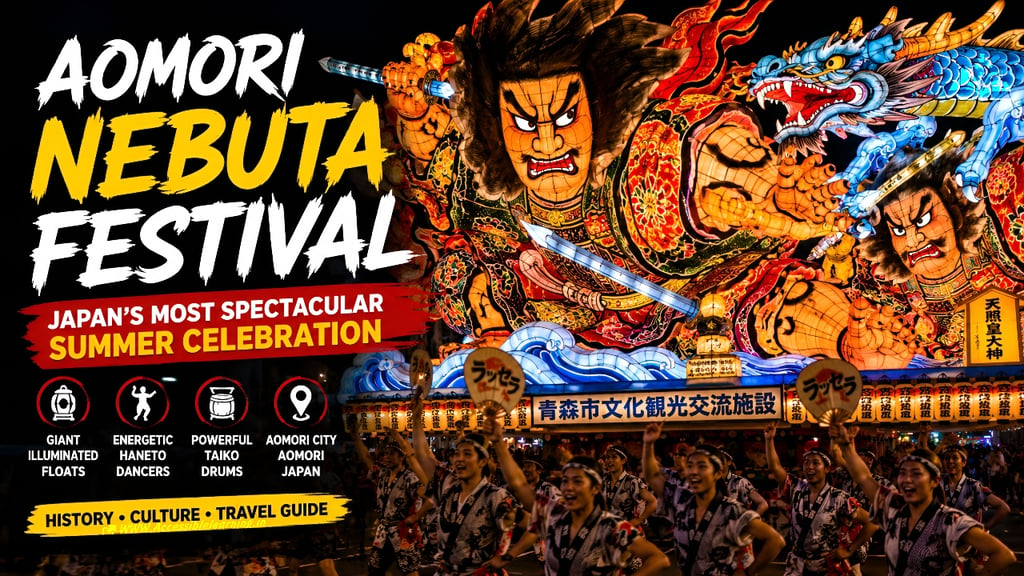
Every August, more than 3 million visitors flood the streets of Aomori City to witness towering illuminated floats that can reach around 5 meters high and 9 meters wide. That single week transforms a quiet northern city into one of Japan's most intense cultural battlegrounds, where tradition fights commercialization without ever surrendering its identity.
What Is the Aomori Nebuta Festival Really About?
The Aomori Nebuta Festival (Aomori Nebuta Matsuri) isn't just another Japanese summer festival packed with food stalls and photo opportunities. It represents centuries of northern Japanese identity, community labor, artistic rivalry, and spiritual symbolism.
The festival traces its roots to ancient Tanabata traditions and local customs designed to drive away laziness, fatigue, and evil spirits during the humid summer months. Over time, these customs evolved into massive illuminated floats depicting fearless warriors, mythical creatures, historical legends, kabuki heroes, and scenes from Japanese folklore.
Today's festival blends heritage with spectacle. That balance explains why it continues attracting millions without losing its cultural backbone.
The Giant Floats Steal Every Headline, But Thousands Build Them
Most tourists admire the finished floats.
Few understand the work behind them.
Each Nebuta float demands months of planning, engineering, painting, wiring, and construction. Skilled artisans build wooden or metal frameworks before covering them with handcrafted washi paper. Artists paint every dramatic facial expression, flowing robe, weapon, and flame by hand.
Modern lighting replaced candles long ago, but the artistic standards never relaxed.
Every neighborhood, organization, and corporate sponsor wants its float to stand above the rest. That competitive spirit drives innovation without abandoning traditional craftsmanship.
These floats don't simply roll through the streets.
They become moving works of public art.
Don't Ignore the Haneto Dancers. They Power the Entire Festival.
Most photographs focus on glowing giants. The real heartbeat comes from the Haneto, the energetic dancers who jump, chant, and move alongside every float.
Anyone can join.
That openness surprises many first-time visitors. Rent the official Haneto costume, follow the basic dance rhythm, and you become part of the procession instead of standing behind a camera.
Their constant chant of "Rassera! Rassera!" echoes through the city and creates an atmosphere no photograph can capture.
Without the dancers, Nebuta would become a parade.
With them, it becomes living culture.
Every Float Tells a Story Worth Reading
Nebuta artists never choose subjects randomly.
Most floats portray:
Samurai heroes
Historical battles
Mythological creatures
Buddhist legends
Chinese classics
Kabuki characters
Japanese folklore
Artists exaggerate muscles, facial expressions, movement, and emotion. They don't chase realism. They chase impact.
Every illuminated face carries anger, determination, courage, or supernatural power. The visual language remains unmistakably Japanese while still captivating visitors who know nothing about the underlying stories.
The Festival Looks Effortless. The Logistics Say Otherwise.
Millions arrive.
Roads close.
Hotels sell out months ahead.
Local transportation operates under enormous pressure.
Behind the colorful celebration sits one of Japan's most organized urban operations.
Authorities coordinate:
Crowd management
Emergency services
Float routes
Volunteer teams
Security
Waste collection
Public transportation
Fire safety
One mistake could create chaos.
Instead, Aomori consistently demonstrates how careful planning allows massive public events to function with remarkable efficiency. That operational success deserves almost as much praise as the floats themselves.
Commercial Success Doesn't Automatically Mean Cultural Decline
Critics often argue that tourism destroys authenticity.
Nebuta tells a more complicated story.
Corporate sponsors certainly fund floats.
Merchandise fills the streets.
Hotels, restaurants, and transportation companies enjoy enormous seasonal revenue.
Yet local communities still build many floats themselves.
Families still volunteer.
Traditional artisans still lead construction.
Children still learn the festival from older generations.
Money entered the picture, but it never replaced community ownership.
That distinction matters.


Why Nebuta Still Matters in Modern Japan
Japan changes rapidly.
Young people move to larger cities.
Rural populations shrink.
Traditional crafts struggle.
Nebuta pushes back against those trends.
The festival creates temporary employment, supports local artists, preserves regional identity, encourages intergenerational cooperation, and reminds younger residents that cultural heritage still carries economic and emotional value.
For one week, Aomori stops feeling peripheral.
It becomes the center of national attention.
That transformation strengthens local pride in ways government campaigns rarely achieve.
The Environmental Question Nobody Likes Discussing
Massive festivals leave footprints. Nebuta attracts millions of visitors who generate transportation emissions, plastic waste, food packaging, and increased energy consumption.
Fortunately, organizers increasingly encourage:
Public transportation
Waste separation
Recyclable materials
Efficient lighting technology
Community cleanup initiatives
Even so, sustainability remains an ongoing challenge rather than a completed achievement.
Large celebrations always demand honest environmental conversations.
Nebuta should not escape them simply because it looks beautiful.
Photography Can Distract From the Experience
Thousands of cameras rise every evening. Many visitors spend more time framing the perfect social media post than watching the floats pass by. That habit creates a strange contradiction.
People travel across the world to experience living culture, then view most of it through a phone screen. The festival rewards observation far more than endless photography.
Listen to the drums.
Watch the dancers.
Notice the craftsmanship.
The memories often outlast the pictures.
The Final Night Delivers the Perfect Ending
The closing celebration shifts toward the waterfront. Selected award-winning floats appear one last time before fireworks illuminate the harbor.
The atmosphere changes.
Excitement mixes with nostalgia.
Months of preparation conclude within a single evening, reminding everyone that Nebuta exists because communities repeatedly choose to rebuild it every year.
Nothing about the festival feels permanent.
That impermanence gives it emotional weight.
Why the Aomori Nebuta Festival Continues to Command Global Attention
Many festivals survive because tourists keep arriving.
Nebuta survives because local people keep believing it matters.
The glowing floats attract international headlines, but community participation protects the festival's soul.
That difference explains why Nebuta remains one of Japan's most respected cultural celebrations rather than another commercial entertainment event.
It doesn't preserve tradition by freezing history.
It preserves tradition by making every generation contribute something new without forgetting what came before.
That balance demands discipline, craftsmanship, and community commitment.
Few festivals achieve all three at this scale.


Travel & Tourist Guide to the Aomori Nebuta Festival
Best Time to Visit
The festival takes place annually from August 2 to August 7 in Aomori City, Aomori Prefecture, Japan. Evening parades usually begin after sunset, offering the best view of the illuminated floats.
How to Reach Aomori
Fly into Aomori Airport from major Japanese cities.
Take the JR Tohoku Shinkansen to Shin-Aomori Station, then transfer to Aomori Station.
Long-distance buses also connect Aomori with northern Japan.
Where to Stay
Book accommodations 4 to 8 months in advance. Hotels near Aomori Station provide the easiest access to parade routes. Budget travelers should also consider nearby cities connected by train.
What to Wear
Comfortable walking shoes
Lightweight summer clothing
Portable fan or cooling towel
Rain jacket or compact umbrella
Reusable water bottle
If you plan to dance as a Haneto, rent the official costume from local vendors.
Local Food Worth Trying
Fresh Aomori scallops
Tuna from Oma
Apple-based desserts and juices
Seafood rice bowls
Miso curry milk ramen
Grilled squid sold at festival stalls
Festival Etiquette
Respect parade barriers and staff instructions.
Avoid blocking walkways for photos.
Dispose of trash responsibly.
Keep noise respectful outside performance areas.
Ask permission before taking close-up portraits of participants.
Arrive early for the best viewing locations.
Practical Tips
Carry cash, as smaller vendors may not accept cards.
Expect large crowds and long walking distances.
Reserve transportation and hotels well in advance.
Check weather forecasts, as August can be warm and occasionally rainy.
Download offline maps before arriving to navigate crowded streets more easily.
The Aomori Nebuta Festival rewards preparation. Plan ahead, respect local traditions, and immerse yourself in the energy of one of Japan's most remarkable cultural celebrations.
FAQ's
Q: What is the Aomori Nebuta Festival famous for?
The Aomori Nebuta Festival is famous for its enormous illuminated floats, energetic Haneto dancers, traditional taiko drumming, and vibrant nighttime parades. It is one of Japan's most celebrated summer festivals and attracts more than 3 million visitors each year.
Q: When is the Aomori Nebuta Festival held?
The festival takes place every year from August 2 to August 7 in Aomori City, Aomori Prefecture, Japan. The final evening features an impressive fireworks display and a special parade of award-winning Nebuta floats.
Q: Can tourists participate in the Aomori Nebuta Festival?
Yes. Visitors can join the parade as Haneto dancers by renting the official Haneto costume and following the festival's participation guidelines. No prior dance experience is required.
Q: How are the Nebuta floats made?
Nebuta floats are handcrafted over several months by skilled artisans using metal or wooden frames covered with washi paper. They are hand-painted and illuminated from within, often portraying legendary warriors, mythical figures, and scenes from Japanese history and folklore.
Q: What is the best way to experience the Aomori Nebuta Festival?
Arrive early to secure a good viewing spot, book accommodation several months in advance, use public transportation, and consider joining the Haneto dancers for an immersive cultural experience. Staying through the final night also lets you enjoy the fireworks and award-winning float procession.
Q: Why is the Aomori Nebuta Festival culturally important?
The festival preserves regional traditions, supports local artisans, strengthens community identity, and passes centuries-old craftsmanship and folklore to younger generations. It remains one of Japan's most significant examples of living cultural heritage rather than simply a tourist attraction.
Subscribe To Our Newsletter
All © Copyright reserved by Accessible-Learning Hub
| Terms & Conditions
Knowledge is power. Learn with Us. 📚

