

Ambedkar Jayanti, Baisakhi, Vishu & Puthandu: Meaning, Traditions & Significance Explained
Discover the cultural richness of India through Ambedkar Jayanti, Baisakhi, Vishu, and Puthandu—four significant April celebrations that represent equality, harvest, prosperity, and new beginnings. This in-depth guide explores their history, rituals, regional importance, and modern relevance, helping you understand why these festivals hold deep meaning across different parts of India.
CULTURE/TRADITIONEVENT/SPECIALINDIA/BHARATCELEBRATION/FESTIVALS
Jagdish Nishad
4/4/20265 min read
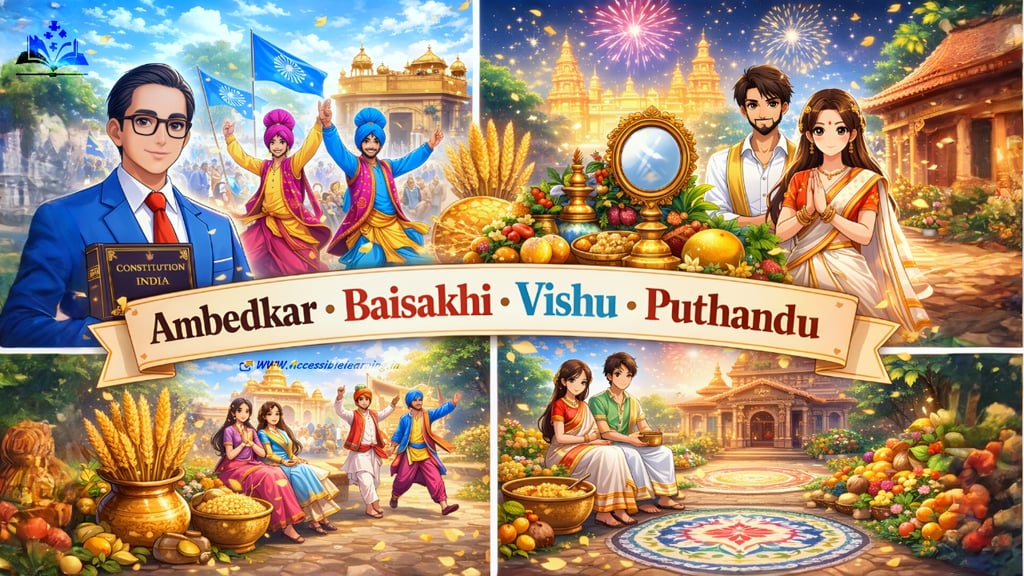

April in India is not just another month. It marks a powerful cultural transition where history, harvest, spirituality, and new beginnings intersect. Four major observances Ambedkar Jayanti, Baisakhi (Punjab), Vishu (Kerala), and Puthandu (Tamil Nadu) fall within the same window, each representing a unique lens of Indian identity.
This expanded guide explores deeper meanings, lesser-known facts, rituals, and modern relevance in a clear and engaging way.
Ambedkar Jayanti: More Than a Tribute
Ambedkar Jayanti (April 14) commemorates the birth of Dr. B. R. Ambedkar, a jurist, economist, and social reformer whose work reshaped modern India.
Beyond the Basics
Dr. Ambedkar was one of the first Indians to earn a doctorate in economics abroad
He played a key role in framing fundamental rights in the Constitution
Known as the “Father of the Indian Constitution”
Unique Observances
Public readings of the Constitution in schools and universities
Cultural programs focused on equality and rights awareness
Digital campaigns promoting constitutional values
Modern Relevance
Ambedkar Jayanti has evolved into a global observance, especially among Indian diaspora communities. It is increasingly tied to conversations about:
Social equity
Representation
Education as empowerment
Lesser-Known Insight
Many followers visit libraries and educational institutions on this day, symbolizing Ambedkar’s belief:
“Education is the most powerful tool for social change.”
Baisakhi (Punjab): Where Agriculture Meets Identity
Baisakhi, celebrated on April 13 or 14, is one of Punjab’s most energetic and meaningful festivals.
Agricultural Significance
Marks the harvesting of Rabi crops, especially wheat
Farmers celebrate a successful yield and financial stability
Traditionally linked to gratitude toward nature
Religious Depth
Formation of the Khalsa Panth in 1699 transformed Sikh identity
Initiation ceremonies (Amrit Sanchar) are often held on this day
Cultural Energy
Bhangra and Gidda are not just dances—they tell stories of rural life
Traditional Punjabi attire becomes a symbol of pride and celebration
Interesting Facts
Baisakhi fairs often include folk wrestling, music competitions, and crafts
It is also celebrated as a regional New Year in parts of North India
Economic Angle
For many farmers, Baisakhi marks the financial turning point of the year, influencing rural markets and local economies.

Vishu (Kerala): The Philosophy of First Sight
Vishu, celebrated in Kerala around April 14, marks the Malayalam New Year, but its deeper meaning lies in symbolism and intention.
The Science Behind Vishu Timing
Vishu aligns with the sun’s transit into Aries (Mesha Sankranti), making it astronomically significant.
Vishu Kani: A Visual Manifestation of Prosperity
The arrangement includes:
Golden cucumber, jackfruit, and mango
Metal mirror (Val Kannadi)
Coins and sacred texts
The idea is simple yet profound:
What you see first shapes your mindset for the year.
Cultural Layers
Vishu Kaineetam reinforces family hierarchy and bonding
Fireworks symbolize driving away negativity
Lesser-Known Insight
Many households maintain strict preparation rituals the night before, ensuring that the Vishu Kani remains untouched until dawn.
Modern Shift
Urban families are adapting Vishu with minimalist Kani setups while still preserving its symbolic meaning.
Puthandu (Tamil Nadu): The Celebration of Life’s Balance
Puthandu, or Tamil New Year, is celebrated on April 14 with rituals that emphasize balance and acceptance.
Astrological Significance
Marks the beginning of the Tamil solar calendar year
Associated with planetary alignment and new cycles
Mango Pachadi: A Life Philosophy on a Plate
This iconic dish includes:
Jaggery (sweetness)
Neem (bitterness)
Tamarind (sourness)
Chili (heat)
It symbolizes the idea that life is a mix of emotions, and all must be embraced.
Ritual Practices
Reading of Panchangam (astrological forecast) for the year
Decorating homes with Kolam for positivity and prosperity
Interesting Facts
Some communities begin new ventures or investments on Puthandu
It is considered an auspicious day for financial planning
Cultural Continuity
Despite modernization, Puthandu remains deeply rooted in family traditions and temple rituals, especially in rural Tamil Nadu.
Hidden Connections Between These Festivals
While they come from different regions, these observances are surprisingly interconnected.
Astronomical Link
Most of these festivals align with the solar transition into Aries, marking
Seasonal change
Agricultural cycles
New calendars
Shared Values
Across all four:
Renewal and fresh beginnings
Gratitude toward life and nature
Community bonding and shared identity
Symbolism of “Reset”
Each festival, in its own way, represents a reset button:
Social reset (Ambedkar Jayanti)
Economic reset (Baisakhi)
Spiritual reset (Vishu)
Emotional reset (Puthandu)


How These Festivals Are Celebrated Today
Urban Celebrations
Digital greetings and social media campaigns
Community events in cities and housing societies
Cultural workshops and themed gatherings
Global Presence
Indian diaspora communities celebrate these festivals in:
Canada, UK, USA (large Baisakhi parades)
Middle East (Vishu and Puthandu gatherings)
Influence on Tourism
Amritsar sees a surge during Baisakhi
Kerala temples attract Vishu visitors
Cultural tourism is rising during April
Why These Festivals Still Matter
In today’s fast-paced, digital-first world, these celebrations serve as anchors:
They preserve cultural identity in a globalized society
They teach values through rituals and storytelling
They offer a moment to pause, reflect, and reset
Ambedkar Jayanti, Baisakhi, Vishu, and Puthandu together represent a powerful narrative of India—one that blends justice, gratitude, spirituality, and acceptance. They are not just festivals. They are living philosophies.
Each one asks a simple question:
How do you begin again—with purpose, balance, and hope?
FAQ's
Q: What is celebrated on Ambedkar Jayanti?
Ambedkar Jayanti celebrates the birth anniversary of Dr. B. R. Ambedkar on April 14. It honors his contribution to the Indian Constitution, social justice, and equality. People mark the day with tributes, rallies, and educational events.
Q: Why is Baisakhi important in Punjab?
Baisakhi is important because it marks both the harvest festival and the founding of the Khalsa Panth by Guru Gobind Singh in 1699. It is a major cultural and religious festival for Sikhs and farmers in Punjab.
Q: What is Vishu, and why is it celebrated in Kerala?
Vishu is the Malayalam New Year celebrated in Kerala. It symbolizes prosperity and new beginnings. The day begins with viewing the Vishu Kani, which is believed to bring good luck for the year.
Q: What is the significance of Puthandu in Tamil Nadu?
Puthandu marks the Tamil New Year and represents renewal, hope, and balance in life. It is celebrated with rituals, temple visits, and traditional foods like Mango Pachadi.
Q: Why are Ambedkar Jayanti, Baisakhi, Vishu, and Puthandu celebrated around the same time?
These festivals fall around mid-April because they are linked to the solar transition into Aries (Mesha Sankranti). This period marks seasonal change, harvest cycles, and the beginning of new regional calendars.
Q: Is April 14 a special day in India?
Yes, April 14 is significant because multiple major events and festivals occur on this day, including:
Ambedkar Jayanti
Vishu (Kerala New Year)
Puthandu (Tamil New Year)
It represents cultural, historical, and spiritual importance across India.
Q: How is Baisakhi celebrated in India?
Baisakhi is celebrated with:
Traditional dances like Bhangra and Gidda
Visits to Gurudwaras
Community meals (Langar)
Fairs and cultural events
Q: What is Vishu Kani, and why is it important?
Vishu Kani is a special arrangement of items like fruits, rice, gold, and a mirror. It is viewed first thing in the morning on Vishu, as it is believed to bring prosperity and success for the year.
Q: What foods are prepared during Puthandu?
On Puthandu, families prepare traditional dishes such as:
Mango Pachadi (symbolic dish with mixed flavors)
Sambar, Payasam, and other festive meals
Each dish represents different aspects of life.
Q: What is the message behind these April festivals in India?
These festivals collectively promote:
New beginnings and renewal
Gratitude and prosperity
Social equality and unity
Acceptance of life’s ups and downs
Q: Are these festivals celebrated outside India?
Yes, Indian communities worldwide celebrate these festivals, especially in countries like Canada, the UK, the USA, and the Middle East through cultural events, temple visits, and community gatherings.
Q: What is the best way to celebrate these festivals today?
Modern celebrations include:
Participating in local cultural events
Learning about their history and meaning
Sharing traditions with family
Supporting community initiatives
Q: What is the difference between Vishu and Puthandu?
While both mark New Year celebrations:
Vishu (Kerala) focuses on visual symbolism and prosperity rituals
Puthandu (Tamil Nadu) emphasizes life balance and emotional acceptance through traditions like Mango Pachadi
Q: What is the economic importance of Baisakhi?
Baisakhi is crucial for farmers as it marks the harvest season. It influences:
Rural income cycles
Agricultural markets
Local trade and fairs
Q: Why is Ambedkar Jayanti relevant today?
Ambedkar Jayanti remains important as it promotes:
Equality and human rights
Awareness of constitutional values
Education as a tool for empowerment
Q: What festivals are celebrated in India in April?
India celebrates several important festivals in April, including Ambedkar Jayanti, Baisakhi, Vishu, and Puthandu. These festivals mark new beginnings, harvest seasons, cultural identity, and social values across different regions of the country.
Subscribe to Frontier Intelligence
All © Copyright reserved by Accessible-Learning Hub
| Terms & Conditions
Accessible Learning Hub — Actionable clarity for high-agency minds.
Weekly breakdowns on AI breakthroughs, capital flow, and human performance systems. Zero fluff.