

Akshaya Tritiya: Meaning, Significance, Rituals, and Its Growing Relevance Today
Discover the true meaning of Akshaya Tritiya, its spiritual significance, rituals, and modern relevance. Learn why this auspicious day is ideal for investments, new beginnings, and attracting lasting prosperity in today’s world.
CULTURE/TRADITIONINDIA/BHARATCELEBRATION/FESTIVALS
Jagdish Nishad
4/9/20264 min read
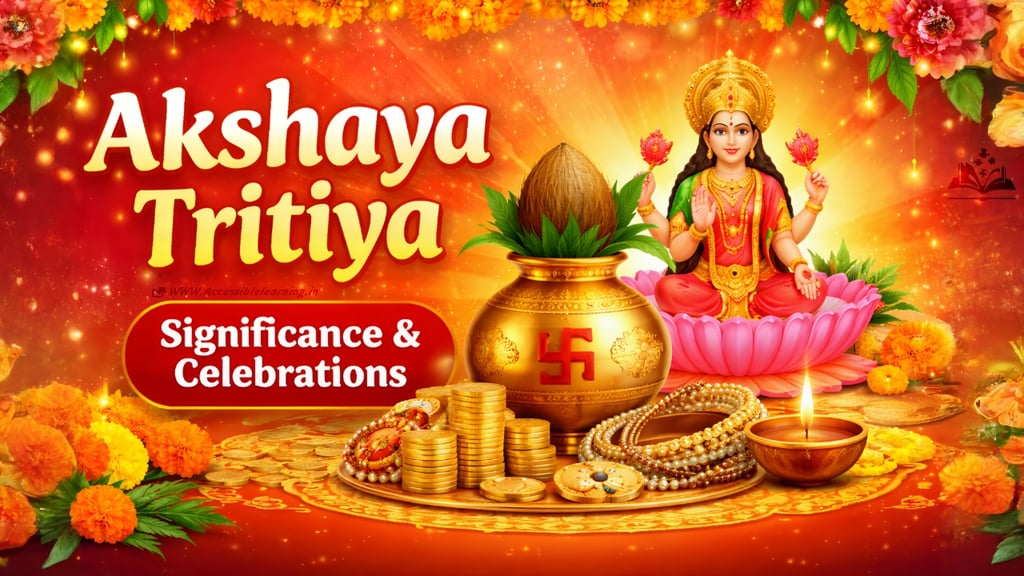
Akshaya Tritiya is one of the most powerful and positive days in the Hindu calendar. It represents growth that never diminishes, making it a symbol of prosperity, good karma, and fresh beginnings. What makes this festival unique is that it connects ancient beliefs with modern financial thinking and mindful living.
Let’s go deeper into its meaning, traditions, lesser-known facts, and why it matters even more today.
What Does “Akshaya” Truly Mean?
The word "Akshaya" translates to "eternal," "never decreasing," or "limitless." Unlike material wealth that fluctuates, Akshaya symbolizes:
Everlasting prosperity
Continuous success
Spiritual abundance
This is why anything started on this day is believed to grow steadily over time, whether it’s wealth, relationships, or personal goals.
Rare Astrological Significance
One of the most powerful aspects of Akshaya Tritiya lies in its cosmic alignment:
The Sun is in Aries (its strongest position)
The Moon is in Taurus (its exalted sign)
This rare combination creates a naturally auspicious day, eliminating the need for a separate muhurat.
What this means:
Energy is considered balanced and highly positive
Actions taken are believed to yield long-term success
Ideal for both spiritual and material pursuits
Deeper Mythological Connections
Beyond commonly known stories, Akshaya Tritiya is linked with multiple layers of mythology:
Birth of Lord Parashurama, symbolizing justice and balance
The Akshaya Patra blessing to Draupadi, representing endless nourishment
Ved Vyasa beginning the narration of the Mahabharata
The sacred descent of the Ganga River, symbolizing purification and life
These stories emphasize a recurring idea: divine support appears when intentions are pure.
Lesser-Known Rituals and Practices
Beyond gold buying and puja, several meaningful practices are followed:
1. Jal Daan (Water Donation)
Offering water to the needy during peak summer is highly valued, symbolizing life and compassion.
2. Anna Daan (Food Donation)
Feeding the poor or organizing community meals is believed to bring infinite merit.
3. Gau Seva (Serving Cows)
In many regions, feeding cows is seen as an act of gratitude and dharma.
4. Tree Plantation
A more modern adaptation, planting trees reflects sustainable prosperity.


Akshaya Tritiya and Wealth Psychology
In today’s world, Akshaya Tritiya has evolved into a financial mindset reset day.
It encourages:
Long-term thinking over short-term spending
Asset building instead of impulsive buying
Discipline in savings and investments
Modern Financial Actions:
Investing in gold (physical or digital)
Starting SIPs or mutual funds
Reviewing financial goals
The festival subtly teaches:
Wealth grows not just by buying but by planning wisely.
Cultural and Regional Depth
Akshaya Tritiya is celebrated differently across India, adding to its richness:
Odisha: Farmers begin sowing season with rituals called Akhi Muthi Anukula
Rajasthan: Mass weddings take place due to the auspicious timing
Gujarat: New business accounts (Halkhata) are opened
Tamil Nadu & Kerala: Focus on Vishnu worship and temple offerings
Modern Relevance: Why It Matters More Today
Akshaya Tritiya has adapted beautifully to modern life:
1. Digital Transformation
Buying gold online or investing through apps
Virtual pujas and live temple darshan
2. Minimalist Celebrations
People are shifting from excess spending to:
Meaningful rituals
Intentional purchases
3. Conscious Giving
Instead of symbolic charity, many now:
Support NGOs
Fund education or healthcare
4. Personal Growth Focus
The day is increasingly used to:
Start habits (fitness, journaling, learning)
Reset mindset and goals

Practical Ways to Celebrate in a Meaningful Way
You can align with the spirit of Akshaya Tritiya without complexity:
Begin a small investment or savings plan
Donate something useful, not just symbolic
Spend time in gratitude and reflection
Start a long-pending idea or project
Declutter your space to invite fresh energy
Powerful Symbolism Behind the Festival
Akshaya Tritiya is not just about wealth. It reflects:
Abundance mindset – believing there is enough for everyone
Karma principle – what you give returns multiplied
New beginnings – every moment is an opportunity
Akshaya Tritiya stands at a beautiful intersection of faith, action, and intention. It reminds us that prosperity is not only about material gain, but also about consistent effort, generosity, and clarity of purpose.
In today’s fast-paced world, this festival offers a timeless lesson:
Start small, act with intention, and build something that grows endlessly.
That is the true meaning of Akshaya.
FAQ's
Q: What is Akshaya Tritiya, and why is it important?
Akshaya Tritiya is a highly auspicious Hindu festival symbolizing eternal prosperity and success. The word “Akshaya” means “never diminishing,” and it is believed that any good deed, investment, or new beginning on this day brings long-lasting positive results.
Q: Why do people buy gold on Akshaya Tritiya?
Buying gold on Akshaya Tritiya is considered शुभ (auspicious) because gold represents wealth, security, and stability. It is believed that purchasing gold on this day invites continuous financial growth and protects long-term wealth.
Q: Is Akshaya Tritiya a good day to start something new?
Yes, Akshaya Tritiya is known as a “Sarva Siddhi Muhurat," meaning no specific timing is required. It is considered ideal for:
Starting a business
Making investments
Buying property
Beginning personal or professional goals
Q: What are the best things to do on Akshaya Tritiya?
Some meaningful activities include:
Performing puja and prayers
Donating food, water, or clothes
Investing in gold or savings plans
Starting a new project or habit
Practicing gratitude and mindfulness
Q: Can I celebrate Akshaya Tritiya at home?
Yes, Akshaya Tritiya can be easily celebrated at home by:
Cleaning and decorating your space
Offering prayers to Goddess Lakshmi and Lord Vishnu
Lighting a diya and offering sweets or fruits
Doing charity or helping someone in need
Q: Is buying gold necessary on Akshaya Tritiya?
No, buying gold is a tradition but not compulsory. The true essence of the festival lies in:
Good deeds (karma)
Charity (daan)
Positive beginnings
You can also invest in digital assets, savings, or personal growth.
Q: What is the spiritual meaning of Akshaya Tritiya?
Spiritually, Akshaya Tritiya represents:
Infinite blessings
Growth of good karma
Alignment with abundance and positivity
It encourages people to act with pure intentions and generosity.
Q: How is Akshaya Tritiya relevant in modern life?
In today’s world, Akshaya Tritiya is seen as a day for:
Financial planning and smart investments
Starting businesses or creative projects
Supporting social causes or NGOs
Building long-term habits for growth
Q: What should you avoid doing on Akshaya Tritiya?
While there are no strict restrictions, it is generally advised to avoid:
Negative thoughts or actions
Arguments or conflicts
Wasteful spending without purpose
The focus should remain on positivity and mindful decisions.
Q: When is Akshaya Tritiya celebrated?
Akshaya Tritiya is observed on the third day of the bright half (Shukla Paksha) of the Vaishakha month, which usually falls in April or May according to the Gregorian calendar.
Subscribe to Frontier Intelligence
All © Copyright reserved by Accessible-Learning Hub
| Terms & Conditions
Accessible Learning Hub — Actionable clarity for high-agency minds.
Weekly breakdowns on AI breakthroughs, capital flow, and human performance systems. Zero fluff.