

Akita Kanto Festival Guide: History, Meaning, Dates, and Hidden Facts
Discover the Akita Kanto Festival, Japan's breathtaking lantern celebration where performers balance towering bamboo poles in a centuries-old test of skill, tradition, and community spirit.
CULTURE/TRADITIONEVENT/SPECIALTRAVEL LIFEJAPAN
Kim Shin
7/23/20265 min read
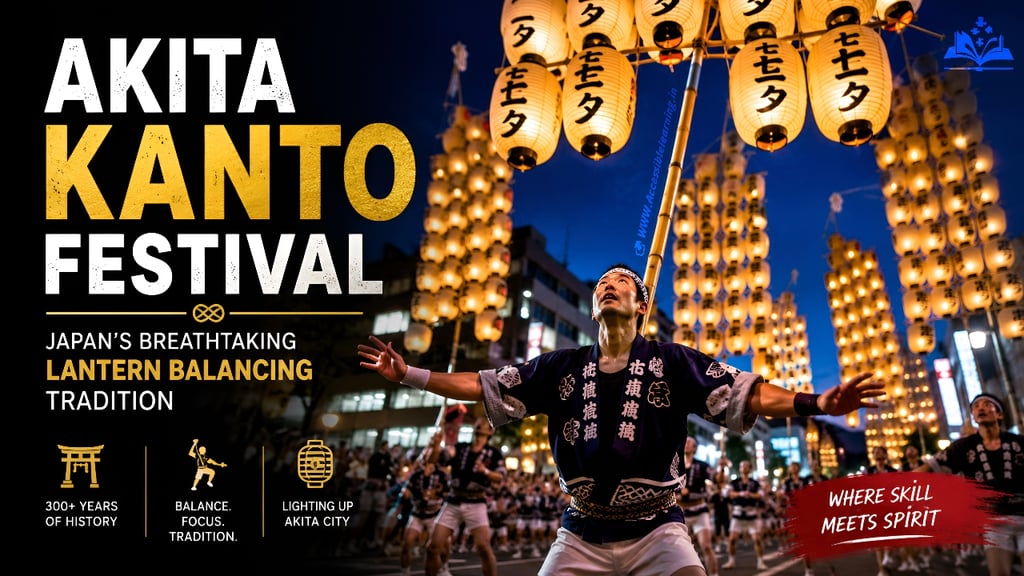
Forget fireworks and parades. The Akita Kanto Festival forces performers to balance towering bamboo poles carrying dozens of glowing lanterns that can weigh around 50 kilograms (110 pounds) and stretch more than 12 meters (39 feet) into the summer night. One mistake can send the entire structure crashing. That constant risk is exactly what makes this one of Japan's most respected traditional festivals.
Every August, Akita City transforms its streets into a stage where precision matters more than spectacle. This is not a performance built for social media. It is a centuries-old ritual that demands endurance, technique, and absolute focus.
The Festival Started as a Prayer, Not a Tourist Attraction
The Akita Kanto Festival traces its origins back more than 270 years to the Edo period. Local communities created the event as part of the Neburi Nagashi tradition, a ritual meant to drive away sleepiness, illness, and bad fortune during the exhausting summer farming season.
Farmers depended on healthy rice harvests for survival. They believed these rituals helped protect their crops and invited prosperity. The lantern-covered bamboo poles eventually evolved into symbolic rice plants, with the glowing lanterns representing sacks of rice hanging from heavy stalks.
That agricultural symbolism remains at the heart of the festival today. While tourism has grown dramatically, local residents continue to treat the event as an important cultural responsibility rather than simple entertainment.
Why the Bamboo Poles Matter More Than You Think
The famous kanto poles dominate every image of the festival, but they carry far deeper meaning than most visitors realize.
Each bamboo pole represents a rice plant bending under the weight of a successful harvest. The attached paper lanterns symbolize bundles of rice ready for storage after months of labor.
Several pole sizes appear throughout the celebration, but the largest command the most attention.
Typical dimensions include the following:
Height reaching approximately 12 meters (39 feet)
Weight approaching 50 kilograms (110 pounds)
Up to 46 illuminated lanterns
Flexible bamboo construction that constantly shifts with wind and movement
Balancing one of these poles requires much more than strength. Performers continuously adjust their bodies to compensate for changing weight distribution and natural bamboo movement.
This Is Athletic Performance Disguised as Tradition
Many visitors expect a ceremonial procession. What they witness instead resembles elite athletic competition. Performers balance the towering poles on multiple parts of their bodies, including:
Forehead
Shoulder
Lower back
Palm
None of these transitions happen slowly. Experienced participants smoothly shift the pole from one position to another while maintaining perfect balance.
Children begin learning these techniques at surprisingly young ages. Families often pass their knowledge through multiple generations, creating communities where balancing techniques become inherited skills instead of casual hobbies.
Years of practice produce movements that appear effortless. They are anything but.
Every Lantern Tells a Story of Community
The glowing lanterns do more than create beautiful nighttime photography.
Traditional washi paper lanterns often display the names of neighborhoods, companies, organizations, or sponsors supporting individual teams. Every group entering the festival carries its own identity into the streets.
This transforms the event into friendly competition between local communities.
Each team wants to demonstrate the following:
Better balance
Cleaner technique
Stronger teamwork
Greater endurance
Victory comes through precision, not loud celebration.
The Hidden Logistics Most Visitors Never Notice
Watching the Akita Kanto Festival feels effortless. Running it is anything but.
Before opening night, organizers coordinate:
Hundreds of performers
Bamboo preparation
Lantern assembly
Fire safety measures
Traffic control
Medical support
Street closures
Nighttime lighting
Equipment inspections
Every lantern requires careful setup before illumination. Every bamboo pole demands inspection because tiny structural weaknesses become dangerous once lifted overhead.
Festival organizers spend months preparing for only a few nights of public performance.


Tradition Refuses to Stand Still
The Akita Kanto Festival respects history without freezing itself in time. Modern safety planning now protects performers and spectators while preserving traditional techniques.
Electric lighting occasionally supports certain displays, but many performances still embrace traditional aesthetics.
Digital promotion attracts international audiences, yet local training methods remain remarkably unchanged.
Young performers still learn directly from experienced mentors instead of online tutorials.
That human connection keeps the festival authentic.
The Music Controls Everything
Most visitors notice the lanterns first.
Veteran spectators listen to the music.
Flutes, drums, and rhythmic chanting create the pace that performers follow throughout each demonstration.
The famous calls echo through Akita's streets while balancing teams coordinate every movement with remarkable consistency.
Without that rhythm, balancing becomes significantly harder.
The music acts as an invisible guide that keeps performers synchronized under enormous physical pressure.
Night Creates the Magic Everyone Remembers
Daytime practice showcases impressive skill.
Night transforms the entire festival.
As darkness settles over Akita City, hundreds of illuminated lanterns rise into the air, creating what resembles a floating forest of glowing rice plants.
Warm paper lanterns contrast against the dark sky while bamboo poles sway with every controlled adjustment.
The visual impact feels surprisingly calm despite the physical difficulty involved.
That balance between serenity and tension defines the festival's identity.
The Competition Is Real, Even Without Big Prizes
The Akita Kanto Festival includes formal competitions where experienced performers demonstrate technical excellence.
Judges evaluate:
Stability
Technique
Balance
Pole control
Transition quality
Overall presentation
Winning brings prestige rather than financial reward.
Neighborhood pride matters far more than prize money.
Experienced performers often spend years refining tiny adjustments that casual spectators barely notice.
Those details separate masters from beginners.
Tourism Brings Opportunity and Pressure
International recognition has strengthened Akita's economy.
Hotels fill quickly.
Restaurants experience some of their busiest nights.
Local businesses benefit from thousands of visitors arriving during the festival.
Success also creates pressure.
Crowded viewing areas, increased commercial activity, and growing demand for social media content challenge organizers trying to protect the festival's original purpose.
The strongest leadership decisions consistently prioritize tradition over entertainment trends. That choice explains why the festival continues to earn respect instead of becoming another commercial spectacle.
Why UNESCO Recognition Matters
The Akita Kanto Festival forms part of Japan's nationally protected cultural heritage and belongs to the group of traditional festivals recognized through UNESCO's Representative List of the Intangible Cultural Heritage of Humanity under the collective designation of the Yama, Hoko, and Yatai float festivals of Japan.
That recognition does not exist because the lanterns look beautiful. It exists because communities have preserved specialized knowledge, craftsmanship, music, rituals, and training across generations. UNESCO recognition validates the people protecting those traditions, not simply the event itself.
When and Where the Festival Happens
The festival takes place annually in Akita City, located in Japan's Akita Prefecture.
Key details include:
Dates: August 3 to August 6 each year
Main venue: Kanto Odori (Kanto Main Street)
Best viewing time: Evening performances after sunset
Additional activities: Daytime competitions, cultural exhibitions, and public demonstrations
Accommodation often sells out months in advance because visitor demand consistently exceeds available rooms during festival week. Planning early is not optional.
The Biggest Misconception About the Akita Kanto Festival
People often describe the Akita Kanto Festival as a lantern festival.
That description misses the point.
The lanterns attract cameras.
The performers sustain the tradition.
Without years of disciplined practice, community mentoring, bamboo craftsmanship, musical coordination, and neighborhood commitment, the glowing poles would become nothing more than decorative props. The festival survives because ordinary residents continue investing extraordinary effort into preserving it.
Discipline Outshines Spectacle
The Akita Kanto Festival succeeds because it refuses to chase modern entertainment trends.
It celebrates patience instead of speed.
Technique instead of flashy effects.
Community instead of celebrity.
Visitors leave impressed by the glowing lanterns.
Those who truly understand the festival leave, respecting the generations of people who transformed impossible balance into living cultural heritage.
That difference explains why the Akita Kanto Festival remains one of Japan's most powerful traditional celebrations rather than another seasonal attraction.
Subscribe To Our Newsletter
All © Copyright reserved by Accessible-Learning Hub
| Terms & Conditions
Knowledge is power. Learn with Us. 📚

