

AI vs Human Therapy for Neurodivergent Students: What Parents Need to Know in 2026
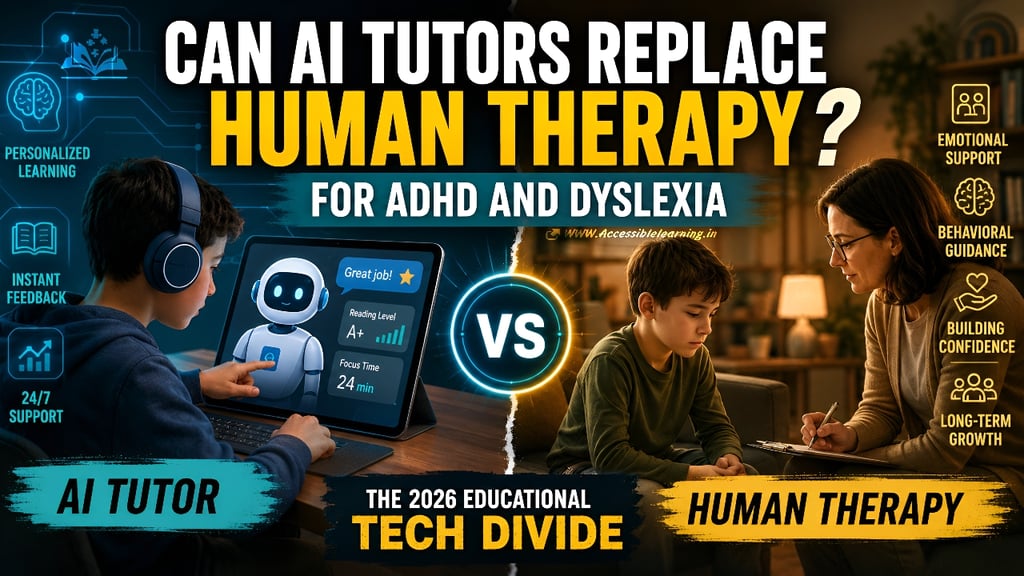
Can AI tutors replace human therapy for ADHD and dyslexia? Explore the 2026 educational technology divide, where AI excels, where human specialists remain essential, and why hybrid learning models are shaping the future of neurodivergent education.
ARTIFICIAL INTELLIGENCE & FUTURE TECHACCESSIBLE LEARNING
Shiv Singh Rajput | Sachin K Chaurasiya
7/24/202611 min read
Executive Summary
In 2026, one of the fastest-growing debates in education is no longer whether artificial intelligence belongs in classrooms. Instead, parents, teachers, psychologists, and policymakers are asking a much more specific question:
"If AI tutors can personalize learning better than schools, can they also replace therapy for children with ADHD or dyslexia?"
The short answer is no, but the reasons are far more nuanced than most headlines suggest.
Today's AI tutors can instantly adapt reading difficulty, detect attention lapses, generate personalized exercises, explain concepts infinitely, and even coach executive-function habits. For many neurodivergent learners, this represents a breakthrough that traditional education has struggled to provide.
However, therapy addresses a fundamentally different problem.
An AI tutor is designed to optimize learning.
A therapist is trained to understand human behavior.
Confusing those two roles has become one of the biggest educational misconceptions of 2026.
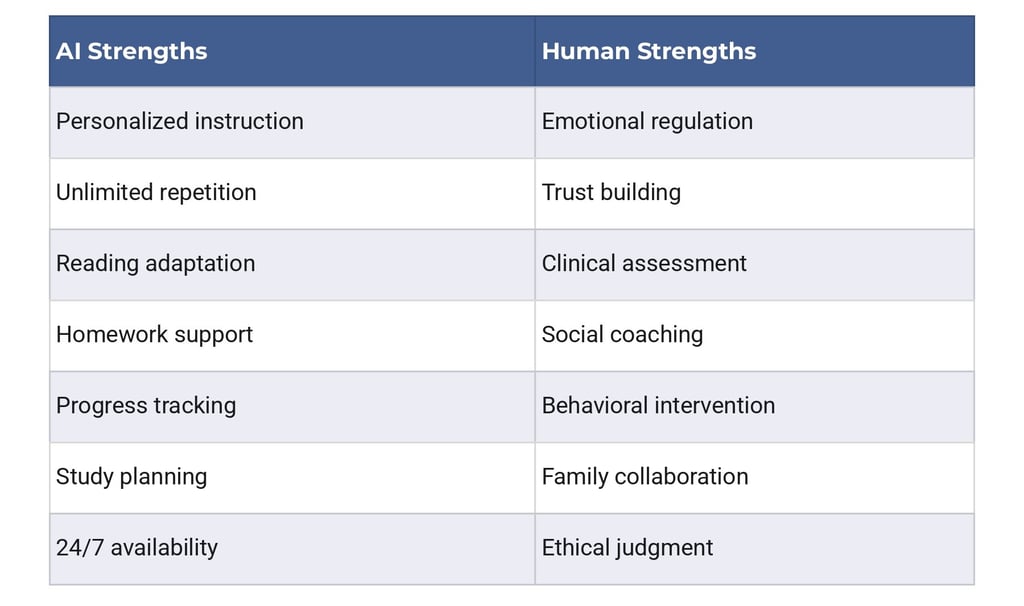
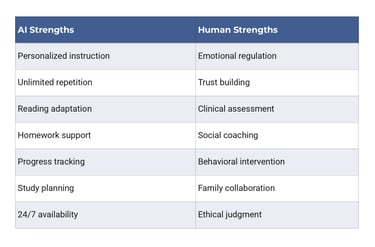
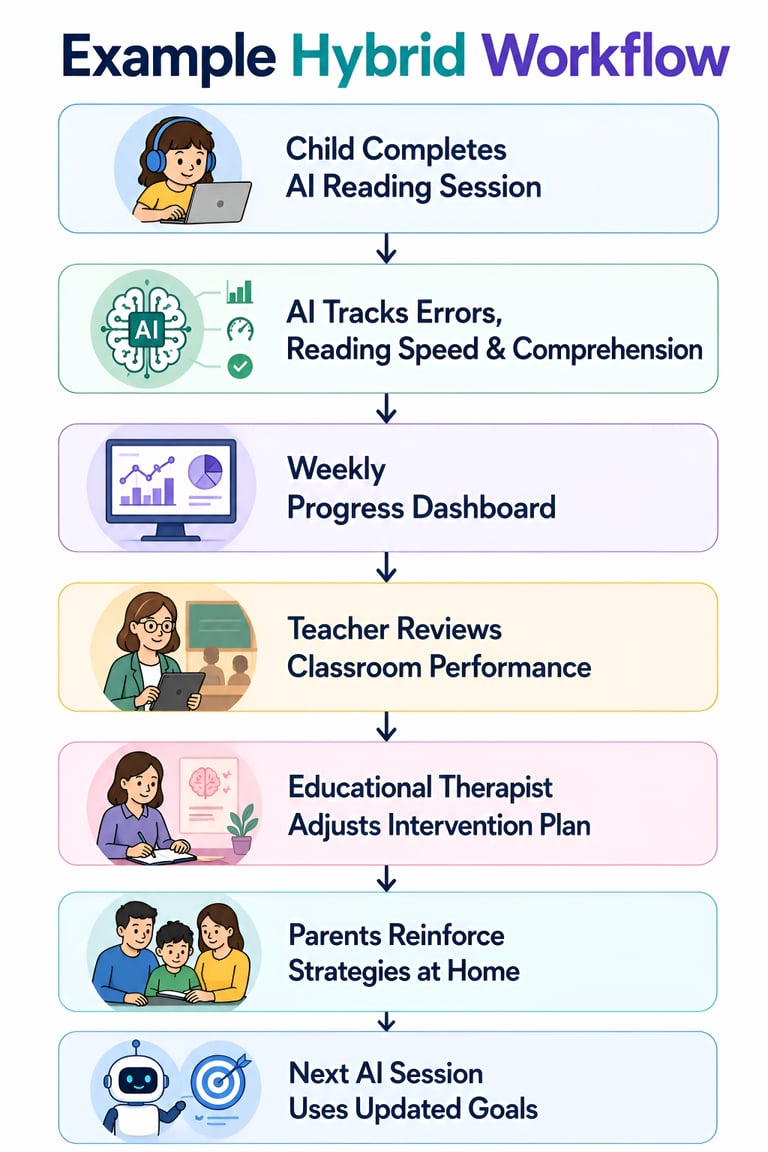
The real transformation isn't AI replacing therapists. It's the emergence of hybrid learning ecosystems, where AI handles repetition, personalization, and continuous practice while human specialists focus on diagnosis, emotional regulation, behavioral intervention, and long-term development.
For families facing long waitlists, rising therapy costs, and teacher shortages, this distinction has enormous financial and emotional consequences.
Why This Question Suddenly Exploded in 2026
Search behavior reveals a dramatic shift in how parents are approaching neurodivergent education.
Five years ago, searches looked like:
"Best dyslexia tutor near me"
"How to help ADHD child focus"
"Reading intervention program"
Today they sound completely different.
People now ask AI:
"Can ChatGPT help my dyslexic son read?"
"Can AI replace occupational therapy?"
"Is an AI tutor better than a special education teacher?"
"Can GPT coach executive functioning?"
"Will insurance pay for AI therapy?"
These aren't hypothetical questions.
They're practical questions from families struggling with three simultaneous pressures.
Therapy Waitlists Continue Growing
Many regions now experience months-long waits for child psychologists, speech-language pathologists, educational therapists, and ADHD specialists.
Parents increasingly use AI because immediate help feels better than no help.
AI Became Good Enough
Large language models now:
simplify reading passages instantly
generate phonics exercises
explain mathematics differently every time
adapt vocabulary levels
provide unlimited homework assistance
simulate conversation practice
track learning patterns
For academic support, AI crossed an important threshold.
Education Costs Continue Rising
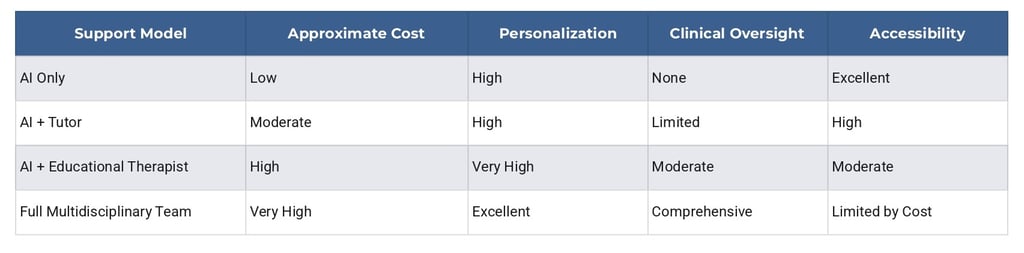
One-on-one intervention remains expensive. Approximate annual costs (varies by country):
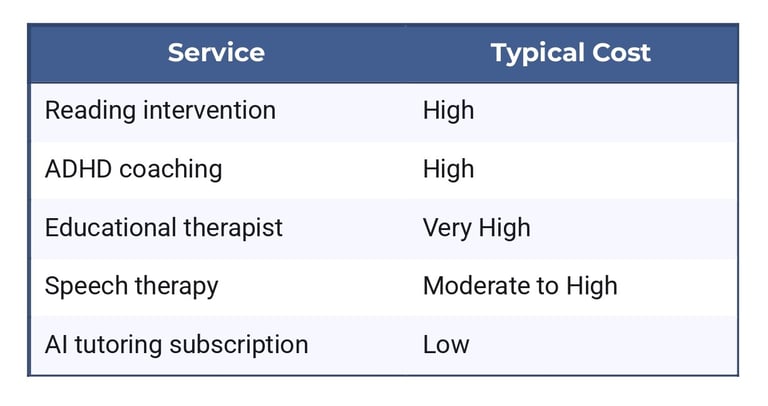

The economic gap explains why parents increasingly ask whether AI can replace specialists.
The better question is:
Which specialist can AI meaningfully augment, and which roles remain deeply human?
The Educational Technology Divide Nobody Is Talking About
Most discussions compare:
AI vs Teachers
This comparison is far too simplistic.
Neurodivergent education involves multiple professionals.
Each serves a completely different purpose.
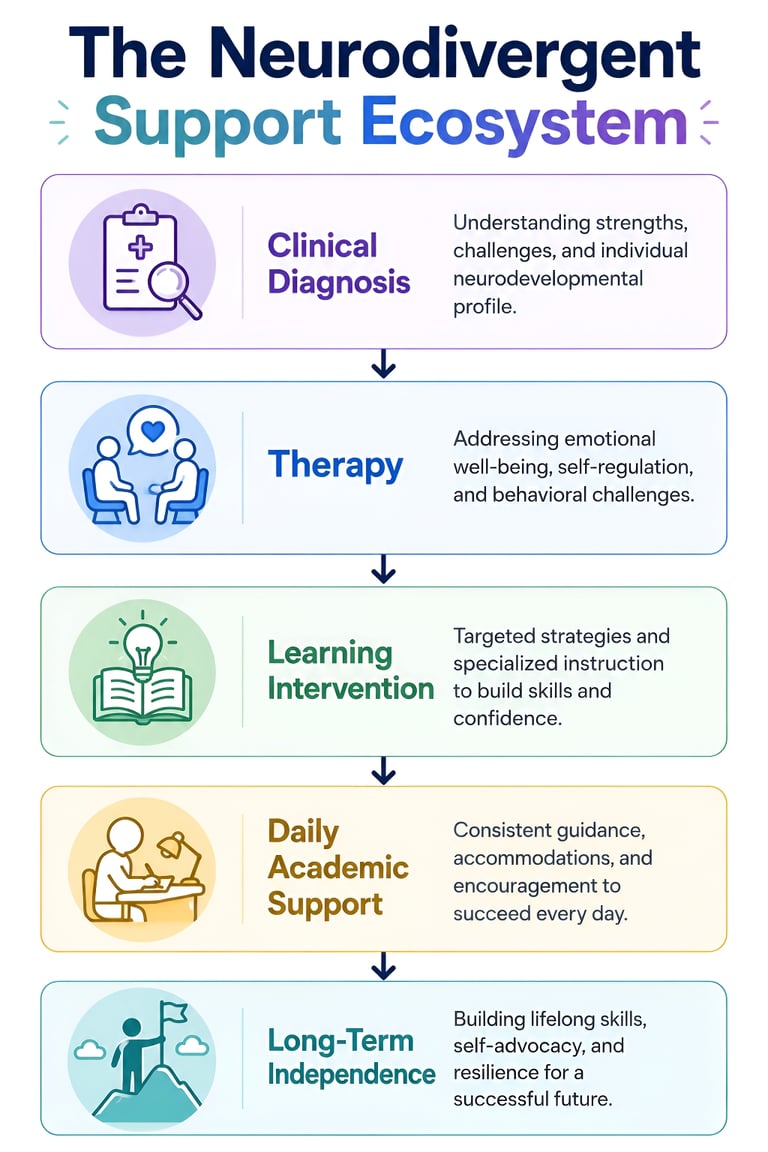


ADHD and dyslexia are completely different problems.
One of the biggest mistakes made by AI companies is marketing one solution for every learning difference. ADHD and dyslexia affect learning in fundamentally different ways.
ADHD
The primary challenge isn't intelligence. It's regulation.
Students often struggle with:
working memory
sustained attention
planning
impulse control
task initiation
emotional regulation
time management
Knowledge isn't missing. Execution is inconsistent.
Dyslexia
Dyslexia primarily affects language processing.
Students commonly experience difficulty with:
decoding words
phonological awareness
reading fluency
spelling
rapid naming
reading speed
Intelligence usually remains unaffected. The bottleneck lies in processing written language efficiently.
Why This Distinction Matters for AI
An AI tutor can compensate for decoding challenges remarkably well by reading text aloud, simplifying vocabulary, providing immediate feedback, and adapting reading material.
But AI has a much harder time addressing emotional impulsivity, frustration tolerance, or executive dysfunction because those involve motivation, self-awareness, interpersonal dynamics, and behavior that extend beyond academic content.
This is why one technology can appear almost magical for dyslexia while offering only partial support for ADHD.
What AI Tutors Actually Do Better Than Humans
This may sound controversial, but in several narrowly defined educational tasks, AI tutors already outperform many traditional tutoring models.
The advantage isn't intelligence.
It's scalability and consistency.
Infinite Patience
A human tutor gets tired.
AI does not.
If a student asks the same question 75 times, AI responds with the same level of patience every time.
For learners who fear embarrassment, this can dramatically reduce anxiety.
Unlimited Personalization
Traditional tutoring often follows a structured lesson plan.
AI dynamically changes:
sentence complexity
vocabulary
reading level
examples
pacing
explanation style
visual descriptions
Every interaction becomes individualized.
Instant Reading Adaptation
Consider this paragraph:
"Photosynthesis converts light energy into chemical energy."
AI can immediately transform it into the following:
elementary reading level
middle school reading level
visual explanation
comic version
analogy
step-by-step breakdown
audio narration
quiz
No textbook can adapt this quickly.
Executive Function Scaffolding
Many AI learning platforms now assist with:
breaking assignments into smaller tasks
generating checklists
creating timers
planning homework sessions
organizing calendars
scheduling breaks
tracking progress
These tools support executive functioning, especially for students with ADHD, by reducing cognitive load.
However, they do not replace therapeutic interventions aimed at improving self-regulation or addressing underlying behavioral patterns.


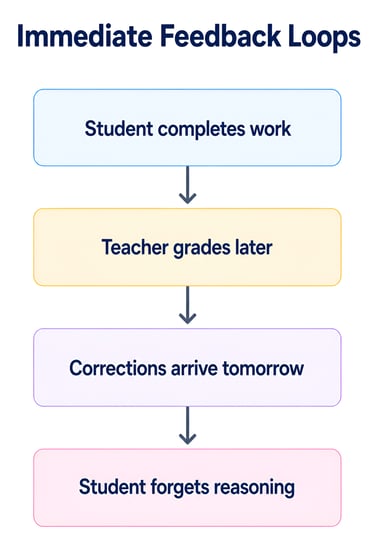


Where Human Therapy Operates on an Entirely Different Level
This is the point where many technology discussions lose precision. Therapy is not simply "helping someone learn."
Therapy is a structured clinical process that can involve assessment, diagnosis, intervention planning, emotional support, family collaboration, and long-term behavioral change.
A therapist observes patterns that may not appear in homework performance alone.
For example:
A child who repeatedly abandons reading tasks may not just have poor decoding skills. They may be experiencing anxiety, perfectionism, sensory overload, low self-esteem, or emotional responses tied to previous failures.
An AI tutor can notice that the child stopped reading.
A therapist asks why.
That distinction changes the intervention.
Diagnosis Requires Clinical Judgment
Parents often ask:
"Can AI tell me if my child has ADHD or dyslexia?"
The answer remains no.
AI can identify patterns that suggest further evaluation may be worthwhile, but it cannot reliably diagnose neurodevelopmental conditions. Formal diagnosis requires standardized assessments, developmental history, observation across settings, and clinical expertise.
Emotional Regulation Is Not Homework Help
Many children with ADHD struggle with:
frustration
emotional outbursts
rejection sensitivity
anxiety around school
low confidence after repeated setbacks
These experiences influence learning just as much as academic skills.
AI can offer calming strategies or guided exercises, but it cannot replace the therapeutic relationship that helps children process emotions over time.
Families Need Coaching Too
Neurodivergent support rarely focuses only on the child.
Parents often need guidance on:
establishing routines
responding to challenging behaviors
communicating with schools
reinforcing strategies at home
reducing conflict around homework
This family-centered work is a core component of many therapeutic approaches and extends beyond the capabilities of an AI tutor.
The Economic Reality Behind the AI Boom
The rapid adoption of AI tutoring is not driven solely by technological enthusiasm. It is also a response to economic pressure.
Families are navigating a landscape where specialized educational services are increasingly expensive, while AI tools offer low-cost, always-available support.
This has created a new educational divide.
Households with sufficient resources can combine AI tools, educational therapists, psychologists, and specialized tutoring into a comprehensive support system.
Families with tighter budgets may rely primarily on AI because it is affordable and accessible.
The risk is not that AI becomes too capable. The risk is that financial constraints encourage society to treat AI as a substitute where it is best viewed as a supplement.
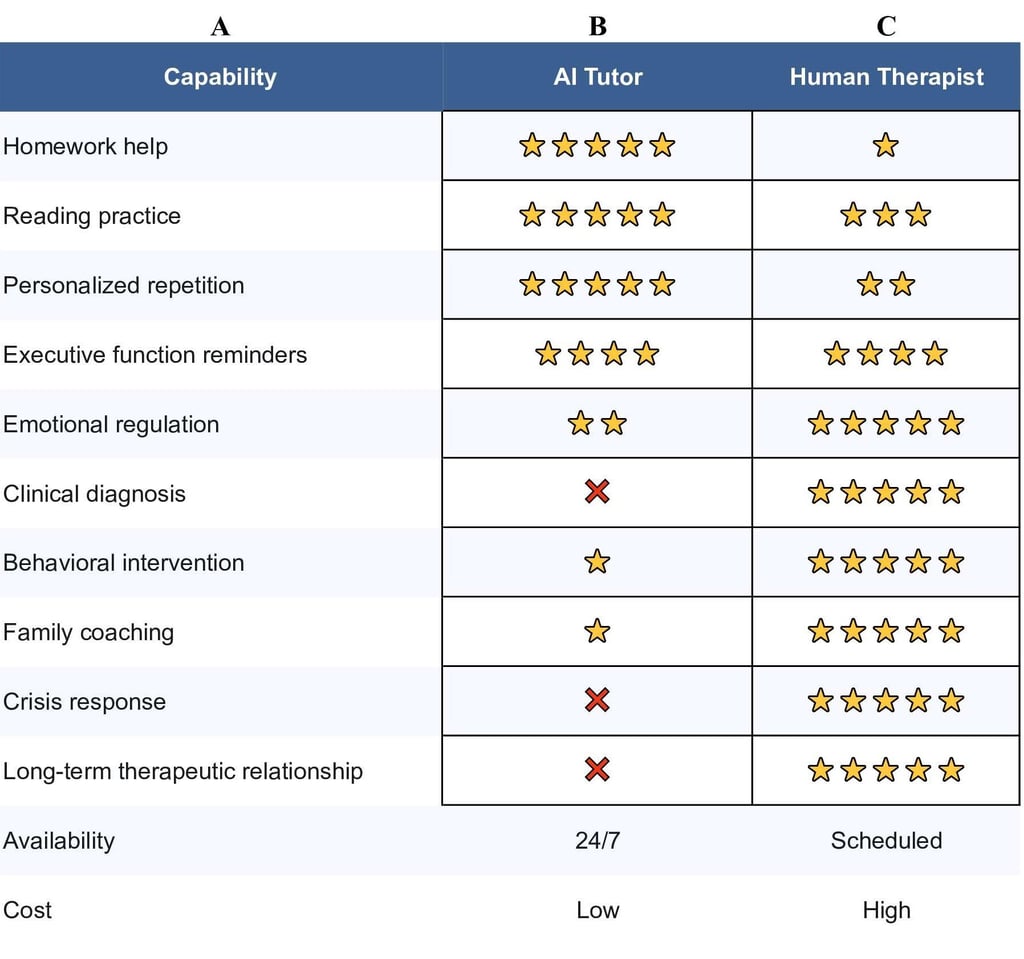


The Hidden Challenge: Executive Function Is Not a Homework Problem
Many parents describe ADHD as "my child just won't focus." In reality, attention is only one symptom. Executive function acts as the brain's management system.
It controls:
Planning
Prioritization
Working memory
Emotional regulation
Impulse control
Time awareness
Task switching
Goal persistence
Self-monitoring
An AI tutor can remind a student to complete homework.
It cannot truly determine whether the student ignored the task because of the following:
anxiety
perfectionism
sensory overload
emotional exhaustion
poor sleep
medication side effects
family stress
bullying
depression
Those distinctions fundamentally change the appropriate intervention.
Why Emotional Context Matters
Imagine two students who stop reading after five minutes. Student A is distracted by notifications.
Student B quietly believes:
"I'm stupid. I'll never learn."
To an AI tutor, both students appear inactive.
To a therapist, they require completely different support strategies.
One needs attention management.
The other needs confidence rebuilding.
This illustrates one of AI's biggest limitations: it can observe behavior, but it cannot fully understand the lived emotional experience behind that behavior.
Dyslexia: Practice Helps, But It Isn't the Whole Story
AI has become remarkably effective at supporting literacy.
It can:
Read text aloud naturally
Highlight words during narration
Adjust font size and spacing
Simplify vocabulary
Create phonics games
Generate unlimited decoding exercises
Provide instant pronunciation feedback
Translate difficult passages into plain language
These capabilities reduce barriers to learning.
However, successful dyslexia intervention often includes elements that AI cannot independently provide.
These include:
Comprehensive assessment of reading development
Monitoring subtle progress over months
Collaboration with classroom teachers
Parent education
Motivation through trusted relationships
Adjustment of intervention based on real-world behavior
Learning differences rarely exist in isolation.
A child with dyslexia may also experience anxiety, low confidence, ADHD, or language disorders.
Treating only the reading difficulty overlooks the broader developmental picture.
The AI Hallucination Risk Parents Rarely Consider
AI models generate responses by predicting language patterns. They do not possess clinical judgment. This distinction matters when discussing developmental conditions.
For example, if a parent asks:
"Does my child definitely have ADHD?"
A responsible AI should encourage professional evaluation rather than provide certainty. Yet parents may unintentionally treat AI-generated suggestions as medical advice.
Potential risks include the following:
Delayed diagnosis
Misinterpretation of symptoms
False reassurance
Unnecessary anxiety
Overconfidence in self-assessment
Educational guidance is valuable. Clinical conclusions require trained professionals.
Beyond Academics: The Social Skills Gap
Neurodivergent children often need support in areas that extend well beyond schoolwork.
These may include:
Reading facial expressions
Managing friendships
Handling conflict
Understanding sarcasm
Working in teams
Coping with rejection
Building resilience
These skills are shaped through real human interaction.
AI can simulate conversations and role-play scenarios, but simulated interaction is not identical to navigating unpredictable real-life relationships. This is one reason social-emotional learning continues to depend heavily on human guidance.
The Economics of the New Educational Divide
Technology is often portrayed as an equalizer.
In practice, it can also widen inequalities.
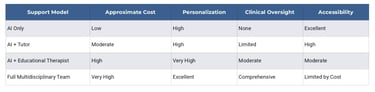
Consider two families.
Family A
AI tutor subscription
Weekly educational therapist
Child psychologist
Speech-language support
Occupational therapy when needed
Parent coaching
Family B
Free AI chatbot
Public school support only
Long specialist waiting lists
Limited insurance coverage
Both families have access to AI.
Only one has access to comprehensive human care. The educational divide is increasingly becoming a care divide, not a technology divide.
Schools Are Facing a New Ethical Question
Teachers increasingly receive AI-generated reports showing the following:
Homework completion
Reading speed
Attention patterns
Writing habits
Quiz performance
Learning preferences
This raises difficult questions.
Who owns this data?
How long is it stored?
Can it influence academic placement?
Could insurers, employers, or universities one day request historical learning profiles?
The answers are still evolving, making educational data governance one of the most important policy discussions of the decade.
Voice Search Answers Parents Are Already Asking
"Can AI diagnose dyslexia?"
No. AI can recognize patterns that may suggest reading difficulties and recommend further evaluation, but only qualified professionals can diagnose dyslexia through standardized assessments and comprehensive clinical evaluation.
"Can ChatGPT help a child with ADHD?"
Yes, AI can assist with breaking tasks into smaller steps, explaining concepts differently, creating schedules, generating reminders, and providing personalized study support. However, it cannot replace therapy, medication management, or clinical coaching when those are needed.
"Is AI better than a human tutor?"
For repetitive practice, immediate feedback, and personalized explanations, AI may outperform traditional tutoring in some situations. For motivation, emotional support, and adapting to complex personal circumstances, experienced human tutors remain invaluable.
"Can AI replace educational therapy?"
Not in 2026.
Educational therapy combines learning science, psychology, observation, and individualized intervention. AI supports many components of this work but does not replace the professional expertise involved.
"Should parents use AI every day?"
Used thoughtfully, daily AI support can reinforce learning, reading practice, and organization. The key is ensuring that screen-based assistance is balanced with human interaction, physical activity, social experiences, and professional guidance when appropriate.

Predictions for 2027-2030
The next few years are likely to reshape neurodivergent education in significant ways.
1. AI Will Become More Multimodal
Future tutors will combine voice, handwriting recognition, eye tracking, and gesture analysis to personalize lessons more naturally.
2. Therapists Will Use AI as a Clinical Assistant
Rather than replacing therapists, AI is expected to summarize session notes, analyze learning trends, suggest evidence-based exercises, and automate routine documentation, allowing professionals to devote more time to direct patient care.
3. Digital Twins for Learning
Researchers are exploring personalized learner models that simulate how an individual student responds to different teaching strategies.
Rather than guessing, future educational software may test multiple instructional approaches in a virtual model before recommending the most effective pathway.
4. Family Dashboards
Parents may soon access unified dashboards showing:
Reading growth
Executive function goals
Homework habits
Therapy objectives
Teacher feedback
AI learning analytics
This could reduce fragmented communication between schools, clinicians, and families.
5. Regulation Will Tighten
Governments are expected to introduce stricter standards for AI systems used with children, including requirements for transparency, data protection, human oversight, and evidence supporting educational claims.
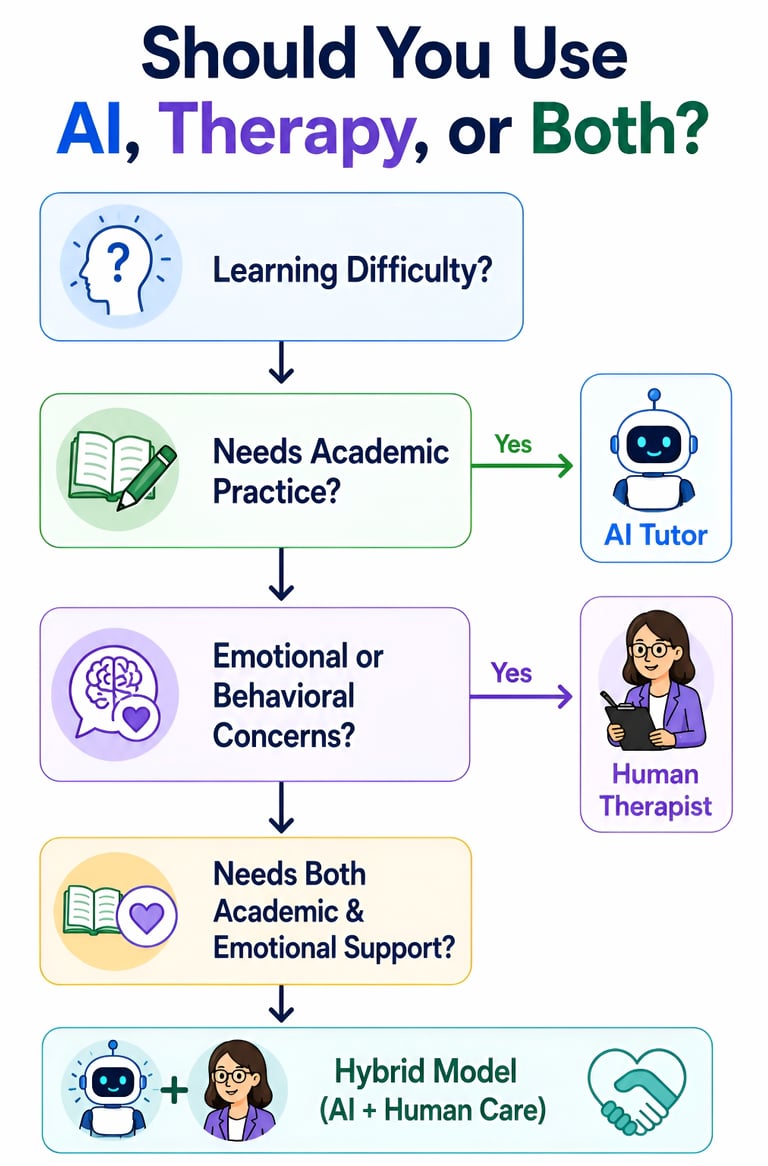
Practical Decision Framework for Parents
Instead of asking:
"Should I choose AI or therapy?"
Ask these questions instead.
AI is likely sufficient when:
The child needs additional homework support.
Reading practice is the primary goal.
Concepts require repeated explanations.
Organization and planning need reinforcement.
Budget limits access to frequent tutoring.
Human specialists are essential when:
A diagnosis is needed.
Emotional regulation is deteriorating.
Anxiety or depression may be present.
School refusal develops.
Behavior changes significantly.
Family conflict around learning becomes severe.
Safety concerns emerge.
The strongest approach combines:
AI tutoring
Classroom accommodations
Parent involvement
Qualified therapists when indicated
Teachers working from shared goals
The real educational technology divide of 2026 is not between artificial intelligence and human expertise. It is between automation and understanding.
AI excels at delivering instruction, adapting content, and making high-quality academic support available at a scale that was unimaginable a decade ago.
Human therapists contribute something AI still cannot replicate: the ability to understand the emotional, behavioral, developmental, and relational factors that shape how children learn and grow.
For children with ADHD or dyslexia, the most promising future is not one where AI replaces therapists. It is one where intelligent tools handle repetitive instructional tasks while educators, clinicians, and families focus on the deeply human work of helping children build confidence, resilience, and independence.

Frequently Asked Questions
Q: Can AI completely replace therapy for ADHD or dyslexia?
No. AI can enhance learning and organization, but it cannot provide diagnosis, emotional support, behavioral intervention, or the therapeutic relationship required for comprehensive care.
Q: Is AI tutoring effective for children with dyslexia?
Yes. Many AI tools improve reading practice through text-to-speech, adaptive exercises, personalized feedback, and vocabulary support. These features complement, rather than replace, evidence-based reading interventions.
Q: Can AI help students with ADHD stay organized?
Yes. AI can create study schedules, break assignments into manageable steps, generate reminders, and provide structured routines. These supports are useful but do not address all aspects of executive functioning.
Q: Are AI tutors safe for young children?
They can be, provided they are age-appropriate, supervised by adults, and used alongside trusted educational resources. Parents should also review privacy settings and understand how learning data is collected and used.
Q: Will AI make educational therapy obsolete?
Current trends suggest AI will change how educational therapy is delivered by automating routine tasks and providing richer learning analytics. It is more likely to augment therapists than replace them.
Q: What is the biggest limitation of AI for neurodivergent learners?
AI cannot fully interpret emotional context, family dynamics, or complex behavioral patterns. These factors often determine which interventions are most effective.
Q: How should schools integrate AI responsibly?
Schools should use AI to personalize instruction and reduce administrative burdens while ensuring that teachers retain decision-making authority, protecting student privacy, and maintaining human oversight for educational and clinical decisions.
Q: What is the most effective support model in 2026?
For many students with ADHD or dyslexia, the strongest outcomes come from a hybrid model that combines AI-assisted learning, classroom accommodations, active parent involvement, and professional support tailored to the child's individual needs.
Subscribe to Frontier Intelligence
All © Copyright reserved by Accessible-Learning Hub
Accessible Learning Hub — Actionable clarity for high-agency minds.
Weekly breakdowns on AI breakthroughs, capital flow, and human performance systems. Zero fluff.