

AI in Healthcare: Benefits, Risks, and the Future of Medical Innovation
A detailed look at how artificial intelligence is transforming modern healthcare. This article explains the advantages of AI in diagnosis, treatment, hospital operations, remote monitoring, and research, while also covering the major risks such as privacy, bias, safety, and ethical concerns. Ideal for readers who want a balanced and human-centered understanding of AI’s role in healthcare today and in the future.
AI ASSISTANTAI/FUTUREHEALTH/DISEASEMODERN DISEASES
Sachin K Chaurasiya
11/30/20255 min read
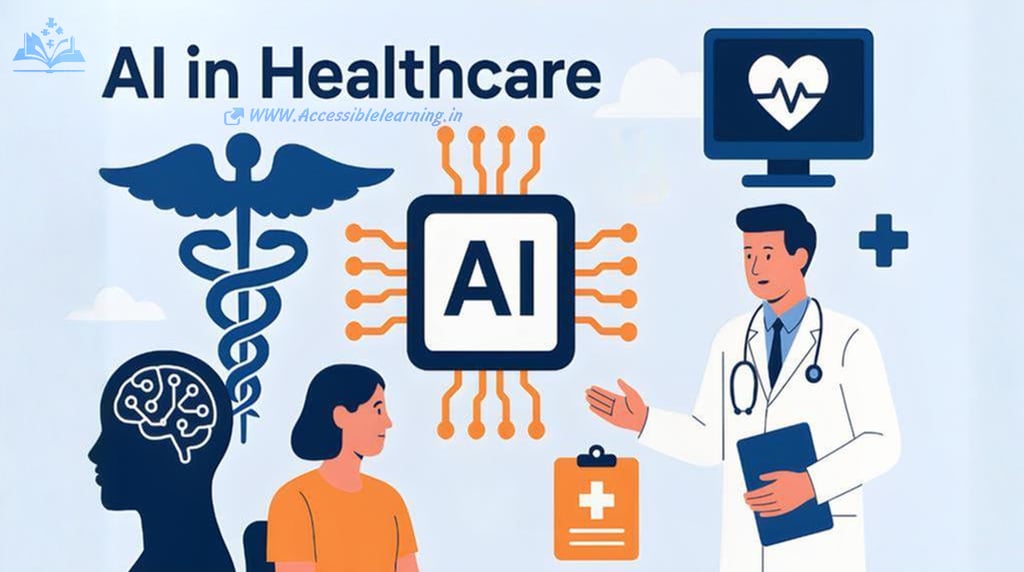
Artificial intelligence is no longer a futuristic concept in healthcare. It sits inside diagnostic tools, hospital systems, research labs, and even home devices. Its growing influence brings major advantages but also real risks that need careful regulation and responsible design. This expanded guide looks at the benefits, challenges, and future landscape of AI in modern healthcare.
Major Benefits of AI in Healthcare
Higher Diagnostic Accuracy
AI models analyze scans, images, lab values, and clinical notes at high speed.
They detect patterns associated with cancer, heart diseases, neurological disorders, and infections.
Examples of diagnostic impact
AI-powered radiology detects tumors at earlier stages.
Algorithms identify diabetic retinopathy in eye scans.
Cardiology tools evaluate ECGs and predict possible cardiac events.
Dermatology models classify skin lesions and flag potential melanoma.
The faster healthcare teams act, the better the outcomes.
Predictive Healthcare and Early Risk Detection
Predictive models analyze patient history, lifestyle data, and biomarkers to identify who may develop certain conditions.
These insights help:
Prevent hospital readmissions
Predict sepsis before symptoms escalate
Monitor chronic conditions more proactively
Personalize preventive care for high-risk individuals
This shift from reactive to proactive treatment saves both lives and cost.
Personalized and Precision Medicine
AI supports precision medicine by analyzing genetics, genomics, medical records, and environmental data.
This improves:
Cancer treatment planning
Medication dose adjustment
Targeted therapies
Customized rehabilitation plans
It ensures each patient gets the most effective treatment with fewer side effects.
Faster Drug Discovery and Clinical Trials
Traditional drug development is slow and expensive. AI accelerates it by:
Identifying drug targets
Predicting molecule behavior
Simulating biological interactions
Screening millions of compounds virtually
Designing optimized clinical trial structures
This speeds up timelines and reduces research costs.
Smart Hospitals and Workflow Automation
AI systems streamline hospital operations with better accuracy than manual methods.
They improve:
Patient triage
Appointment scheduling
Bed management
Resource allocation
Staff workload planning
Medical coding and documentation
Hospitals run more smoothly, and healthcare workers get more time for patient interaction.
Virtual Health Assistants and Chatbots
These tools support both patients and healthcare staff.
They help with:
Symptom checking
Medication reminders
Appointment management
Mental health guidance
Basic triage
Digital therapy sessions
This increases convenience while reducing pressure on medical staff.


Wearables and Remote Patient Monitoring
AI-powered wearables track heart rate, oxygen levels, sugar levels, sleep cycles, and more.
Doctors get real-time alerts if something is wrong.
Remote monitoring benefits:
Elderly patients
Cardiac patients
Post-surgery recovery
Diabetes management
Individuals in remote areas
Continuous care becomes more accessible.
Improving Public Health and Epidemiology
AI helps predict disease outbreaks and track health trends.
It supports:
Epidemiological modeling
Pandemic response planning
Vaccine distribution
Healthcare resource forecasting
Population-level risk analysis
Governments rely on AI to make informed public-health decisions.
Key Concerns and Risks of AI in Healthcare
Data Privacy, Consent, and Security
Healthcare datasets often include sensitive personal information. Risks include:
Hacking and data breaches
Unauthorized sharing
Misuse of genetic information
Weak encryption practices
Poor access controls
Healthcare systems must follow strong regulations to protect patients.
Bias and Inequality
AI can unintentionally discriminate if trained on limited or unbalanced data. Bias may affect:
Diagnosis accuracy
Treatment suggestions
Clinical predictions
Insurance approvals
Patient triage decisions
Diverse datasets and ethical review processes are essential.
Explainability and Transparency Problems
Black-box models make it hard for doctors to trust AI outputs. If an AI tool suggests treatment without showing reasoning, clinicians might hesitate to rely on it. Explainable AI is becoming a priority to help medical teams understand and verify results.
Legal and Ethical Challenges
When AI makes a wrong prediction, determining responsibility is difficult. Key concerns:
Who is accountable, the doctor or the manufacturer?
Should AI be allowed to make autonomous decisions?
How do we regulate AI for high-risk applications?
Clear legal frameworks are still evolving.
Overdependence on Automation
AI helps but shouldn’t replace clinical judgment. There’s a risk that over-reliance could weaken human decision-making skills or cause issues when systems fail. Balanced use is essential.
Algorithm Drift and System Decay
AI accuracy can decline over time if not updated with new data. Changing disease patterns or demographics can cause predictions to become unreliable. Continuous monitoring and retraining are required.
Job Evolution and Workforce Training
AI doesn’t replace doctors, but it changes their roles.
Healthcare workers must learn:
How AI tools work
How to interpret outputs
Where AI limitations exist
How to communicate AI-driven insights to patients
This training requires time and investment.

Future of AI in Healthcare
AI is expected to influence almost every part of healthcare in the coming years.
Digital Twins for Patients
Researchers are developing digital replicas of human organs and systems.
These models simulate disease progression and help predict treatment outcomes.
Autonomous Surgical Robotics
Robots will become more precise and capable, assisting surgeons in complex procedures with real-time AI guidance.
Fully AI-Assisted Diagnostics
AI systems may become primary interpreters of medical images, with physicians validating results instead of manually examining everything.
AI Hospitals and Smart Infrastructure
Future hospitals may run on AI-driven energy optimization, safety systems, patient routing, and emergency response.
Behavioral and Mental Health AI
Advanced emotional analysis tools will help detect depression, anxiety, and cognitive decline from speech patterns or behavior.
Continuous, Invisible Health Monitoring
Sensors built into clothing, home environments, and implants may detect early signs of health issues without any manual input.
AI is transforming healthcare with better diagnostics, faster drug discovery, personalized treatments, and improved hospital operations. At the same time, it raises serious concerns about privacy, fairness, and accountability. The future depends on balancing innovation with responsible governance, transparent models, and ethical practices.
When used wisely, AI can support doctors, empower patients, and build a healthcare system that is safer, more accurate, and more accessible for everyone.
FAQs
Q: How is AI used in healthcare today?
AI is used for diagnosing diseases, analyzing medical images, predicting patient risks, managing hospital workflows, powering virtual assistants, supporting telehealth, discovering new drugs, and monitoring patients through wearables. It helps doctors make faster and more accurate decisions.
Q: Can AI replace doctors?
No. AI supports doctors but doesn’t replace their clinical judgment, experience, or decision-making. Healthcare involves empathy, ethical reasoning, and real-world understanding that AI cannot replicate. AI is a tool, not a substitute for human expertise.
Q: Is AI safe to use in diagnosing medical conditions?
When properly developed and tested, AI can be very reliable. However, accuracy depends on the quality of the data and the system design. AI should be viewed as an additional layer of support rather than the sole source of diagnosis.
Q: What are the biggest risks of AI in healthcare?
Major risks include data privacy issues, biased predictions, lack of transparency, over-reliance on automation, algorithm errors, and unclear legal accountability. Hospitals need strong governance and regular system audits to manage these risks.
Q: How does AI help reduce healthcare costs?
AI cuts costs by reducing diagnostic errors, automating administrative tasks, improving patient flow, speeding up drug research, optimizing resource allocation, and enabling early intervention for chronic diseases. Faster, more accurate care reduces long-term expenses.
Q: Can AI improve patient experience?
Yes. AI improves appointment scheduling, reduces waiting times, personalizes treatment plans, powers chatbots for quick support, and makes remote monitoring easier for patients. It helps create a smoother and more efficient care journey.
Q: Does AI protect patient data?
AI itself doesn’t guarantee privacy. Security depends on how healthcare organizations store and manage the data. Systems must follow strong encryption practices, regulated access controls, and compliance frameworks like HIPAA or GDPR.
Q: Why does AI sometimes produce biased results?
Bias happens when AI is trained on incomplete or unbalanced datasets. If certain demographics or conditions are underrepresented, the system may perform poorly for those groups. Fixing bias requires diverse data and continuous evaluation.
Q: How does AI support telemedicine and remote care?
AI analyzes data from wearables, monitors vital signs in real time, flags unusual patterns, and helps doctors follow up with patients without requiring in-person visits. This is especially helpful for rural areas, elderly patients, and chronic care.
Q: What is explainable AI in healthcare?
Explainable AI refers to systems that show how they made a decision. This transparency helps doctors trust the results and ensures that clinical decisions are safe, understandable, and easy to verify.
Q: What is the future of AI in healthcare?
AI will contribute to digital twins, smarter hospitals, robotic-assisted surgeries, and more accurate predictive medicine. Continuous monitoring devices and advanced diagnostics will make healthcare more proactive, personalized, and decision-focused.
Q: How should healthcare organizations prepare for AI adoption?
They need to:
Train staff to work with AI tools
Invest in secure data infrastructure
Use transparent and ethical models
Conduct routine model audits
Develop clear accountability frameworks
Follow privacy laws and security standards
This builds trust and ensures safe, effective AI integration.
Subscribe to Frontier Intelligence
All © Copyright reserved by Accessible-Learning Hub
| Terms & Conditions
Accessible Learning Hub — Actionable clarity for high-agency minds.
Weekly breakdowns on AI breakthroughs, capital flow, and human performance systems. Zero fluff.