

AI Image Generators: Which One Is Best for Artists?
Discover the best AI image generators for artists, including Midjourney, DALL·E, Stable Diffusion, and Adobe Firefly. Learn how these tools work, their strengths, and how artists can use AI to enhance creativity, speed up workflows, and explore new visual styles.
EDITOR/TOOLSAI/FUTURECOMPANY/INDUSTRY
Sachin K Chaurasiya
3/26/20266 min read
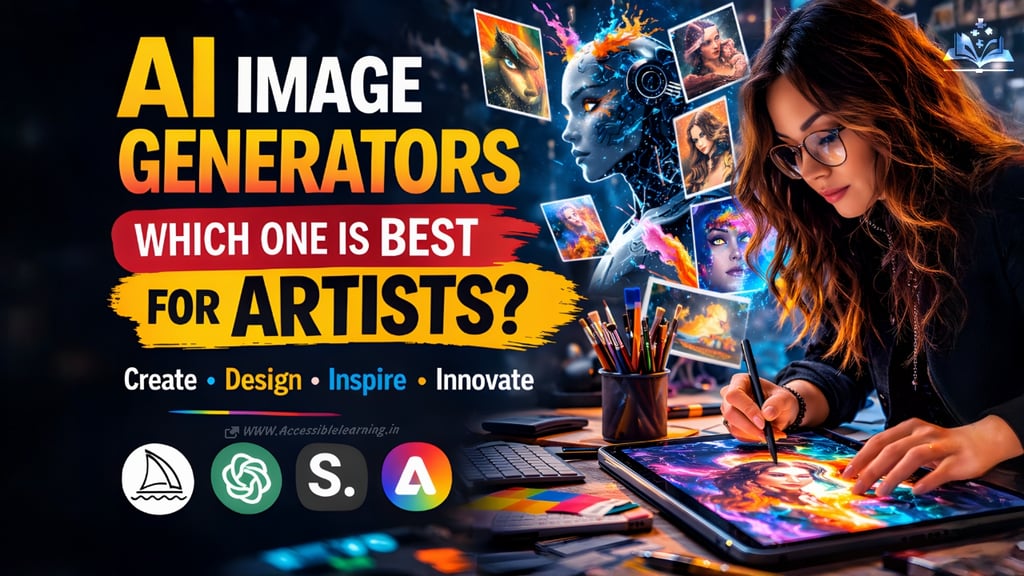
Artificial intelligence has rapidly transformed the way digital art is created. Tasks that once required hours of sketching, rendering, and editing can now be completed in seconds using AI image generators. For artists, illustrators, designers, and creative professionals, these tools are becoming powerful assistants that accelerate the creative process rather than replace it.
However, with many AI image generators available today, artists often wonder which one actually delivers the best results. Some tools focus on artistic expression, others specialize in photorealism, and some provide deep customization options for advanced users.
Understanding the strengths of each platform can help artists choose the right tool for their creative workflow.
Understanding AI Image Generators
AI image generators use advanced machine learning models trained on millions of images and artworks. These systems learn visual patterns such as color, lighting, shapes, textures, and composition.
Most modern platforms rely on diffusion models, which gradually transform random noise into a detailed image that matches the user’s text prompt. For artists, this technology can support many parts of the creative process, including
Concept art creation
Character design exploration
Environment and world-building
Illustration references
Mood boards and visual inspiration
Rapid visual experimentation
Instead of starting from a blank canvas, artists can generate multiple visual ideas quickly and then refine the best concepts.
Why Artists Are Using AI Image Generators
AI art tools are becoming increasingly popular among creative professionals for several reasons.
Faster Idea Development
Artists can generate dozens of visual concepts within minutes. This helps speed up brainstorming and early concept development.
Creative Experimentation
AI allows artists to experiment with styles, color palettes, and compositions that might be difficult to explore manually.
Inspiration and Reference Material
Many artists use AI-generated images as references for lighting, textures, poses, and environments.
Workflow Acceleration
AI tools can assist with background creation, texture generation, and design exploration, allowing artists to focus more on creative decisions.
Expanding Artistic Possibilities
AI can combine artistic styles, cultural influences, and visual elements in ways that inspire completely new creative directions.
Key Features Artists Should Look For
Choosing the right AI image generator requires understanding what features matter most for artistic work.
1. Image Quality
High-resolution images with strong detail, realistic lighting, and consistent anatomy are important for professional artwork.
2. Prompt Interpretation
A strong AI model should understand complex prompts and translate them accurately into visuals.
3. Editing and Control Tools
Advanced generators offer features like:
Inpainting (editing parts of an image)
Outpainting (expanding the image beyond its borders)
Image-to-image transformation
Style references and variations
4. Style Diversity
Artists benefit from tools that can generate many styles, such as:
Realistic photography
Anime and manga
Oil painting
Digital illustration
Cinematic concept art
5. Commercial Licensing
If the artwork will be used in commercial projects, the platform should allow commercial use of generated images.
The Best AI Image Generators for Artists
Several AI platforms have become particularly popular among artists due to their quality and creative capabilities.
1. Midjourney
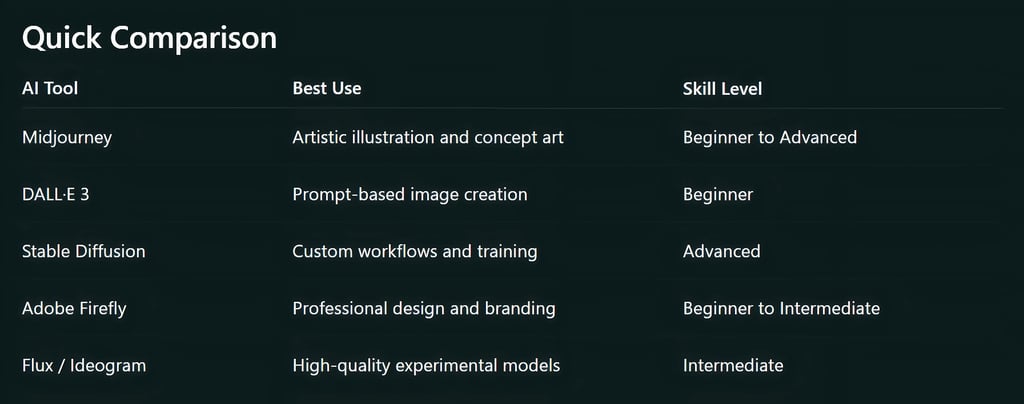
Midjourney is widely known for producing visually stunning and highly artistic images. It often generates dramatic lighting, cinematic compositions, and painterly aesthetics.
Because of its strong artistic style, many concept artists and illustrators prefer Midjourney for fantasy scenes, character designs, and imaginative environments.
Strengths
Exceptional artistic style
Strong lighting and composition
Excellent for fantasy and cinematic artwork
Limitations
Limited editing features
Runs primarily through Discord
Subscription required
Best for:
Concept artists, illustrators, and fantasy creators.
2. DALL·E 3
DALL·E 3 is recognized for its ability to interpret prompts accurately and produce images that closely match the written description. It is particularly useful for creators who want clear visual outputs without needing complicated prompt structures.
Strengths
Accurate, prompt interpretation
Strong photorealistic output
Easy to use for beginners
Limitations
Less stylized than Midjourney
Limited customization compared to open-source models
Best for:
Illustrators, content creators, and designers.
3. Stable Diffusion
Stable Diffusion is one of the most powerful AI art systems because it is open source. Artists can install it locally, customize models, and train the system with their own art styles.
This flexibility allows advanced users to create highly personalized workflows.
Strengths
Full customization and control
Large community of plugins and models
Can run locally on personal hardware
Limitations
Requires technical setup
Learning curve for beginners
Best for:
Professional artists, developers, and advanced users.
4. Adobe Firefly
Adobe Firefly is built specifically for designers and creative professionals working with Adobe tools. One of its major advantages is its focus on safe commercial usage. The model is trained on licensed and public-domain images, which reduces legal concerns when using generated artwork commercially.
Strengths
Integration with Photoshop and Illustrator
Commercial-friendly training data
Strong design-focused features
Limitations
Less experimental or artistic than some AI models
Works best within the Adobe ecosystem
Best for:
Graphic designers and branding professionals.
5. Emerging AI Image Models
The AI art space continues to evolve rapidly, with new models such as Flux, Ideogram, and advanced image generation systems appearing frequently. These tools are improving in areas like:
Text accuracy in images
Character consistency across images
Higher resolution outputs
Better prompt understanding
Many of these newer systems aim to combine the artistic quality of Midjourney with the flexibility of Stable Diffusion.

Tips for Artists Using AI Image Generators
To get the best results from AI image generators, artists should follow a few practical strategies.
Use descriptive prompts: Clear prompts with style references, lighting details, and composition instructions produce better results.
Combine AI with traditional skills: AI works best when paired with drawing, editing, and artistic knowledge.
Iterate multiple times: Generating variations can lead to unexpected and creative visual ideas.
Use AI for ideation, not final output alone: Many artists use AI-generated images as a starting point and refine them using traditional digital art tools.
The Future of AI in Digital Art
AI image generation technology is advancing quickly and will likely become a standard tool in creative workflows. Future AI art tools may include:
Real-time AI painting assistance
Consistent character generation for storytelling
AI-driven animation creation
Integration with 3D design tools
Personalized AI models trained on an artist’s own style
Rather than replacing artists, AI tools are expanding the creative possibilities available to them. Artists who learn how to combine their creativity with AI technology will be better prepared for the next generation of digital art and design.
FAQ's
Q: What is an AI image generator?
An AI image generator is a tool that creates images from text prompts using artificial intelligence and machine learning models. These systems analyze patterns from large datasets of images and generate new visuals based on the user’s description. Artists use AI generators to create concept art, illustrations, and visual ideas quickly.
Q: Which AI image generator is best for artists?
The best AI image generator depends on the artist’s needs. Midjourney is widely preferred for artistic and cinematic visuals, while DALL·E 3 is known for strong prompt accuracy. Stable Diffusion offers the most customization for advanced users, and Adobe Firefly works well for professional design workflows.
Q: Are AI-generated images copyright free?
This depends on the platform. Many AI image generators allow commercial use of generated images, but some have restrictions depending on subscription plans or training data policies. Artists should always review the licensing terms of the specific platform before using images commercially.
Q: Can artists use AI image generators professionally?
Yes, many artists use AI tools professionally for concept art, design drafts, marketing visuals, and illustration references. AI can help speed up idea generation and experimentation, but most professionals still refine the final artwork using traditional design tools.
Q: Do AI image generators replace artists?
AI tools are designed to assist artists rather than replace them. Creativity, storytelling, composition, and artistic vision still come from the human creator. AI simply helps automate parts of the creative process and expand artistic possibilities.
Q: What is the difference between Midjourney and Stable Diffusion?
Midjourney focuses on producing highly artistic images with minimal setup, making it popular among illustrators and concept artists. Stable Diffusion, on the other hand, is open source and allows users to customize models, train their own styles, and run the system locally.
Q: How do artists write better prompts for AI image generators?
Artists can improve AI-generated results by writing detailed prompts that include style references, lighting descriptions, camera angles, artistic mediums, and composition details. Clear prompts help the AI understand the intended visual style more accurately.
Q: Are AI image generators good for beginners?
Yes, many AI image generators are beginner friendly. Tools like DALL·E 3 and Adobe Firefly provide simple interfaces where users can generate images just by typing a description. Beginners can quickly experiment with different visual styles without needing advanced technical skills.
Q: Can AI image generators create consistent characters?
Some modern AI tools are improving in this area, allowing users to generate similar characters across multiple images. However, maintaining perfect consistency can still be challenging unless advanced techniques such as model training or reference images are used.
Q: What is the future of AI image generators for artists?
AI image generation technology is expected to become more powerful and integrated into creative software. Future developments may include real-time AI drawing assistance, better character consistency, animation generation, and tools that adapt to an artist’s personal style.
Subscribe to Frontier Intelligence
All © Copyright reserved by Accessible-Learning Hub
| Terms & Conditions
Accessible Learning Hub — Actionable clarity for high-agency minds.
Weekly breakdowns on AI breakthroughs, capital flow, and human performance systems. Zero fluff.