

Afan National Festival: Celebrating Oromo Language, Culture, and Identity
The Afan National Festival is a cultural celebration dedicated to the Oromo language and heritage. It honors Afan Oromo through music, history, traditional knowledge, and community values, highlighting its role in preserving identity, unity, and cultural continuity in the modern world.
AFRICAEVENT/SPECIALCELEBRATION/FESTIVALS
Kim Shin
12/26/20257 min read
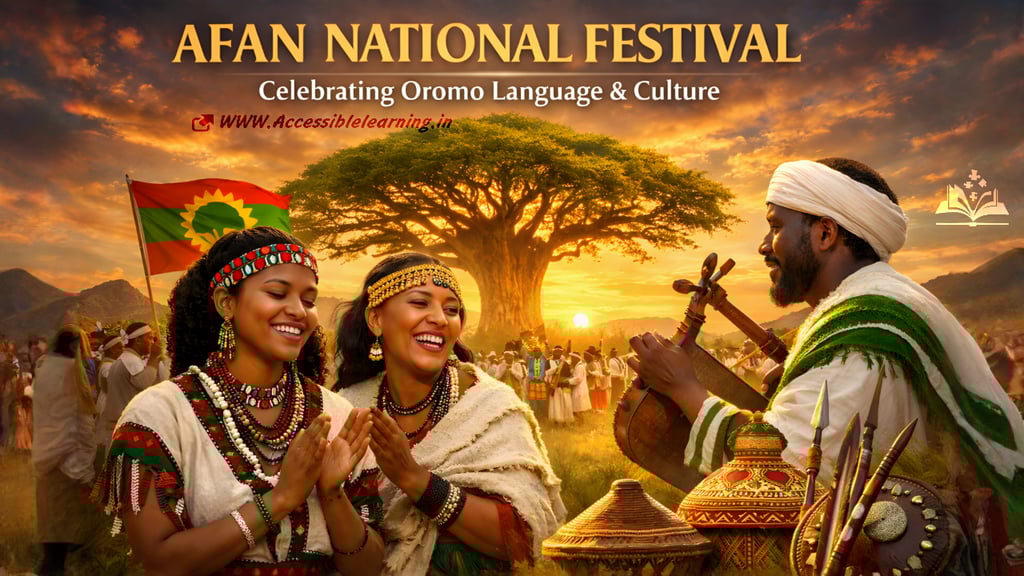
The Afan National Festival is a cultural celebration rooted in the Oromo people’s deep connection to their language, history, and collective identity. Centered around Afan Oromo, one of the most widely spoken indigenous languages in Africa, the festival is more than a cultural event. It is a statement of pride, resilience, and continuity for the Oromo community in Ethiopia and across the global diaspora.
This festival brings language, tradition, music, governance values, and social unity into one shared public space. For many, it is both a celebration and a reminder of the responsibility to preserve cultural heritage in a fast-changing world.
What Is the Afan National Festival?
The Afan National Festival is a cultural and linguistic festival dedicated to honoring Afan Oromo, also known as the Oromo language, and the broader Oromo way of life. It is observed through public gatherings, cultural performances, educational discussions, and artistic displays.
The festival focuses on:
Promoting the Oromo language
Preserving traditional knowledge and customs
Strengthening cultural identity
Passing heritage to younger generations
While not always tied to a single fixed national holiday date, it is often organized around language days, cultural weeks, or regional celebrations supported by community groups, cultural institutions, and local administrations.
The Importance of Afan Oromo Language
Afan Oromo is one of the largest Cushitic languages and serves as a cultural backbone for the Oromo people. It is used in education, media, literature, and governance in many regions of Ethiopia.
The festival highlights:
The role of language in preserving history and oral traditions
The revival of traditional storytelling, poetry, and proverbs
Efforts to standardize and modernize Afan Oromo for digital and academic use
By celebrating the language publicly, the Afan National Festival reinforces the idea that language is not just a communication tool but a carrier of worldview, values, and identity.
Cultural Roots and Historical Context
The Oromo people have a long and complex history, guided by indigenous systems such as the Gadaa system, a democratic and age-based governance structure recognized by UNESCO as Intangible Cultural Heritage.
During the festival, communities reflect on:
Oromo history and resistance
The role of elders, youth, and women in society
Traditional laws, ethics, and conflict resolution practices
This historical grounding makes the festival deeply meaningful rather than purely ceremonial.
Key Highlights of the Afan National Festival
Traditional Music and Dance
Performances like Shagoyee, Dhiichisa, and other Oromo dances are central to the celebrations. Traditional instruments and songs narrate stories of love, struggle, nature, and unity.
Cultural Attire and Symbols
Participants wear traditional Oromo clothing, often decorated with symbolic colors and patterns. Items such as the Odaa tree symbol, spears, beads, and headpieces represent strength, wisdom, and belonging.
Poetry, Literature, and Storytelling
Poets and writers recite works in Afan Oromo, keeping oral literature alive and encouraging new creative voices within the community.
Educational Programs
Workshops, panel discussions, and exhibitions focus on:
Language preservation
Oromo history and philosophy
Youth engagement and cultural education
Role of Youth and the Oromo Diaspora
A major focus of the Afan National Festival is youth participation. Young people perform, volunteer, document events digitally, and engage in discussions about identity in the modern world.
For the Oromo diaspora, the festival serves as
A cultural reconnection point
A platform to teach children their language and traditions
A way to maintain unity across borders
Social media and digital platforms now play a key role in spreading awareness of the festival globally.
Why the Afan National Festival Matters Today
In an era of globalization and cultural homogenization, the Afan National Festival acts as a safeguard for indigenous identity. It promotes:
Linguistic diversity
Cultural confidence
Intergenerational knowledge transfer
It also fosters mutual understanding by inviting people from other communities to learn about Oromo culture in an open and celebratory environment.


Afan National Festival and Cultural Preservation
The festival aligns with broader efforts to protect intangible cultural heritage. By encouraging public use of Afan Oromo and traditional practices, it helps ensure that culture remains lived, spoken, and practiced, not just archived. This makes the Afan National Festival a living movement rather than a symbolic event.
Spiritual and Environmental Connections
The Afan National Festival also reflects the Oromo people’s spiritual relationship with nature. Oromo culture traditionally emphasizes harmony with the environment, land stewardship, and respect for natural symbols such as rivers, mountains, and sacred trees.
The Odaa tree symbolizes unity, justice, and community decision-making
Nature-based rituals highlight balance between humans and the natural world
Environmental awareness is often woven into cultural storytelling during the festival
This aspect makes the festival relevant to modern discussions on sustainability and indigenous ecological knowledge.
Women’s Role in Oromo Culture and the Festival
Women play a central role in preserving Oromo traditions, and the festival actively recognizes their contributions.
Traditional songs led by women pass down historical narratives
Women showcase indigenous crafts, weaving, and culinary traditions
Discussions often highlight women’s roles in peace-building and social cohesion
By amplifying women’s voices, the Afan National Festival promotes cultural continuity and social respect.
Indigenous Knowledge and Wisdom Systems
Beyond celebration, the festival acts as a platform for sharing indigenous knowledge systems.
Traditional medicine and herbal knowledge
Conflict resolution methods rooted in Oromo customs
Moral education through folktales and proverbs
These knowledge systems are increasingly recognized as valuable resources for modern society.
Afan National Festival and Language Policy Awareness
The festival also creates space for dialogue around language rights and education.
Encourages mother-tongue education in early learning
Supports literacy campaigns in Afan Oromo
Raises awareness about linguistic equality in public institutions
This advocacy dimension adds depth and relevance to the festival’s purpose.
Economic and Creative Impact
The Afan National Festival contributes to local and regional economies.
Artisans sell handmade crafts and traditional attire
Local food vendors promote Oromo cuisine
Cultural tourism generates income and employment
This economic activity reinforces the idea that cultural preservation can support sustainable livelihoods.
Modern Media and Digital Documentation
Today, the festival extends beyond physical gatherings through digital platforms.
Live streaming of events for global audiences
Social media storytelling in Afan Oromo
Digital archiving of performances and oral histories
These efforts ensure the festival remains accessible and relevant to future generations.
Intercultural Dialogue and National Unity
Although rooted in Oromo identity, the Afan National Festival often welcomes participation from other communities.
Encourages cultural exchange and mutual respect
Builds bridges between different ethnic and linguistic groups
Strengthens national unity through shared celebration
This inclusive approach positions the festival as a cultural bridge rather than a closed tradition.
Challenges and the Way Forward
Despite its importance, the festival faces challenges.
Limited funding and institutional support
Risk of commercialization overshadowing authenticity
Need for consistent documentation and education programs
Community-led initiatives and youth-driven innovation are key to sustaining the festival’s true spirit.


The Afan National Festival stands as a powerful celebration of language, identity, and community. It honors the Oromo people’s past while actively shaping their cultural future. Through music, language, history, and shared pride, the festival strengthens bonds within the community and sends a clear message: cultural heritage thrives when it is celebrated openly and passed forward with purpose.
As interest in indigenous cultures and linguistic diversity continues to grow, the Afan National Festival remains a meaningful example of how tradition and modern expression can coexist with dignity and strength.
FAQs
Q: What is the Afan National Festival?
The Afan National Festival is a cultural celebration dedicated to Afan Oromo, the language and heritage of the Oromo people. It highlights language preservation, traditional music and dance, history, indigenous knowledge, and community unity.
Q: Why is Afan Oromo celebrated through a national festival?
Afan Oromo represents the identity, values, and historical memory of the Oromo people. The festival helps protect the language, promote cultural pride, and ensure that traditions are passed to younger generations in a public and meaningful way.
Q: When is the Afan National Festival celebrated?
The festival does not follow a single fixed national date. It is usually organized during cultural weeks, language celebration days, or regional heritage events, depending on local authorities and community organizations.
Q: Where is the Afan National Festival celebrated?
The festival is mainly celebrated in Oromo regions of Ethiopia, but it is also observed by the Oromo diaspora worldwide, including communities in Africa, Europe, North America, and the Middle East.
Q: Who can participate in the Afan National Festival?
The festival is open to everyone. While it centers on Oromo culture, people from other communities are welcome to attend, learn, and participate in cultural activities, performances, and discussions.
Q: What activities take place during the festival?
Common activities include:
Traditional Oromo music and dance performances
Poetry, storytelling, and oral literature sessions
Cultural exhibitions and traditional attire displays
Educational talks on language, history, and identity
Youth- and community-led cultural programs
Q: What is the role of youth in the Afan National Festival?
Youth play a key role by performing cultural arts, documenting events digitally, promoting Afan Oromo online, and learning traditional knowledge from elders. Their involvement ensures cultural continuity in a modern context.
Q: How does the festival help preserve Oromo culture?
By encouraging public use of Afan Oromo, showcasing traditional practices, and promoting indigenous knowledge, the festival keeps Oromo culture active, visible, and relevant rather than confined to history books.
Q: Is the Afan National Festival linked to the Gadaa system?
Yes. The festival often highlights the Gadaa system, the traditional Oromo governance structure based on democratic principles, leadership cycles, and social responsibility. It reinforces values of justice, equality, and collective decision-making.
Q: Why is the Afan National Festival important today?
In a globalized world, indigenous languages and cultures face increasing pressure. The Afan National Festival protects cultural diversity, strengthens identity, supports community unity, and promotes respect for indigenous heritage.
Q: How does the festival benefit the economy?
The festival supports local artisans, performers, and food vendors. It also encourages cultural tourism, creating income opportunities while keeping traditional skills and crafts alive.
Q: How can people support or promote the Afan National Festival?
People can support the festival by:
Attending events and cultural programs
Using and promoting Afan Oromo in daily life
Sharing festival content online
Supporting Oromo artists, writers, and educators
Q: Is the Afan National Festival officially recognized?
Recognition varies by region and organization. While some events receive institutional support, many celebrations are community-driven, highlighting the grassroots strength of Oromo cultural preservation.
Q: How is technology influencing the Afan National Festival?
Digital platforms help stream events, share stories globally, archive oral history, and engage the diaspora. Technology has expanded the festival’s reach beyond physical boundaries.
Q: What message does the Afan National Festival send to the world?
The festival sends a clear message that language is identity, culture is living, and indigenous heritage deserves respect, protection, and celebration in the modern world.
Subscribe to Frontier Intelligence
All © Copyright reserved by Accessible-Learning Hub
| Terms & Conditions
Accessible Learning Hub — Actionable clarity for high-agency minds.
Weekly breakdowns on AI breakthroughs, capital flow, and human performance systems. Zero fluff.